Kibune and Kurama Day Trip: Eizan Railway's Maple Tunnel, Kifune Shrine and the Kurama-dera Hiking Trail
Kibune and Kurama day trip from Kyoto: Eizan Railway access, 2026 Kifune Shrine autumn light-up (Nov 7–24), Kurama-dera fees, the hiking trail and passes.
Quick answer
A Kibune and Kurama day trip starts at Demachiyanagi in Kyoto, where the Eizan Railway Kurama Line reaches Kibuneguchi in about 28 minutes and Kurama in about 30. The classic route visits Kurama-dera first (¥500 mountain fee), then crosses Mount Kurama on foot to Kifune Shrine, about 1.5-2 hours of walking. In 2026 Kifune Shrine's autumn light-up runs November 7-24 from sunset to 20:30, and the roughly 250 m 'maple tunnel' between Ichihara and Ninose stations peaks from early to late November.
A Kibune and Kurama day trip is the most "deep in the forest" outing you can make from central Kyoto: in under 30 minutes on the Eizan Railway from Demachiyanagi, you are walking through the cedar woods of Kurama-dera, then crossing Mount Kurama to Kifune Shrine, known for its water deity and matchmaking blessings. In autumn there is also the Eizan Railway's "maple tunnel" and Kifune Shrine's autumn light-up. This guide covers how to get to Kibune and Kurama, the 2026 autumn light-up dates, Kurama-dera's mountain fee and cable car, the Kurama to Kibune hiking trail, kawadoko season and money-saving passes, so you can plan the whole day in one go.
Recommended Kibune and Kurama day trip route: Kurama first, then Kibune
In short: start at Kurama Station in the morning, visit Kurama-dera, follow the mountain trail over Mount Kurama down to Kibune, spend the afternoon at Kifune Shrine's three sites with lunch or tea, and take the Eizan Railway back from Kibuneguchi Station in the evening. This order puts the climbing in the first half and keeps the second half downhill, which is the easiest way to pace yourself.
According to Kurama-dera's official "strong legs course", it is a 3-minute walk from Kurama Station to the Niomon gate, about 25 minutes via Yuki Shrine and the winding Tsuzura-ori path to the main hall, about 30 minutes more to Maoden, and finally about 20 minutes down to Kibune[7]. If you would rather skip the first climb, take the Mount Kurama cable car from beside the gate to Tahoto Station, then walk about 10 minutes to the main hall.
| Time | Plan | Notes |
|---|---|---|
| 9:00 | Eizan Railway Kurama Line from Demachiyanagi | About 30 minutes to Kurama Station |
| 9:40 | Kurama-dera gate, Yuki Shrine | Mountain fee ¥500 |
| 10:15 | Main hall and Kongosho stone mosaic | Main hall open 9:00–16:15 |
| 11:00 | Reihoden museum (optional) → Okunoin path, Maoden | About 50 minutes of trail, up and down |
| 12:00 | Down through the West Gate to Kibune | Find lunch along the Kibune River |
| 13:30 | Kifune Shrine: main shrine, Yuisha, Okumiya | The three-shrine visit; water fortunes at the main shrine |
| 16:00 | Stay until dark during the autumn light-up | 2026 light-up: sunset to 20:30 |
| Return | Bus to Kibuneguchi, then Eizan Railway to Demachiyanagi | During the light-up you pass through the maple tunnel on the way back |
Getting to Kibune and Kurama: how to ride the Eizan Railway from Demachiyanagi
In short: the easiest way is to go to Demachiyanagi Station, the terminus of the Keihan Line, and change to the Eizan Railway Kurama Line. It takes about 28 minutes to Kibuneguchi and about 30 minutes to the terminus at Kurama[9]. A route-search site shows the Eizan fare from Demachiyanagi to Kurama as ¥470[10].
Getting to Demachiyanagi from around Kyoto:
- From Kyoto Station: take the JR Nara Line one stop to Tofukuji, then the Keihan Line to Demachiyanagi, about 12 minutes; or take a city bus to Demachiyanagi Ekimae.
- From Gion or Kawaramachi: board the Keihan Line at Gion-Shijo, about 7 minutes to Demachiyanagi.
- From along the Karasuma subway line: ride to the terminus at Kokusaikaikan and change to Kyoto Bus route 52 to Kurama, about 25 minutes according to Kurama-dera's website[7].
From Kibuneguchi Station, Kifune Shrine is still about 2 km away. Kyoto Bus route 33 runs from outside the station to the Kibune stop in about 7 minutes, and from there it is about a 5-minute walk to the main shrine; you can also walk along the road beside the Kibune River in about 30 minutes[11]. This bus section is outside the area of Kyoto City's subway and bus one-day pass[9], so pay the fare shown on board. On autumn weekends the bus line can be very long; if it is crowded on the way back, walking down the road to Kibuneguchi takes about 30 minutes.
Eizan Railway maple tunnel: when is the best time in 2026?
In short: between Ichihara and Ninose stations on the Eizan Railway there is a stretch of about 250 m lined with about 280 maple trees, known as the "Momiji Tunnel" (maple tunnel). The leaves turn from early to late November[1]. It can only be enjoyed from the train window; you cannot walk into it.
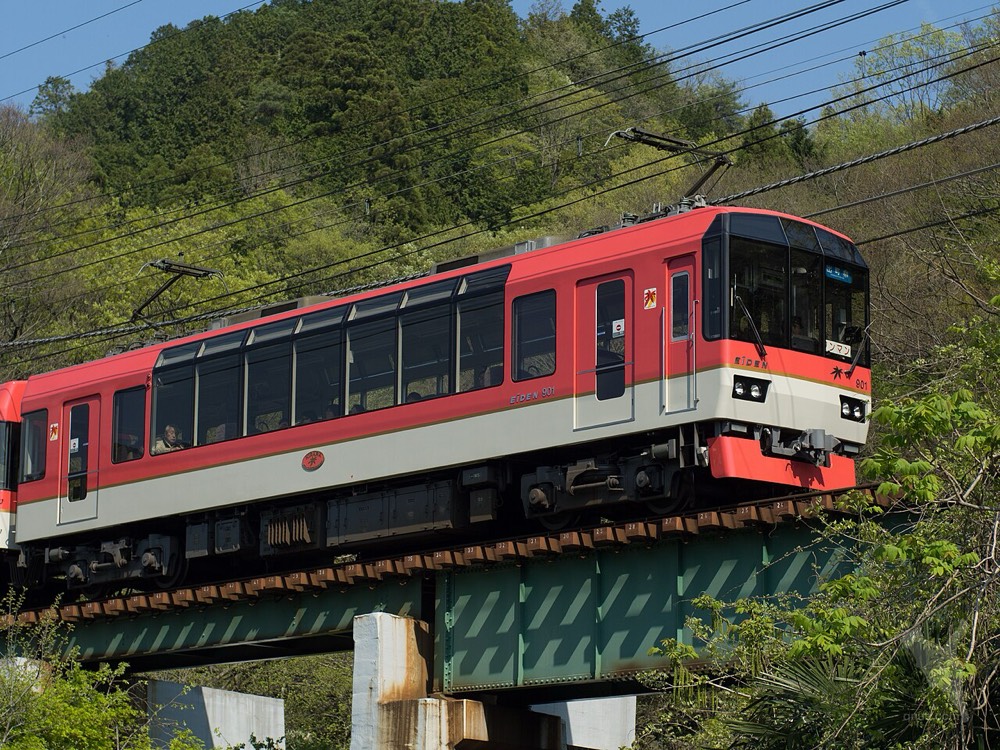
Every autumn the Eizan Railway lights up the maple tunnel at night, and trains switch off their lights and slow down through the section. As of October 21, 2026, the railway had not yet announced its 2026 light-up dates, so the figures below are from previous years for reference:
| Item | 2025 (reference only) | 2026 |
|---|---|---|
| Maple tunnel light-up | Nov 7–24, later extended to Nov 30[2][3] | Not yet announced by Eizan Railway |
| Light-up hours | Sunset to about 21:00 | Not yet announced |
| Kifune Shrine autumn light-up | — | Nov 7 (Sat) – Nov 24 (Tue), sunset to 20:30[4] |
During the 2025 light-up, Ninose and Kibuneguchi stations were also illuminated, and there was a special night train that required advance tickets[2]. Kifune Shrine has announced 2026 dates similar to previous years, so the railway's dates will likely fall in early to mid November as well, but please check the Eizan Railway's official announcements.
The "Kirara" panoramic train has extra-large windows and some outward-facing seats, making it a favorite for the maple tunnel, but there are only a few of these cars, so you may not get one. Whichever train you take, a window seat will show you the maples closing in around the tracks.
How to visit Kurama-dera: mountain fee, cable car and Reihoden museum
In short: entering Kurama-dera requires a ¥500 mountain conservation fee (aizanhi, since April 2023). The Mount Kurama cable car beside the gate is ridden in return for a "donation" of ¥200 one way for adults and ¥100 for elementary school children and younger[6].
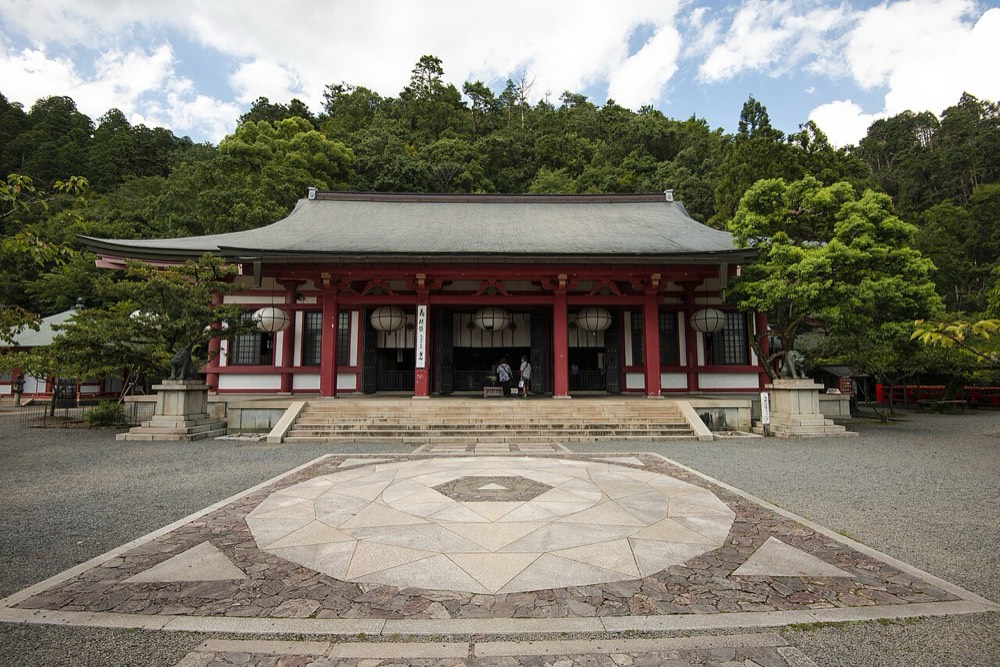
Kurama-dera sits on Mount Kurama north of Kyoto. Legend says it is where the young Ushiwakamaru (Minamoto no Yoshitsune) trained and learned swordsmanship from a tengu. The stone mosaic "Kongosho" in front of the main hall is a popular photo spot. Highlights:
- Main hall (Honden Kondo): open 9:00–16:15; the heart of Kurama-dera.
- Mount Kurama cable car: first uphill departure from Sanmon Station at 8:40, last at 16:20; last downhill departure from Tahoto Station at 16:25, roughly every 20 minutes[7]. It occasionally stops for inspections, including the morning of October 27, 2026, so check the temple's notices before you go.
- Reihoden (Mount Kurama Museum): ¥200 admission, open 9:00–16:00, closed Tuesdays (the next day if Tuesday is a holiday), and closed in winter from December 12 to the end of February[6].
- Yuki Shrine: on the winding path up; it is the shrine behind the Kurama Fire Festival every October 22.
Kurama to Kibune hiking trail: how to walk the Okunoin path
In short: from Kurama-dera's main hall, continue along the Okunoin path past Sojogadani and Maoden, and the West Gate exit brings you out in Kibune. The Okunoin path from the Reihoden area to Maoden is about 1.5 km, and it takes roughly 50 minutes from the main hall to Kibune, downhill after the high point[7].
This is the most distinctive part of Mount Kurama. The bedrock is so hard that cedar roots cannot grow downward and spread across the surface instead, creating a whole stretch of exposed "tree root path" (Ki-no-ne-michi). Sojogadani, linked to the Ushiwakamaru legend, and Maoden, which enshrines the guardian Maoson, are both on this route.
Before you set off:
- Shoes: wear sneakers or hiking shoes; the stone steps and roots get slippery after rain.
- Time: the main hall closes at 16:15, and starting the trail too late risks walking in the dark; aim to set off on the trail before noon.
- Water: there are almost no vending machines on the trail, so stock up near Kurama Station.
- Exit: after coming down through the West Gate, cross the bridge to the road along the Kibune River, which leads to all of Kifune Shrine's sites.
- Trail conditions: mountain trails can close temporarily for typhoons, fallen trees or repairs. At the time of writing we found no closure notice for autumn 2026; check the "Oshirase" notices on Kurama-dera's website or ask at the gate.
Kifune Shrine's three-shrine visit: main shrine, Yuisha, Okumiya and water fortunes
In short: worship at Kifune Shrine is called the "three-shrine visit" (sanshamairi), visiting the main shrine, Okumiya and Yuisha (the middle shrine) in turn. From May 1 to November 30 the main shrine is open 6:00–20:00, every day of the year, with free admission[5].
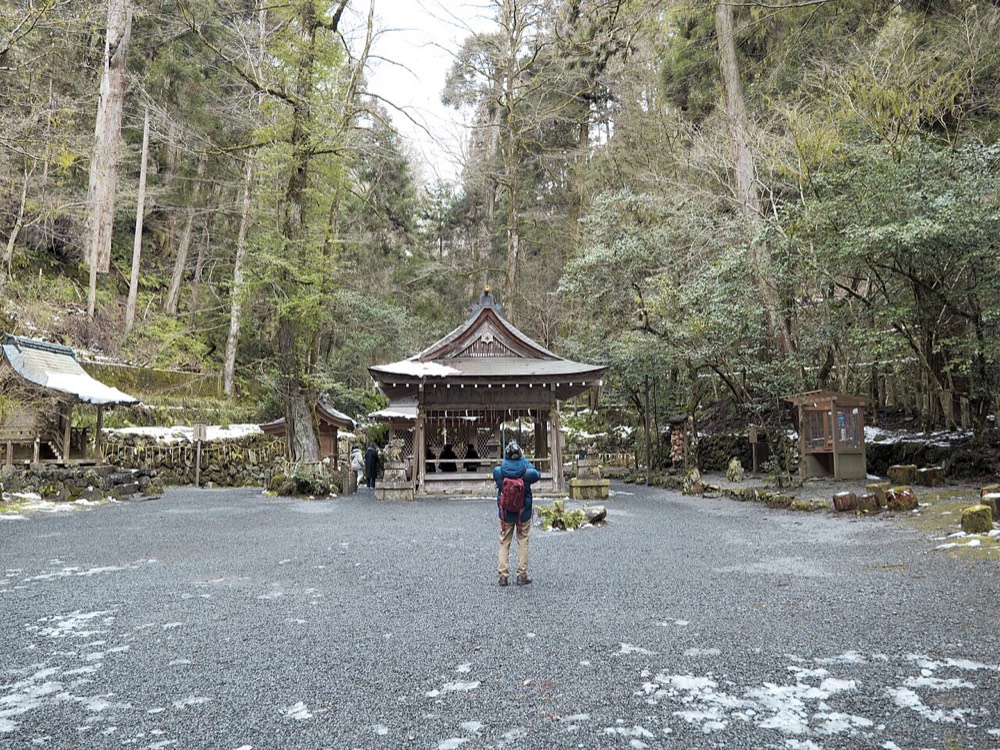
Kyoto's Kifune Shrine calls itself the head shrine of Kifune shrines. It enshrines a water deity and is also known for matchmaking. Note that shrines with the same name exist elsewhere in Japan (for example in Manazuru, Kanagawa), so make sure you are looking at the one in Sakyo Ward, Kyoto.
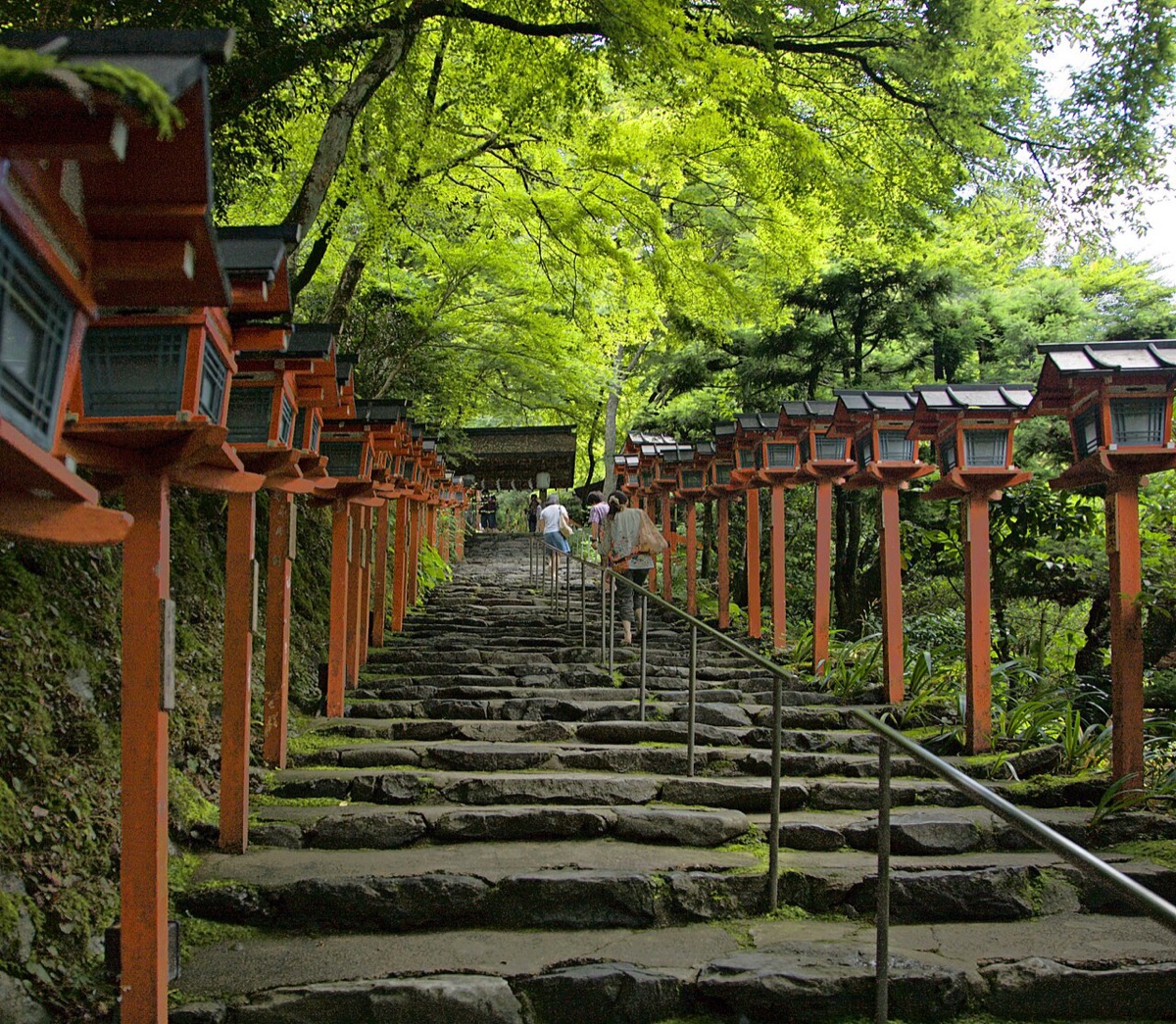
- Main shrine (Hongu): its entrance is the red-lantern stone stairway in the cover photo. The sacred water flowing in front of the shrine comes from springs on Mount Kibune, and the "water fortune slip" (mizu-ura mikuji), whose text appears when you float it on the water, is the most popular experience here.
- Yuisha (middle shrine): between the main shrine and Okumiya, dedicated to Iwanagahime-no-mikoto, a deity of good matches; you will often see couples and people praying for love here.
- Okumiya: the site where Kifune Shrine was founded, surrounded by cedars and the quietest of the three. A "dragon hole" is said to lie beneath the inner sanctuary.
The amulet and goshuin counter is usually open 9:00–17:00 and extends to 20:00 during the autumn light-up[4][5]. In 2026 the light-up covers the main shrine and Okumiya grounds, and water fortunes are available during light-up hours too.
Kibune kawadoko and food: can you still eat there in autumn?
In short: Kibune's kawadoko are seating platforms built over the Kibune River, where you eat to the sound of the water. They are a summer tradition, generally running from May to September, with dates varying by restaurant; on an autumn trip from late October onward you basically will not find them.
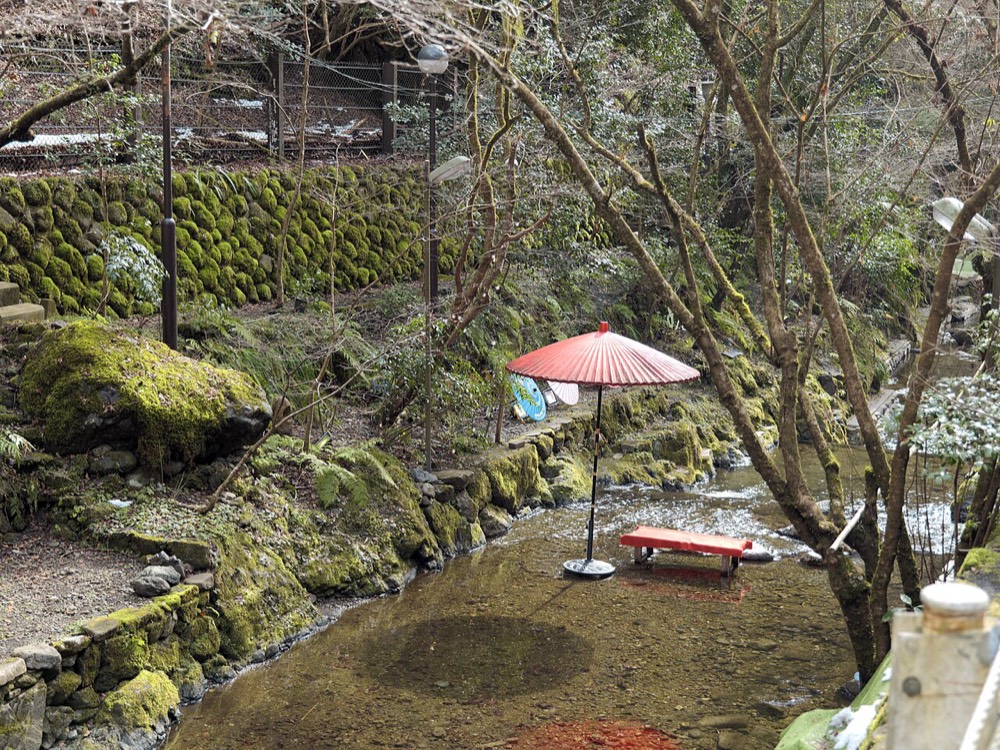
Most of Kibune's restaurant-ryokan stay open all year and move their meals indoors in autumn and winter, with prices ranging from light meals to over ¥10,000; popular places usually need reservations. On a tighter budget, have a simple meal or dessert at one of the tea houses along the Kibune road, or eat around Kurama Station. Seasons and prices vary widely, so check with each restaurant. To fit both summer kawadoko and autumn leaves into a Kyoto trip, use our Kyoto attractions guide to plan.
Money-saving passes for Kibune and Kurama: Ee Kippu and day passes compared
In short: if you are only riding the Eizan Railway, get the Eizan 1-Day Pass "Ee Kippu"; if you are starting from Kyoto Station or along the subway, get the "Subway & Eiden Kurama/Kibune Day Pass"[8].
| Ticket | Price (adult) | Coverage | Best for |
|---|---|---|---|
| 1-Day Pass "Ee Kippu" | ¥1,200 | Unlimited rides on all Eizan lines for a day | Staying near Demachiyanagi or the Keihan Line, adding Ichijoji or Yase |
| Subway & Eiden Kurama/Kibune Day Pass | ¥2,100 | All Eizan lines + Keihan Sanjo–Demachiyanagi + all Kyoto subway lines | Starting from Kyoto Station or along the Karasuma Line |
| Eiden & Onsen Ticket | ¥2,200 | All Eizan lines for a day + Kurama Onsen outdoor bath ticket | Anyone who wants a hot-spring soak in Kurama |
| Kyoto Rakuhoku "Mori to Mizu" Ticket | ¥1,800 | All Eizan lines + Kyoto Bus sections north of Imadegawa-dori (some exclusions) | Anyone who also wants to ride the Kibune bus and route 52 |
The first three passes do not include buses. The "Mori to Mizu" Ticket covers all Eizan lines plus Kyoto Bus north of Imadegawa-dori (excluding sections such as north of Kurama Onsen) and is valid only on the day of purchase[8]; confirm at the counter whether it covers the Kibune bus when you buy it. Ee Kippu bought from ticket machines at stations such as Demachiyanagi, Kibuneguchi and Kurama is valid only on the day of purchase. As for fares, a simple round trip from Demachiyanagi to Kurama costs about ¥940 in single tickets, cheaper than the day pass, so the pass only pays off if you add stops such as Ichijoji.
Kurama Onsen near Kurama Station still offers day bathing, and the Eizan Railway sells a ticket bundled with its outdoor bath; check the onsen's official notices for bathing fees and hours.
Pre-trip tips for avoiding the crowds at Kibune and Kurama in autumn
In short: on November weekends there are long lines for both the Eizan Railway and the Kibune bus, so your best bet is a weekday, leaving Demachiyanagi before 9 a.m.
- Timing of the leaves: Kibune and Kurama are in the mountains and cooler than the city, so the leaves usually turn a little earlier than in central Kyoto; for the latest foliage conditions around Kyoto, see Kyoto autumn leaves 2026.
- Stay warm: temperatures drop noticeably in the mountains in the evening, so bring an extra layer for the light-up.
- Return timing: trains back are most crowded just before the light-up ends; head down early after your first look.
- Weather: the Eizan Kurama Line has been suspended by landslides after heavy rain or typhoons in the past, so check the Eizan Railway's service information before you go.
- Add-ons: with time to spare, stop at Ichijoji Station on the way back for its ramen street, or pair this with an Arashiyama day trip for a two-day Kyoto mountains-and-forest itinerary.
FAQ
Should I visit Kibune or Kurama first?
Most people recommend Kurama first, then Kibune. The trail from Kurama-dera's main hall toward Maoden is mostly uphill, and once you pass the top it is downhill all the way to Kibune. You finish with Kifune Shrine and a meal, then take the bus back to Kibuneguchi Station. This order also gets you to Kibune before dark for the autumn light-up.
Can I get off the train to photograph the Eizan maple tunnel?
No. The maple tunnel is about 250 m of track between Ichihara and Ninose stations, with no footpath around it, so you can only enjoy it from inside the train. During the light-up, trains turn off their interior lights and slow down as they pass. Try to get a window seat; weekend trains are packed, so weekdays or late afternoon give a clearer view.
How do I get from Kibuneguchi Station to Kifune Shrine?
Take Kyoto Bus route 33 from outside Kibuneguchi Station to the Kibune stop, about 7 minutes, then walk about 5 minutes to the main shrine. You can also walk along the road beside the Kibune River, about 30 minutes or 2 km. Pay the bus fare shown on board; the Kyoto subway and bus one-day pass does not cover this section.
How long is the Kurama to Kibune hike, and is it hard?
Using Kurama-dera's official estimates, it is about 25 minutes from the gate via Yuki Shrine to the main hall, about 30 minutes from the main hall to Maoden, and about 20 minutes down to Kibune. With prayers and breaks, allow 1.5-2 hours. The path is mostly stone steps and exposed tree roots, so wear good shoes and take extra care after rain.
Can I still eat on a kawadoko river platform in Kibune in autumn?
Kibune's kawadoko platforms mostly operate from May to September, with dates varying by restaurant, and they are generally packed away by late October. In autumn you can eat indoors at riverside ryokan or eateries and enjoy the light-up instead. If you want the kawadoko experience, plan your trip for early to late summer.
Are there money-saving passes for a Kibune and Kurama day trip?
The Eizan Railway 1-Day Pass 'Ee Kippu' costs ¥1,200 for adults and covers all Eizan lines for a day. From central Kyoto, the Subway & Eiden Kurama/Kibune Day Pass costs ¥2,100 and adds all Kyoto subway lines plus Keihan Sanjo-Demachiyanagi. Neither includes buses; the Kyoto Rakuhoku 'Mori to Mizu' Ticket (¥1,800) adds Kyoto Bus sections in the area.
Sources
- Eizan Railway | Momiji Tunnel: Location, length, number of trees and light-up season of the maple tunnel
- Jorudan | Eizan Railway Momiji Tunnel light-up (2025): 2025 light-up dates, sunset to about 21:00, slow running
- Jorudan | Momiji Tunnel slow running and light-up extended to Nov 30 (2025): 2025 light-up extended to November 30
- Kifune Shrine official | Autumn leaves light-up: 2026 light-up: Nov 7-24, main shrine and Okumiya, sunset to 20:30
- Kifune Shrine official | Visitor information: Main shrine hours, the three-shrine visit, water fortune slips
- Kurama-dera official | Entering the mountain: ¥500 mountain fee, ¥200 cable car donation, Reihoden museum
- Kurama-dera official | Access map: Hiking route time estimates and cable car timetable
- Eizan Railway | Value tickets: Ee Kippu, Kurama/Kibune Day Pass, Eiden & Onsen Ticket, Mori to Mizu Ticket
- Kyoto City Official Travel Guide | Kurama and Kibune access: Travel times from Demachiyanagi to Kurama and Kibuneguchi, buses
- Ekitan | Demachiyanagi to Kurama: Fare and travel time from Demachiyanagi to Kurama
- Kifune Shrine official | Access: Kyoto Bus route 33, parking fees
- Eizan Railway official | News: Special timetable on October 22 for the Kurama Fire Festival
Fares, opening hours and event dates can change. Information checked on 2026.10.21; please confirm with official sources before you go.