Ohara Day Trip from Kyoto: Sanzen-in Autumn Leaves, Jakko-in, Hosen-in and the Kyoto Bus
Ohara and Sanzen-in day trip from Kyoto: Kyoto Bus 17 and 19 routes and fares, 2026 autumn leaf forecast, Hosen-in and Jakko-in fees, a timed plan and costs.
Quick answer
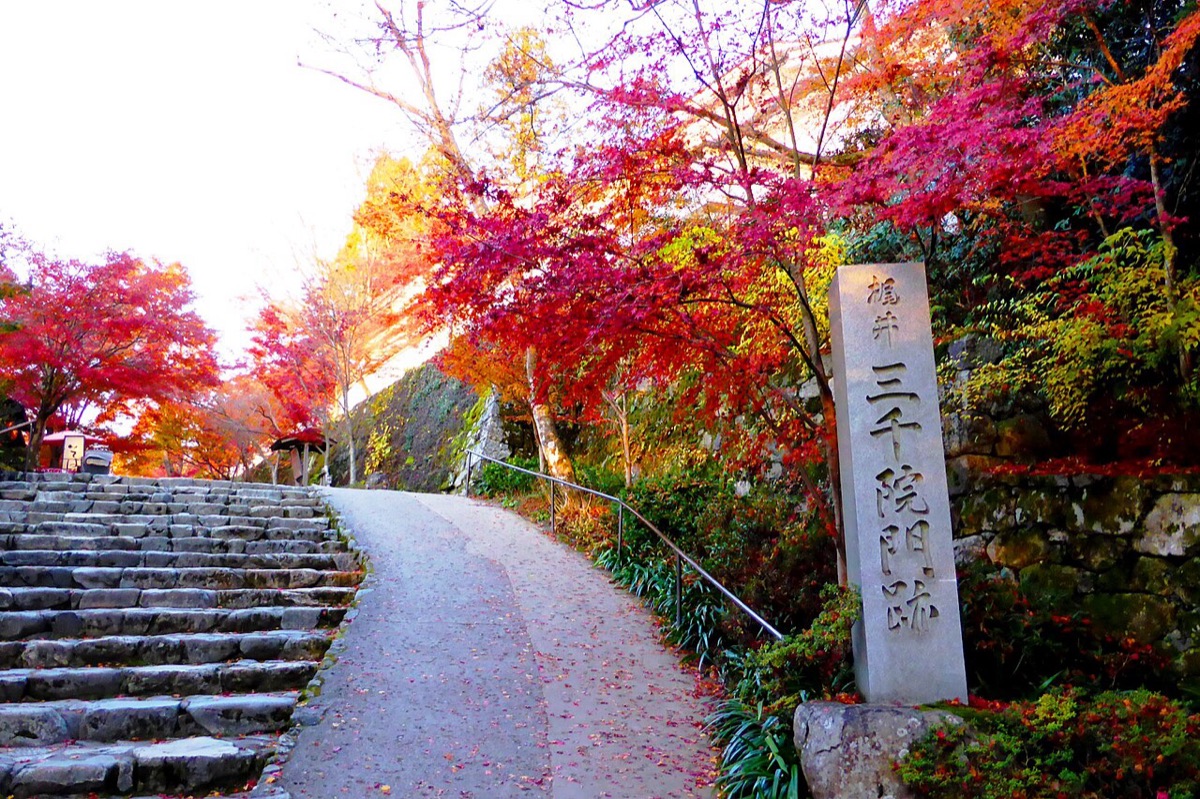
Sanzen-in in Ohara sits in a mountain valley northeast of central Kyoto. Kyoto Bus route 17 runs from Kyoto Station in about 70 minutes for ¥630; taking the subway to Kokusaikaikan and changing to route 19 cuts the bus ride to about 20 minutes for ¥400. Sanzen-in costs ¥700 and opens 8:45-16:45 in November, and its 2026 Momiji Festival runs October 24 to December 6. Forecasters expect Sanzen-in's leaves to peak from around November 18, 2026. Hosen-in has no night light-up in 2026; Jakko-in is a 15-minute walk the other way from the bus stop and costs ¥600.
Sanzen-in in Ohara sits in a mountain valley northeast of central Kyoto, 20 to 70 minutes away by bus, so it is not a temple you can squeeze in on a whim. This guide covers the Kyoto Bus routes and fares from Kyoto Station, Shijo-Kawaramachi, Demachiyanagi and Kokusaikaikan, the 2026 autumn leaf timing and temple opening details, a timed Ohara day trip, and a cost breakdown of fares and admissions, so you can decide whether Ohara (おおはら) deserves a full day.
Is Ohara Sanzen-in for you? Decide before giving it a day
In short: Ohara suits people who love moss gardens, quiet temples and slow walks. If you only want to tick off famous sights, or you have just a day or two in Kyoto, start with the city instead.
Ohara is a mountain village at the northwestern foot of Mount Hiei. Sanzen-in, Hosen-in, Shorin-in and Jikko-in line the same approach path, while Jakko-in sits on the other side of the valley. Everything is walkable, but the only ways in and out are Kyoto Bus or a car, and the round trip alone takes 1.5 to 2.5 hours.
Who it suits
- Repeat visitors who have already seen Kiyomizu-dera and Arashiyama and want a different landscape
- People who want to sit on tatami, look at a garden and drink a bowl of matcha without rushing
- Anyone combining Ohara with Rurikoin in Yase or Kibune and Kurama for a day in northern Kyoto
- Winter visitors hoping to catch temples in the snow
Who it doesn't suit
- Travelers with only a day or two in Kyoto who haven't seen the classic city sights
- Travelers with limited mobility or wheelchair users: the approach climbs gently the whole way and some temple entrances have stone steps
- Anyone after illuminated night foliage: none of Ohara's main temples has a night light-up in 2026, and few shops stay open after dusk
- People carrying large luggage: the buses are small and often standing-room only in autumn
How to get to Ohara: Kyoto Bus route 17 or 19?
In short: if you are staying near Kyoto Station, take route 17 directly. To spend less time on the bus and avoid city traffic, take the subway to Kokusaikaikan first and change to route 19.
According to Sanzen-in's access page[2], the main buses to Ohara are run by Kyoto Bus (京都バス, not the Kyoto City Bus), and the stop is simply called "Ohara". From the stop it is about 10 minutes on foot to Sanzen-in and about 15 minutes to Jakko-in[5]. Fares depend on distance; the adult fares below have applied since June 1, 2024[6]:
| From | How | Bus time | Adult one-way fare | Best for |
|---|---|---|---|---|
| Kyoto Station | Route 17, stop C3 in front of Kyoto Station | About 70 min | ¥630 | Staying at Kyoto Station, no transfers with luggage |
| Shijo-Kawaramachi | Routes 16 and 17 | About 60 min | ¥590 | Staying around Kawaramachi or Gion |
| Demachiyanagi Station | Route 17 and others | About 30 min | ¥490 | Arriving by Keihan or Eizan Railway |
| Kokusaikaikan Station | Karasuma subway line to the end, then route 19 | About 20 min | ¥400, plus the subway fare | Autumn weekends, avoiding traffic on Kawabata-dori |
| Yase-ekimae | Kyoto Bus from around Eizan Railway's Yase-Hieizanguchi Station | About 20 min | Fare by section | Visiting Rurikoin in Yase in the morning |
Children (elementary school) pay half the adult fare, rounded up to the next ¥10[7]. The subway takes about 20 minutes from Kyoto Station to Kokusaikaikan and about 16 minutes from Shijo[2]. Neither route runs very frequently, so checking the timetable on the Kyoto Bus website before you leave will save a lot of waiting.
Riding Kyoto Bus to Ohara for the first time
- At the bus terminal in front of Kyoto Station's Central Exit, find stop C3 and check that the bus front reads "17 大原".
- The Ohara routes charge by distance, so tap your IC card both when you board and when you get off[7], unlike the city's flat-fare routes where you tap only once when leaving.
- Ten nationwide IC cards, including ICOCA, Suica, PASMO and PiTaPa, are accepted, but you cannot buy an IC card on the bus, so get one at a station first[7].
- If paying cash, follow the instructions on board and check the fare display at the front before you get off.
- Get off at "Ohara" and follow the signs at the junction: Sanzen-in and Jakko-in are in opposite directions from the stop.
Should you buy a day pass? A round trip from Kyoto Station costs ¥1,260, more than the Subway and Bus One-Day Pass (¥1,100 for adults). However, Kyoto Bus says the pass is valid only within the "Kyoto sightseeing free zone"; beyond it you pay a cash fare from the boundary stop, and IC cards cannot be used for that fare[9]. Travel media generally say Ohara is inside the zone, but we could not confirm the boundary for the Ohara routes from the official pages, so point to the route map and ask when you buy the pass. If you are also riding the Eizan Railway to Yase or Kibune that day, consider the Kyoto Rakuhoku Mori to Mizu ticket: ¥1,800 for adults, covering all Eizan Railway lines and Kyoto Bus north of Imadegawa-dori (excluding north of Kurama Onsen and Ginkakuji-michi to the top of Mount Hiei). It is valid on the day of purchase only and sold at Demachiyanagi, Shugakuin and Kurama stations and the Kyoto Bus Takano office[8]. For a comparison of other Kyoto passes, see the Kyoto transport guide.
Ohara day trip itinerary: a realistic timetable from Sanzen-in to Jakko-in
In short: arrive in Ohara before 9:30, see Sanzen-in and the three temples on the approach first, walk to Jakko-in in the afternoon, and catch a bus back before 15:30 for the easiest day.
This timetable assumes a November weekday, starting at Kyoto Station by subway plus route 19. On weekends or holidays, add 20 to 30 minutes to each leg.
| Time | Plan | Stay | Notes |
|---|---|---|---|
| 8:30 | Karasuma line from Kyoto Station toward Kokusaikaikan | About 20 min | Busy on weekday mornings, but no traffic |
| 9:00 | Change to Kyoto Bus route 19 at Kokusaikaikan | About 20 min | Check the timetable before you leave |
| 9:30 | Get off at Ohara, walk up the approach | About 10 min | Pickle shops and teahouses line the path; browse on the way back |
| 9:40 | Sanzen-in | 70-90 min | Opens 8:45 in November; fewer people early |
| 11:10 | Hosen-in | 40-60 min | Sit in the guest hall and view the picture frame garden, tea included |
| 12:00 | Shorin-in, Jikko-in | 20-30 min each | Next to each other; you can choose just one |
| 12:40 | Lunch on the approach | About 60 min | Lines form at noon in autumn; eat early |
| 13:50 | Walk back past the Ohara stop and on to Jakko-in | About 20 min | Follow the signs past the bus stop |
| 14:10 | Jakko-in | 50-60 min | Garden and main hall, plus the small shops by the gate |
| 15:20 | Walk back to the Ohara stop for the bus | About 15 min | Queues for return buses grow after 16:00 |
| Around 16:30 | Back at Kyoto Station or Kokusaikaikan | Dinner in the city |
There are two reasons for this order. Sanzen-in is quieter in the morning just after opening than at midday, so it is easier to photograph Yusei-en without crowds. And because Jakko-in is on the other side of the bus stop, leaving it for last lets you walk straight back to the stop without climbing the approach twice. If you are short on energy, drop Shorin-in and Jikko-in; Sanzen-in, Hosen-in and Jakko-in still make a full day.
Visiting Sanzen-in: Ojo Gokuraku-in, Yusei-en and the 2026 Momiji Festival
In short: Sanzen-in costs ¥700 for adults, is open every day, and opens 8:45-16:45 in November. During the Momiji Festival from October 24 to December 6, 2026, the normally hidden Golden Fudo statue is open for worship.
Sanzen-in's official site lists admission at ¥700 for adults, ¥400 for junior high and high school students and ¥150 for elementary school students. Hours are 9:00-17:00 from March to October, 8:45-16:45 in November and 9:00-16:30 from December to February[1].
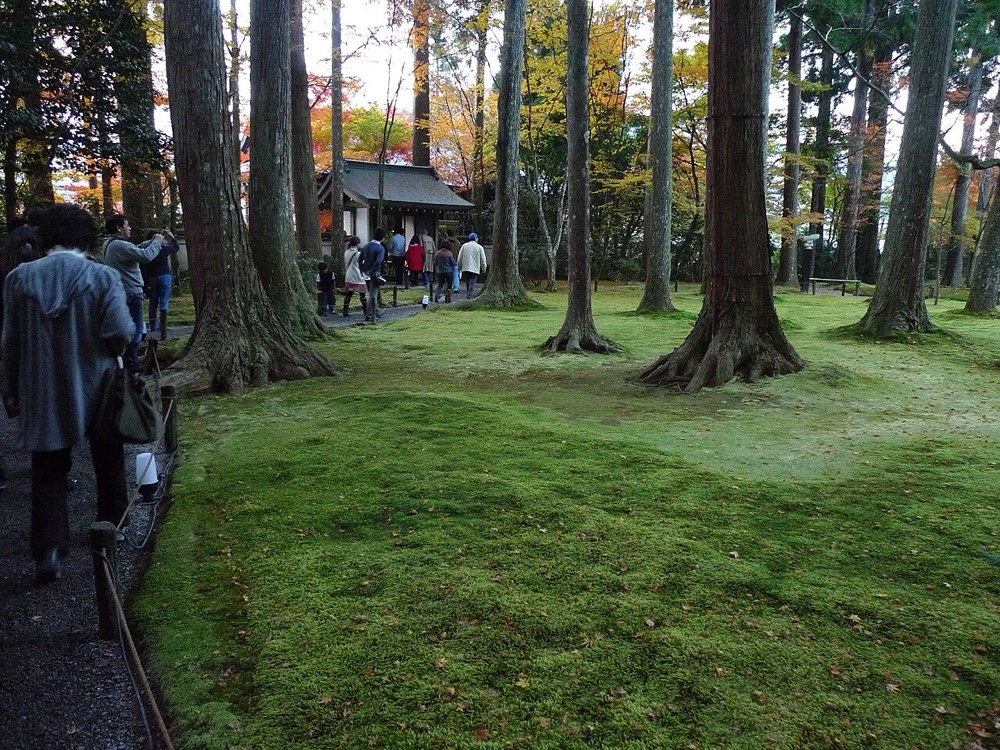
Based on the temple's grounds guide[15], the route runs roughly like this:
- Kyakuden and Shuheki-en: just past the entrance is the guest hall, where you can sit on the veranda and look over the Shuheki-en pond garden.
- Shinden and Yusei-en: the Shinden hall was built in 1926. In front of it, Yusei-en is a garden of cedars and moss; in autumn the moss is covered with fallen leaves, and it is the view of Ohara Sanzen-in you see most often in photos.
- Ojo Gokuraku-in: the oldest small hall on the grounds. Its Amida triad is a National Treasure, and the building is an Important Cultural Property.
- Warabe Jizo: a few small, sweet-faced Jizo statues in the moss beside the Benzaiten pond.
- Hydrangea garden, Golden Fudo Hall and Kannon Hall: up the slope, the Golden Fudo Hall's hidden statue is normally shown only in April, but it is also open during the 2026 Momiji Festival, with limited-edition goshuin stamps[3].
Allow 1 to 1.5 hours. Shoes come off in the Shinden and Kyakuden, and the floors are cold in winter, so an extra pair of socks helps.
Hosen-in picture frame garden: no night light-up in autumn 2026
In short: Hosen-in is famous for its "picture frame garden", where the guest hall's pillars frame the view. 2026 listings show adult admission at ¥1,000, hours of 9:00-17:00 (last entry 16:30), and no night light-up this autumn.
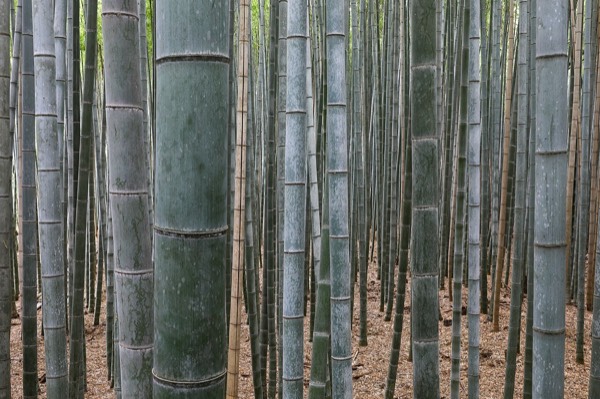
Hosen-in (宝泉院) is about 200 m north of Sanzen-in, right next to Shorin-in[10]. The guest hall's pillars and lintels cut the bamboo grove, maples and old five-needle pine outside into a series of pictures. The garden is called Bankan-en, and the point is to sit on the tatami and look, not to walk through it.
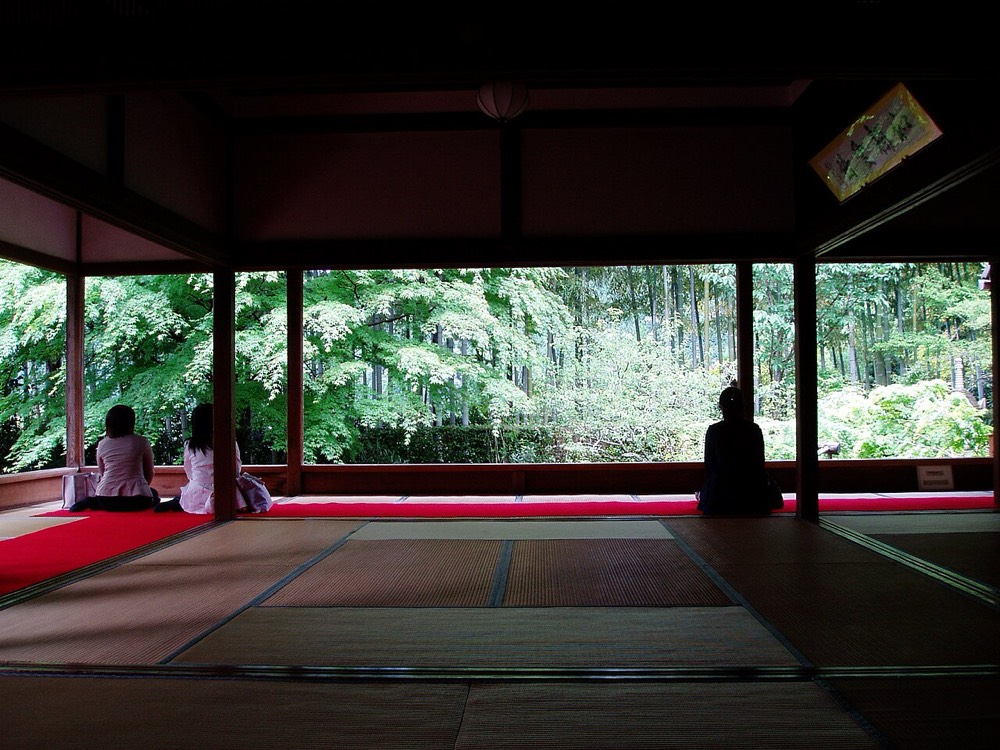
Walkerplus, a Japanese autumn leaves site, lists Hosen-in's admission in October 2026 at ¥1,000 for adults, ¥900 for junior high and high school students and ¥800 for elementary school students, and marks the light-up as "none"[10]. Hosen-in's official site could not be reached when we checked, so see the Hosen-in official site for the latest notices. Travel media say daytime admission includes matcha and a Japanese sweet[14]; staff bring the tea after you enter, and you can finish it before getting up to look around.
For past-year reference: the 2025 Autumn Night Lights ran from November 8 to December 7, with no tea served during the light-up. With no evening sessions this year, pick a temple in the city from the light-up schedule in Kyoto autumn leaves 2026 if you want illuminated foliage.
Shorin-in, Jikko-in and Otonashi Falls: choosing among the smaller temples
In short: if you have time, visit both. If you can only pick one, choose Shorin-in to hear Buddhist chant, or Jikko-in to sit with a garden and see cherry blossoms that also bloom in autumn.
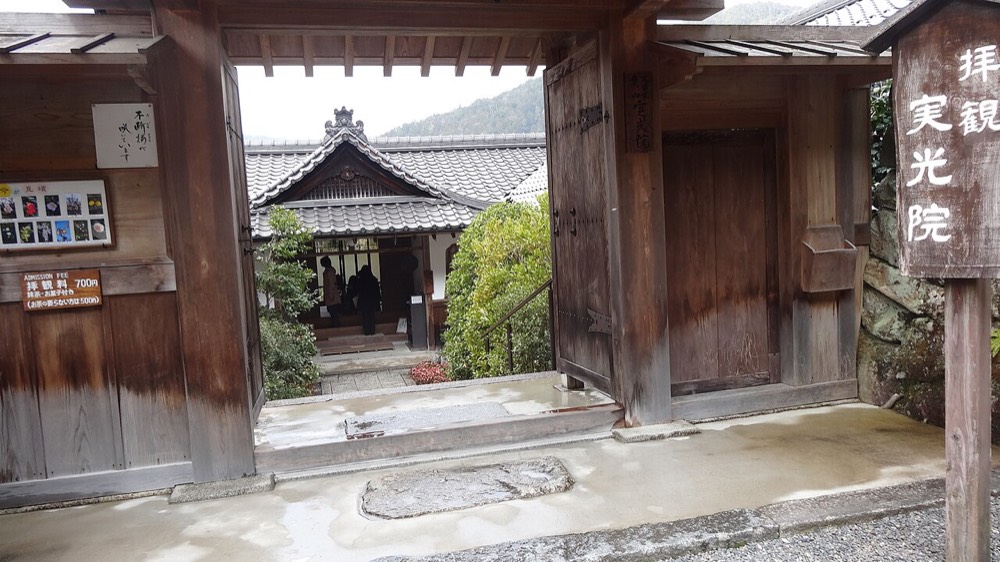
These temples sit between Sanzen-in and Hosen-in. The fees and details below are as listed by travel media and may have changed[14]:
| Temple | Admission (media-listed) | Highlights | Stay |
|---|---|---|---|
| Shorin-in | ¥300 for high school and older | Birthplace of Tendai shomyo chant; spacious, quiet main hall | About 20 min |
| Jikko-in | ¥600 for junior high and older; tea and sweets extra | The garden's "Fudan-zakura" cherry blooms in both spring and autumn | About 30 min |
| Raigo-in | ¥400 for adults | Further up the valley, fewer visitors | About 20 min |
Shorin-in was the stage for the Heian-period "Ohara Debate" and is the home of shomyo Buddhist chant in Ohara; its main hall is plainer and more open than Sanzen-in's buildings. Jikko-in's Fudan-zakura flowers in autumn at the same time as the maples, a rare sight in Ohara.
For a longer walk, follow the Ryo River upstream from beside Sanzen-in, past Raigo-in and a little further, to Otonashi Falls (Otonashi-no-taki). It is a small waterfall, about 30 to 40 minutes there and back, and a good break when the temples are crowded.
Jakko-in in Ohara: the nunnery of the Tale of the Heike, across from the bus stop
In short: Jakko-in costs ¥600 for adults, opens 9:00-17:00 from March to November, and is about 15 minutes' walk from the Ohara stop, in the opposite direction from Sanzen-in.
Jakko-in is a Tendai nunnery. According to the temple, Kenreimon-in, daughter of Taira no Kiyomori, became a nun here in 1185 after the Taira clan was destroyed at Dan-no-ura and spent the rest of her life here; the final chapter of the Tale of the Heike describes her life in Ohara[16]. The original main hall burned in a fire in the early morning of May 9, 2000, and the current hall is a faithful reconstruction in the traditional style[16].
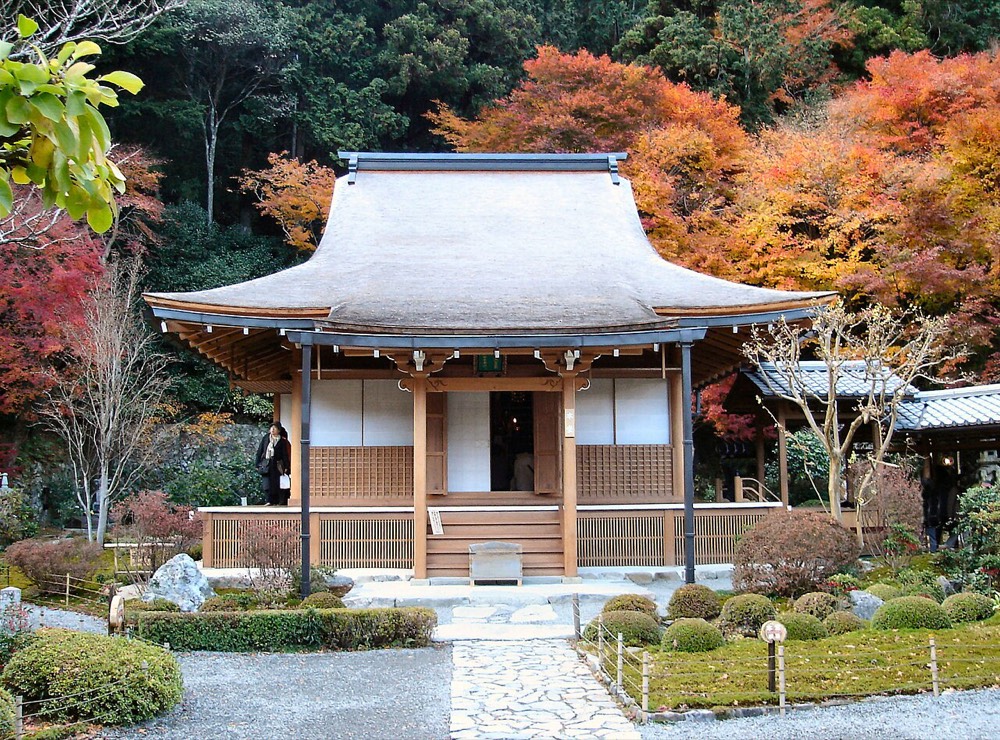
Jakko-in's official hours and admission are as follows[4]:
- Hours: March 1 to November 30, 9:00-17:00; December, 9:00-16:30; January 1-3, 10:00-16:00; January 4 to the end of February, 9:00-16:30.
- Admission: ¥600 for adults and high school students, ¥350 for junior high students, ¥100 for elementary school students.
The walk from the bus stop follows a gentle lane through fields, with pickle shops and small cafés along the way. The temple is compact; west of the main hall are a heart-shaped pond and the "thousand-year princess pine". Allow 40 minutes to an hour.
How much does an Ohara day trip cost? Fares plus admissions
In short: from Kyoto Station, a round-trip bus ride and four temples add up to about ¥3,860, not including lunch.
Based on the timetable above, at adult prices:
| Item | Cost | Notes |
|---|---|---|
| Kyoto Bus, Kyoto Station ⇄ Ohara round trip | ¥1,260 | Via Kokusaikaikan: ¥800 by bus plus the round-trip subway fare |
| Sanzen-in | ¥700 | Official price |
| Hosen-in | ¥1,000 | 2026 media listing, tea included |
| Shorin-in | ¥300 | ¥600 if you choose Jikko-in instead |
| Jakko-in | ¥600 | Official price |
| Total | ¥3,860 | Lunch extra |
Most restaurants and teahouses on the approach take cash, and lines form at lunchtime in autumn. There are also small shops selling pickles and sweets outside Sanzen-in and Jakko-in, so budget another ¥1,000-2,000.
When to see Ohara's autumn leaves in 2026: crowds and other seasons
In short: Sanzen-in's leaves are forecast to peak from around November 18, 2026 and start falling around December 6. The November 21-23 three-day weekend is the busiest, and a weekday morning is ideal.
The Japanese weather company Weathernews forecasts Ohara Sanzen-in's peak from around November 18, 2026, with leaves starting to fall from around December 6[12]. Walkerplus reported Sanzen-in still green on November 4, with the usual peak in mid to late November[11]. Ohara is colder than the city, so colors usually turn a few days earlier than in Higashiyama or Arashiyama; visiting Ohara in mid to late November and the city at the end of the month spreads things out. For overall Kyoto timing by area, see Kyoto autumn leaves 2026.
Avoiding the crowds
- Arrive around 9:00 on a weekday; Sanzen-in is quietest in the first hour after opening.
- On weekends, route 17 from Kyoto Station is prone to city traffic; the subway to Kokusaikaikan plus route 19 is more reliable.
- Leave for the return trip before 15:30, as lines at the Ohara stop keep growing toward evening.
Seasons beyond autumn
- Early summer hydrangeas: Sanzen-in's hydrangea garden has several thousand plants that bloom from about mid-June into July[15]. In 2026, however, pest damage meant they barely bloomed; the temple apologized and is strengthening its plant care[13], so check the bloom status on the official site before going in 2027.
- Winter snow: Ohara is higher up and snow settles more often than in the city. Ojo Gokuraku-in and the moss garden are beautiful under snow, but snow days cannot be predicted. For more winter ideas, see the Kyoto winter guide.
- Fresh green maples: in May and June the moss and green maples are lovely, with far fewer visitors than in autumn.
How to combine Ohara with Yase or Kibune and Kurama in one day
In short: Ohara plus Yase works best, since both are on the Eizan Railway and Kyoto Bus network. Ohara plus Kibune and Kurama is possible, but both are crowded in autumn, so be prepared to see only part of each.
Ohara + Rurikoin in Yase: Sanzen-in's access page says Kyoto Bus takes about 20 minutes from around Eizan Railway's Yase-Hieizanguchi Station to Ohara[2]. Visit Rurikoin in the morning and Ohara's Sanzen-in and Jakko-in in the afternoon. Note that from November 13 to December 6, 2026, Rurikoin admits visitors by reservation only; for booking and access details, see Rurikoin autumn special opening 2026.
Ohara + Kibune and Kurama: after Sanzen-in in the morning, take the bus toward Yase, change to the Eizan Railway, and switch to the Kurama line at Takaragaike for Kibuneguchi. In autumn this is tight, so limit Ohara to Sanzen-in and Kibune to Kifune Shrine. For the Kurama-dera trail and Kibune's light-up, see the Kibune and Kurama day trip. Both combinations can use the Kyoto Rakuhoku Mori to Mizu ticket mentioned above[8].
Before you go
- The bus is the biggest variable: there is no railway to Ohara, so frequency and traffic shape your day. Check return times on the Kyoto Bus website before you leave; Google Maps also shows live Kyoto Bus locations.
- Tap your IC card on and off: the Ohara routes charge by distance, so remember to tap when you board so the fare matches the section you ride.
- Wear comfortable shoes: the approach climbs gently all the way and temples often require removing shoes, so avoid complicated lace-up boots.
- Bring enough cash: many temples and shops on the approach take cash only, so get coins and ¥1,000 notes ready in the city.
- It gets dark early: in late November the sun sets around 16:45 in Kyoto and temples start closing around 16:30, so don't pack too much into the afternoon.
FAQ
How long does it take from Kyoto Station to Sanzen-in in Ohara?
Kyoto Bus route 17 runs directly from stop C3 in front of Kyoto Station to the Ohara stop in about 70 minutes, then it is about a 10-minute walk to Sanzen-in. To spend less time on the bus, take the Karasuma subway line to Kokusaikaikan (about 20 minutes) and change to Kyoto Bus route 19 (about 20 minutes). On autumn weekends traffic often makes the trip longer than scheduled.
Which IC card or pass is best for getting to Ohara?
Kyoto Bus accepts ICOCA, Suica and other nationwide IC cards. The Ohara routes charge by distance, so you tap both when boarding and when getting off. A round trip from Kyoto Station costs ¥1,260, more than the ¥1,100 Subway and Bus One-Day Pass, but some Kyoto Bus routes are outside that pass, so confirm the Ohara route is covered when you buy it. If you are also riding the Eizan Railway to Yase or Kibune, look at the ¥1,800 Kyoto Rakuhoku Mori to Mizu ticket.
Does Hosen-in have a night light-up in autumn 2026?
No. In its October 2026 listing, the Japanese autumn leaves site Walkerplus marks Hosen-in's light-up as 'none', and Kyoto autumn listings also show it is not held this year. In 2025 the Autumn Night Lights ran from November 8 to December 7, which you can treat as past-year reference. If the temple announces otherwise later, its notice takes priority.
Can I see both Sanzen-in and Jakko-in in one day?
Yes, and it is the most common Ohara day trip. The two temples lie on opposite sides of the Ohara bus stop: Sanzen-in is about 10 minutes' walk away and Jakko-in about 15. Adding Hosen-in and Shorin-in, the whole loop takes half to most of a day. Visit Sanzen-in in the morning and Jakko-in after lunch, and head back before the evening bus rush.
Will I see snow at Sanzen-in in winter?
Possibly, but there is no guarantee. Ohara is higher and colder than central Kyoto, so snow settles more often, and snowy views of the moss garden and Ojo Gokuraku-in are very popular. Snow days are unpredictable, though. Check the forecast a few days before you go, and expect possible bus delays or reduced service on snowy days.
Sources
- Sanzen-in: Visiting hours and admission: Admission and seasonal opening hours (checked November 2026)
- Sanzen-in: Access: Kyoto Bus routes 17 and 19, travel and walking times
- Sanzen-in: November 2026 visits and autumn events: Notice of October 23, 2026; Momiji Festival October 24 to December 6
- Jakko-in: Visiting hours and admission: Monthly opening hours and admission
- Jakko-in: Access: About 15 minutes' walk from the Ohara bus stop
- MLIT Kinki District Transport Bureau: Approval of Kyoto Bus fare revision: Fares on main sections including Ohara from June 1, 2024
- Kyoto Bus: Fares and how to ride: Accepted IC cards, tapping on and off on distance-based routes, child fares
- Kyoto Bus: Kyoto Rakuhoku Mori to Mizu ticket: Price, coverage and where to buy
- Kyoto Bus: Subway and Bus One-Day Pass: Price and Kyoto Bus coverage
- Walkerplus autumn leaves: Hosen-in: October 2026 listing: admission, hours, light-up 'none'
- Walkerplus autumn leaves: Ohara (Sanzen-in): Still green on November 4, 2026; usual peak period
- Weathernews autumn leaves forecast: Ohara Sanzen-in: 2026 peak from around November 18, leaves falling from around December 6
- Sanzen-in: Notice on hydrangea blooming: June 8, 2026: hydrangeas barely bloomed due to pest damage
- Mapple: Ohara sightseeing spots (autumn): Media-listed details for Shorin-in, Jikko-in and Hosen-in tea
- Sanzen-in: Temple grounds guide: Shinden, Yusei-en, Ojo Gokuraku-in, hydrangea garden and more
- Jakko-in: History: Kenreimon-in, the 2000 main hall fire and reconstruction
Fares, opening hours and event dates can change. Information checked on 2026.11.05; please confirm with official sources before you go.