Best Crab in Sapporo: King Crab vs Snow Crab vs Hairy Crab, Specialty Restaurants, All-You-Can-Eat and Budgets
Best crab in Sapporo: king, snow, hairy and hanasaki crab compared, with official prices, time limits and booking tips for Kani Honke, Hyosetsu no Mon and buffets.
Quick answer
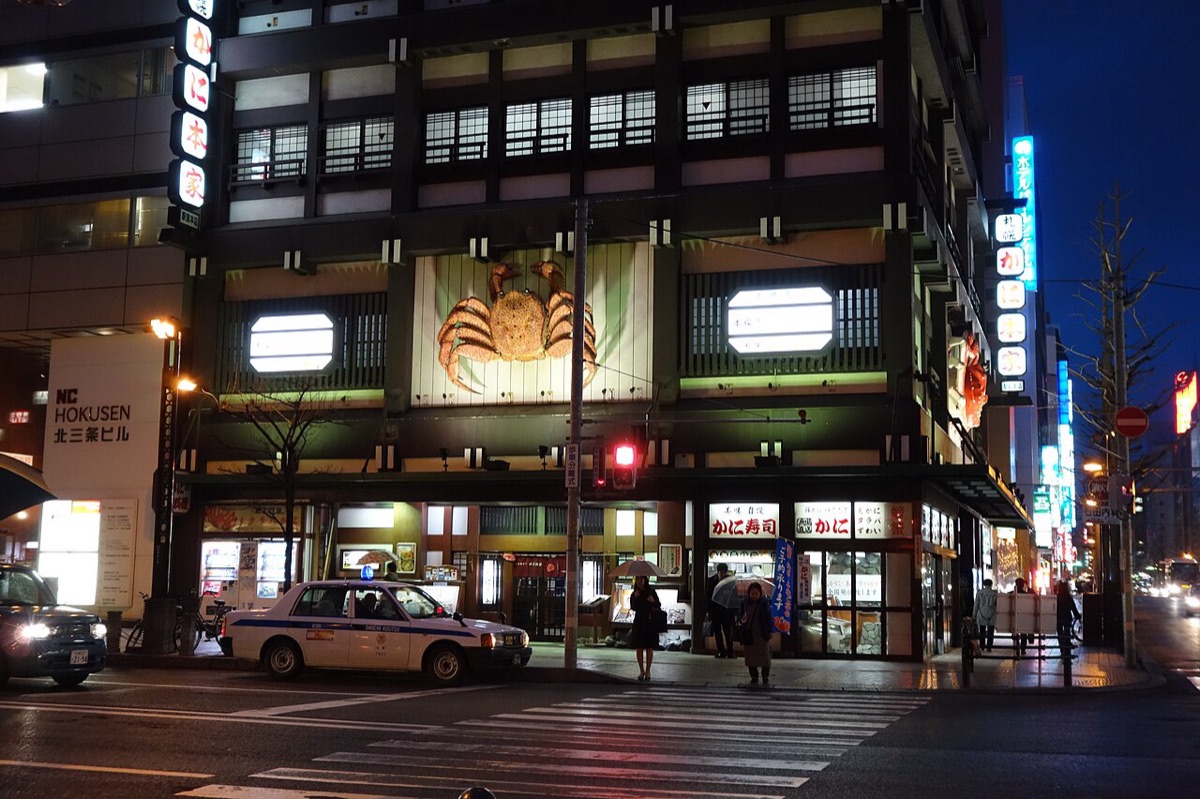
There are three ways to eat crab in Sapporo: course meals at specialty restaurants (Sapporo Kani Honke lunch courses from 4,900 yen and dinner courses from 7,800 yen; Hyosetsu no Mon lunch from 5,830 yen and crab courses from about 9,130 to 23,430 yen), all-you-can-eat crab (Ebikani Kassen, 90 minutes, 9,500 to 10,500 yen), and markets. For hairy crab choose a specialty restaurant or market; at buffets, extra king crab legs may not be true king crab. Prices are tax-included official figures checked in November 2026.
Choosing where to eat crab in Sapporo comes down to three things: which crab you want, how you want to eat it, and how much you want to spend per person. This guide uses official prices to compare king crab (tarabagani), snow crab (zuwaigani, sold as matsuba crab in some regions), hairy crab (kegani) and hanasaki crab, then lays out the three ways to eat it — specialty restaurant courses, all-you-can-eat crab and markets — with a budget breakdown, booking steps, and how to order crab marked "market price" without getting burned. November to February is peak crab season in Sapporo, and popular restaurants fill up at dinner, so book once you have decided.
King crab, snow crab, hairy crab, hanasaki crab: what's the difference?
The short answer: choose king crab for big mouthfuls of meat, snow crab or hairy crab for delicate sweetness and crab innards, and hairy crab if you want crab actually caught in Hokkaido. Here is how the four compare.
| Crab (Japanese) | Texture and flavor | Season and origin | Official Sapporo price reference |
|---|---|---|---|
| King crab (tarabagani) | Thick legs, meaty, fibrous, clean sweetness, little innards | Winter is the main catch season; most at Sapporo markets is imported from Russia | Sapporo Kani Honke boiled king crab, medium platter (2–3 people) 10,500 yen |
| Snow crab (zuwaigani) | Slender legs, fine, sweet meat; innards are edible | Season opens in November along the Sea of Japan; in Sapporo it is mostly imported or frozen | Sapporo Kani Honke snow crab kanisuki hot pot, 6,500 yen per person |
| Hairy crab (kegani) | Small, delicate and sweet meat, rich innards | Different Hokkaido waters have staggered seasons, so local crab is available almost year-round | Sapporo Kani Honke whole boiled hairy crab from 15,000 yen |
| Hanasaki crab (hanasakigani) | Firm, springy meat with a rich flavor | Nemuro specialty, mainly summer, small catch | Rare in Sapporo restaurants in winter; price varies by shop |
A few common points of confusion: king crab and hanasaki crab are lithodids, closer to hermit crabs, with only eight legs including the claws; hairy crab is a true crab with ten legs[12]. "Matsuba crab" and "Echizen crab" are both snow crab, named that way only when caught in the San'in and Hokuriku regions and tagged with a brand label; for brand tags and seasons, see the snow crab season guide. Sapporo menus usually just say "zuwai"; only items labeled "San'in matsuba crab" are the branded kind, such as Sapporo Kani Honke's whole boiled San'in matsuba crab, served November to March from 35,000 yen[6].
Hairy crab is Hokkaido's signature crab. According to the Hokkaido government's fisheries department, Iburi fishes it in June to August, Hidaka December to April, Abashiri March to August, Soya February to May, and Tokachi and Kushiro January to March and August to December, and only males with a carapace of 8 cm or more may be caught[11], so local hairy crab is available in every season.
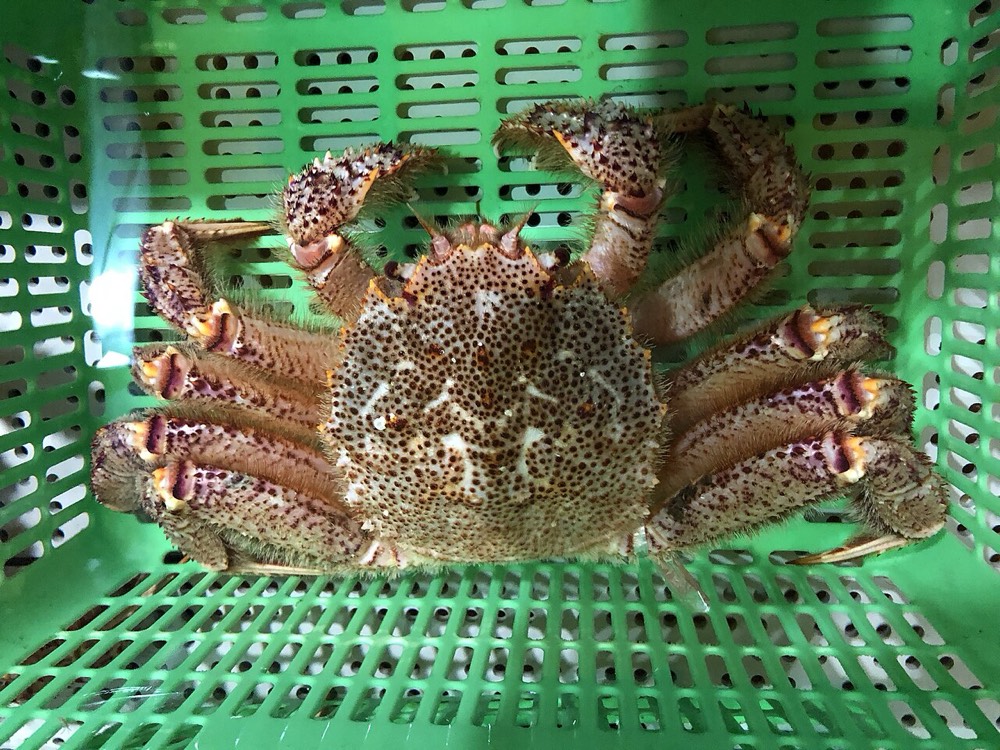
With king crab, set your expectations: the Hokkaido Shimbun has reported that most king crab and snow crab at Sapporo's central wholesale market is imported from Russia[14], and Sapporo City's late-2025 price outlook noted fewer Russian king crab imports and rising prices[15]. Imported does not mean worse, but "Hokkaido king crab" does not mean it was caught in Hokkaido.
Hanasaki crab is named after Hanasaki on the Nemuro Peninsula. Nemuro City's promotion page describes its short season and small catch, which earned it the nickname "phantom crab"[13]. In Sapporo in winter you will mostly see it frozen or already boiled at markets; for fresh catch, visit eastern Hokkaido in summer.
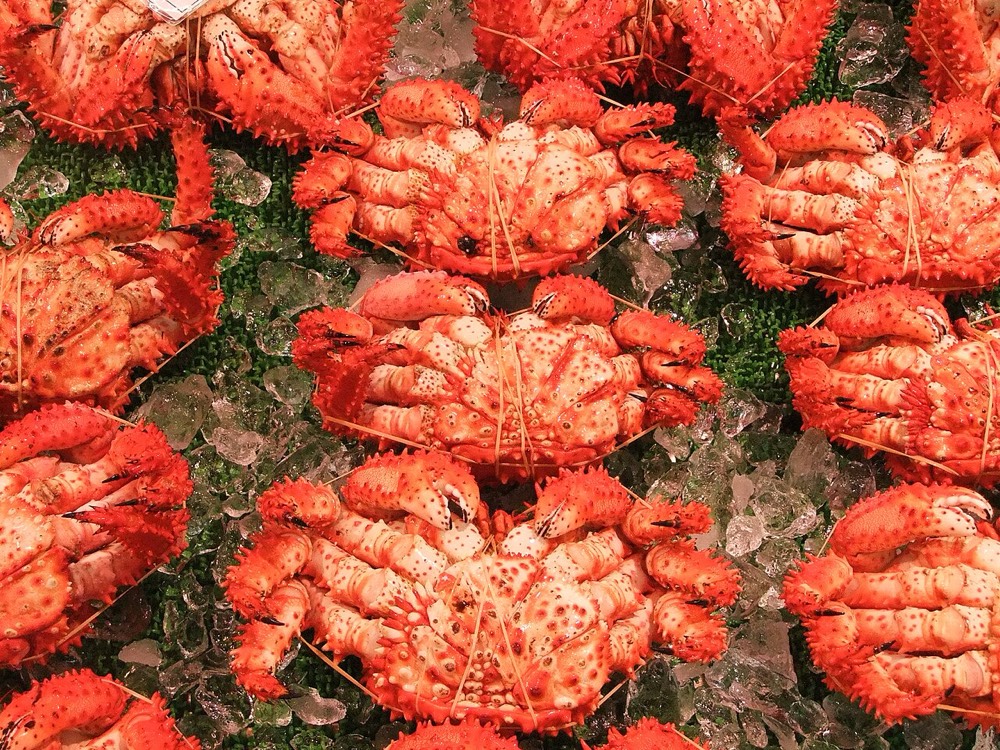
How to eat crab in Sapporo: specialty restaurants vs buffets vs markets
For a refined meal with private rooms, crab sashimi and crab hot pot, choose a specialty crab restaurant. For a fixed price and as much as you can eat, choose an all-you-can-eat crab buffet. For a morning visit with a seafood rice bowl, go to a market.
| Specialty restaurant course | All-you-can-eat crab | Market | |
|---|---|---|---|
| Examples | Sapporo Kani Honke, Hyosetsu no Mon, Sapporo Kaniya | Ebikani Kassen | Nijo Market, Curb Market |
| Price per person | Lunch about 4,900–9,300 yen; dinner about 7,800–26,000 yen | 9,500–10,500 yen | Seafood bowls about 2,000–6,000 yen; whole crab at market price |
| Time | Sapporo Kani Honke: 120-minute limit | 90 minutes, paid extension available | No limit |
| Variety | Sashimi, grilled, tempura, hot pot, rice porridge | Mostly boiled crab legs, plus sushi and fried dishes | Whole boiled crab, seafood bowls |
| Best for | First-timers, older travelers, hairy crab lovers | Big eaters, trying all three major crabs | Breakfast, tight budgets, picking your own crab |
| Booking | Recommended; essential for winter dinners | Recommended | Not needed |
Best crab restaurants in Sapporo: course prices, hours and booking
All three are in central Sapporo. Prices and hours are from official sources as of November 2026.
Sapporo Kani Honke Sapporo Ekimae Main Store: closest to Sapporo Station, widest menu
Sapporo Kani Honke is a crab restaurant chain with branches outside Sapporo too, including Sendai, Nagoya and Fukuoka. The Sapporo Ekimae Main Store is about a 5-minute walk from the south exit of JR Sapporo Station and right by Exit 13 of the subway's Sapporo Station. It is open 11:30 to 22:00, with last orders 30 minutes before closing[4]. Rooms range from small private rooms for one or two people to a hall for 60, convenient for families and older travelers.
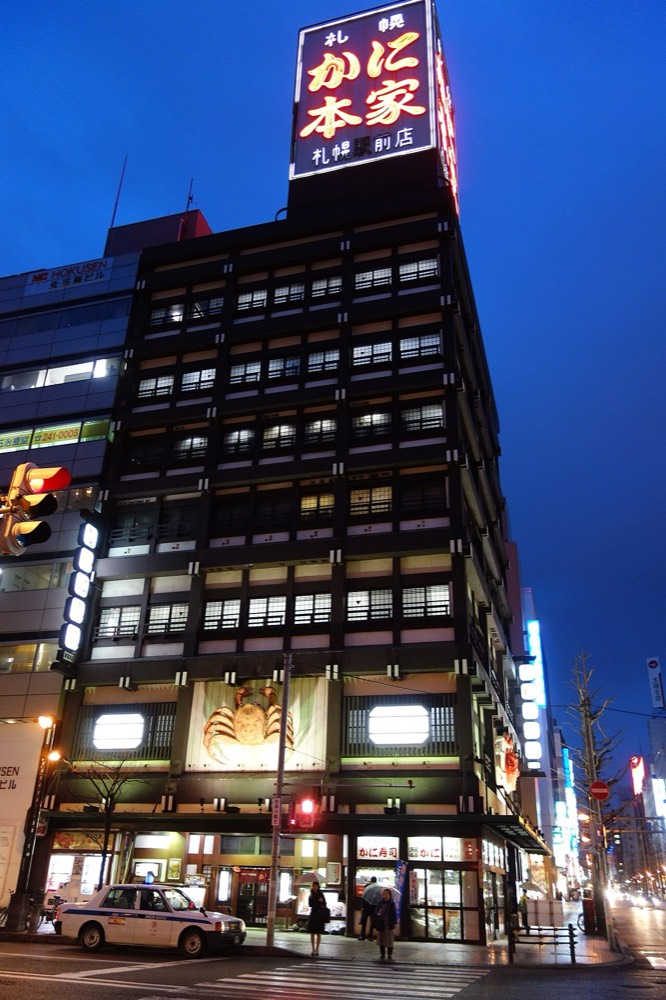
Tax-included prices from the official English menu (updated November 10, 2026)[5]:
| Type | Price (per person) | Highlights |
|---|---|---|
| Lunch courses (not served January 1–3) | 4,900 / 5,800 / 6,500 / 9,300 yen | Crab tofu, boiled snow crab, crab gratin, thick crab sushi roll and more |
| All-day kaiseki courses | 7,800 / 10,500 / 12,000 / 15,000 / 26,000 yen | King crab sashimi and grilled king crab start from the 15,000 yen course |
| Kanisuki (crab hot pot) courses | 8,800 / 11,500 / 15,000 / 25,000 yen | Crab hot pot as the main dish, finished with rice porridge |
| Children's courses (12 and under) | 1,950 / 2,800 yen | Crab rolled omelet, crab cream croquette and more |
A la carte, a medium platter of boiled king crab and snow crab is 8,500 yen and king crab kanisuki is 8,800 yen per person[6]. The official site states a 120-minute limit from arrival; walk-ins are accepted but you may wait when busy, and scarce items like hairy crab or San'in matsuba crab are best ordered when booking[7]. On December 31 it sells takeout only, with no dine-in[4]. Credit cards, transit IC cards and several QR code payment apps are accepted.
Hyosetsu no Mon: a king crab institution in Susukino since 1964
Hyosetsu no Mon is in Susukino at Minami 5-jo Nishi 2-chome and was founded in 1964[3]; king crab is its specialty. Its official crab courses range from a 9,130 yen crab shabu-shabu course to the 23,430 yen "Hokkaido Tannou" course[1]. Popular options:
- Three Major Crabs course: 14,520 yen, 9 dishes, minimum 2 people, with king, snow and hairy crab
- Hyosetsu no Mon king crab course: 15,620 yen, 10 dishes, king crab as the star
- Whole live hairy crab course: 13,200 yen, one whole live hairy crab per person
- "Zuwai first or taraba first?" course: 9,680 yen, a budget-friendly way to have two kinds of crab
Lunch is much better value than dinner: the Zeitaku Kani Lunch and Zeitaku Kani Shabu Lunch are 6,820 yen each and the Kani Shabu Lunch is 5,830 yen, served until 15:00 with last orders at 14:00[2]. Online booking is available on the official site; check its notices for hours and year-end changes.
Sapporo Kaniya Main Store: next to Susukino Station, open every day
Sapporo Kaniya Main Store is at Minami 4-jo Nishi 2-chome, about 2 minutes on foot from Exit 2 of Susukino Station on the Namboku subway line. According to the official Sapporo tourism site, it is open 11:00 to 15:00 (last orders 14:00) and 17:00 to 22:00 (last orders 21:30), every day of the year including New Year's Eve and New Year's Day[8], making it a good backup when other places close over the holidays. Its course details and prices were not available on a verifiable official page; see the Sapporo Kaniya official site for current information.
All-you-can-eat crab in Sapporo: time limits, prices and what to watch for
Sapporo's crab buffets cluster in Susukino, and about 10,000 yen for 90 minutes is the typical format. Ebikani Kassen has the most complete official information, so we use it as the example.
Ebikani Kassen Sapporo: three-crab buffet on the 12th floor in Susukino
Ebikani Kassen is on the 12th floor of the F-45 Building at Minami 4-jo Nishi 5-chome, a 3-minute walk from Exit 2 of Susukino Station on the Namboku line. It is open 16:00 to 23:00 and closes only over the New Year holidays[9]. Buffet prices are below (matching the Ebikani Kassen official menu in November 2026)[9]:
| Course | Tax-included price | Crab and other items |
|---|---|---|
| Set A | 9,500 yen | Hairy crab, snow crab legs + tempura, nigiri sushi, chawanmushi |
| Set B | 9,500 yen | King crab legs, snow crab legs + tempura, nigiri sushi, chawanmushi |
| Three crabs, 10,000 yen | 10,000 yen | Hairy crab, snow crab legs, king crab legs (crab only) |
| 10,000 yen with sides | 10,000 yen | Three crabs + tempura, nigiri sushi, chawanmushi |
| 10,500 yen | 10,500 yen | Three crabs + large shrimp and crab tempura, nigiri sushi, chawanmushi |
- 90 minutes; you can order more only after finishing the set portion. Extensions are 550 yen per person per 30 minutes.
- Unlimited drinks add 1,430 yen per person; elementary school children pay half, and preschoolers pay their age × 110 yen.
- The official Sapporo tourism site lists the buffet as available for 2 or more people[10].
- The restaurant's official menu notes that, due to soaring king crab prices, extra king crab legs are mainly ibaragani (a similar species in the same family). To make all extra legs genuine king crab, add a 6,000 yen per-person option, ordered by the whole table.
That last point is easy to miss: if king crab is the main reason you are going, budget about 16,000 yen per person, roughly the same as a king crab course at a specialty restaurant. The buffet suits big eaters, fans of hairy and snow crab, and anyone wanting to compare three crabs at once. Prices for other crab buffets mostly appear only on booking sites, so check the time limit, crab types and refill rules before choosing.
Eating crab at the market: Nijo Market and the Curb Market in brief
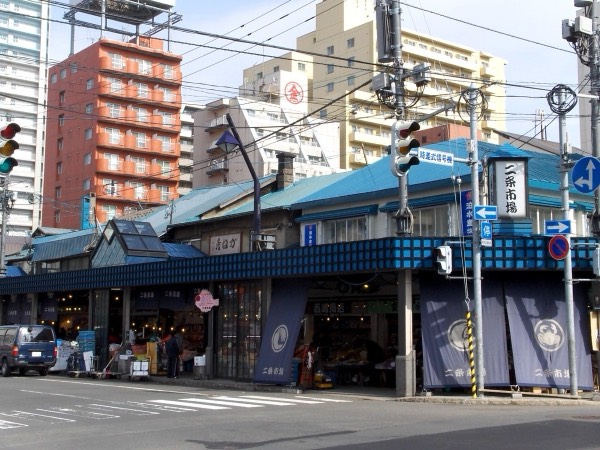
For breakfast, a tight budget, or picking out your own hairy crab, go to a market. Nijo Market is in the city center, opens around 7:00 and is walkable from Odori and Susukino; the Curb Market has about 60 shops and opens at 6:00, better for a dedicated breakfast trip and comparing prices[17]. Market crab is usually sold at market price or by weight, so confirm the total before buying and have the shop boil or cut it for you.
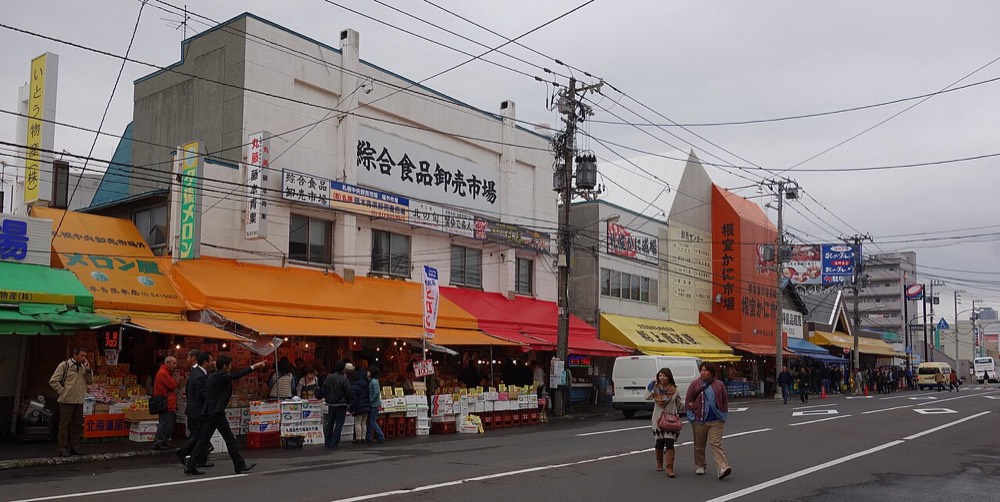
Which market to choose, seafood bowl prices, and how to pick hairy crab and king crab are covered in the Sapporo Nijo Market guide; for soup curry, ramen and other Sapporo must-eats, see the Sapporo food guide.
Sapporo crab prices and budgets: lunch, dinner and buffets
The cheapest way is a specialty restaurant lunch: Sapporo Kani Honke lunch courses start at 4,900 yen, while its all-day kaiseki starts at 7,800 yen. Here is roughly what to budget per person based on official prices (drinks excluded; buffet listed separately):
| Style | Budget per person (yen) | Examples |
|---|---|---|
| Market breakfast | 2,000–6,000 | Seafood bowl at Nijo Market or the Curb Market |
| Specialty restaurant lunch | 4,900–9,300 | Sapporo Kani Honke lunch course, Hyosetsu no Mon lunch |
| All-you-can-eat | 9,500–10,500 (+1,430 for drinks) | Ebikani Kassen |
| Specialty restaurant dinner (standard) | 9,000–15,600 | Hyosetsu no Mon Three Major Crabs course, Sapporo Kani Honke kaiseki |
| Specialty restaurant dinner (premium) | 20,000 and up | Whole hairy crab, San'in matsuba crab, premium courses |
A real example for two: lunch at Hyosetsu no Mon with the Kani Shabu Lunch comes to 11,660 yen for two; have ramen or soup curry for dinner and your crab spend stays around 12,000 yen. If both of you order Hyosetsu no Mon's Three Major Crabs course for dinner instead, the food alone is 29,040 yen, with drinks extra.
On a budget, "crab for lunch, something else for dinner" is the best value. Winter accommodation in Sapporo is also pricey, so factor in where you will eat crab when picking an area: from around Sapporo Station you can walk to Sapporo Kani Honke, while Susukino puts Hyosetsu no Mon, Sapporo Kaniya and the buffet within walking distance. Compare areas in where to stay in Sapporo.
Who should choose what?
- First time in Hokkaido, traveling with older relatives or kids: choose a specialty restaurant course — private rooms, crab already prepared, no shell-cracking needed, and Sapporo Kani Honke has children's courses.
- Big eaters on a fixed budget: a buffet is the best value, but mind the 90-minute limit and refill rules.
- Want genuinely local Hokkaido crab: order hairy crab, either a whole live one at a specialty restaurant or freshly boiled at a market.
- Not for buffets: people who are not good at cracking shells, only want king crab, or care whether the crab was frozen are usually less satisfied with buffets.
- Not for expensive courses: if you just want a taste of crab or are short on time, a market seafood bowl or crab sushi is enough.
Booking, crab etiquette and avoiding pitfalls
How to book a crab restaurant in Sapporo
- Decide the date, party size and course. Most specialty restaurants let you specify the course when booking; note that courses like the Three Major Crabs course require at least 2 people.
- Book through the restaurant's online booking or Japanese reservation sites such as Hot Pepper, Gurunavi or Tabelog; Sapporo Kani Honke also takes phone bookings (011-222-0018)[7].
- Order scarce items such as hairy crab or San'in matsuba crab when booking.
- If you cannot make it, cancel as early as possible using the same booking method; no-shows may be charged.
The Snow Festival period (early February) and the New Year holidays are the hardest times to book. If your trip overlaps with the Sapporo Snow Festival, book two to three weeks before departure.
Basic crab etiquette
- Put shells in the shell bowl provided, not straight onto the table.
- The crab fork and scissors are for scooping meat and cutting shells; ask staff to show you if unsure.
- Do not leave lots of food at a buffet; some restaurants only allow refills after you finish the previous round precisely to cut waste.
- Remove your shoes for tatami rooms; at Sapporo Kani Honke, if staff keep your shoes, hand over your number tag to collect them when leaving[7].
Avoiding pitfalls: market price, origin labels and frozen crab
- Ask about market price first: "jika" on the menu means there is no fixed price. Before ordering, ask staff for the price and weight of that crab ("Kore wa ikura desu ka").
- Ask about origin yourself: according to the Consumer Affairs Agency, fresh food sold at markets or supermarkets must show its origin, but restaurants have no origin labeling obligation[16]. To know whether it is from Hokkaido, ask "Sanchi wa doko desu ka".
- Frozen does not mean poor quality: much imported king crab and snow crab is shipped frozen, which is normal. If texture matters to you, order a small amount first at a buffet before deciding which crab to refill.
- Read crab names carefully: "hon-taraba" is genuine king crab, while similar species such as "ibaragani" look alike and cost less. Restaurants that state this clearly on the menu or refill rules are the safer bet.
How to plan it smoothly
For crab in Sapporo in winter, the smoothest plan is: on arrival day or the next day, have a specialty restaurant lunch course near Sapporo Station, then stroll Susukino and have ramen in the evening; on another morning, go to Nijo Market or the Curb Market for a seafood bowl and see what whole hairy crabs cost. If you want a whole hairy crab or San'in matsuba crab, order it when you book. The subway is the easiest way between central restaurants; if you will ride three or more times a day, see the Sapporo subway one-day pass. For more Hokkaido itineraries and seasonal events, start from the Hokkaido travel overview.
FAQ
How much does a crab meal in Sapporo cost per person?
Based on official tax-included prices in November 2026, specialty restaurant lunch courses run about 4,900 to 9,300 yen, standard dinner crab courses mostly 9,000 to 15,000 yen, and a whole hairy crab or premium course goes above 20,000 yen. All-you-can-eat crab costs about 9,500 to 10,500 yen, plus 1,430 yen for unlimited drinks.
Is all-you-can-eat crab in Sapporo worth it?
It suits big eaters who want king, snow and hairy crab in one sitting, usually within 90 minutes. The downsides are that it is mostly boiled crab legs with little variety, and some restaurants state that extra king crab legs are replaced with a similar species. If you care about texture and variety, a specialty restaurant course is usually more satisfying.
Is the king crab in Sapporo caught in Hokkaido?
Mostly not. The Hokkaido Shimbun has reported that most king crab and snow crab at Sapporo's central wholesale market is imported from Russia, and Sapporo City noted in 2025 that king crab imports had fallen and prices risen. For local Hokkaido crab, hairy crab is the safer choice; you can ask staff about the origin before ordering.
Do I need a reservation for crab restaurants in Sapporo?
Sapporo Kani Honke's official site says you can walk in without a booking, but winter dinners, weekends and the Snow Festival period often fill up, so book ahead by phone or a reservation site. The site also recommends ordering scarce items such as hairy crab or San'in matsuba crab when booking. Buffet restaurants have limited seating, so booking is advised there too.
How do I order crab marked jika (market price) without overpaying?
Jika means the price changes with supply, so it is not a fixed menu price. Before ordering, ask staff for the actual price and weight of that crab or platter, then ask them to prepare it. At markets where crab is sold by weight, ask the price per 100 grams and the total first. Restaurants in Japan are not required to label origin, so ask yourself about origin and whether it was frozen.
Sources
- Hyosetsu no Mon: Crab course menu: Course names, tax-included prices, number of dishes and ordering conditions (checked November 2026)
- Hyosetsu no Mon: Lunch courses: Lunch course prices and serving hours
- Hyosetsu no Mon: Company profile: Founded 1964, address, phone
- Sapporo Kani Honke: Sapporo Ekimae Main Store: Hours, 120-minute limit, access, booking methods, payment methods
- Sapporo Kani Honke: English Menu (updated November 10, 2026): Tax-included prices for lunch, kaiseki, kanisuki and children's courses
- Sapporo Kani Honke: Signature dishes: A la carte prices and seasons for king crab, hairy crab and San'in matsuba crab
- Sapporo Kani Honke: Guide to dining: Walk-ins accepted, booking and cancellation
- Welcome to Sapporo (official Sapporo tourism site): Sapporo Kaniya Main Store: Address, hours, access, open all year
- Welcome to Sapporo (official Sapporo tourism site): Ebikani Kassen: Buffet prices, 90-minute limit, extension fee, children's prices
- Welcome to Sapporo: Ebikani Kassen shop information: Buffet for 2 or more, hours, access, phone
- Hokkaido Government Department of Fisheries and Forestry: Hairy crab: Fishing seasons by area; only males with a carapace of 8 cm or more may be caught
- Japan Tourism Agency multilingual commentary database: Crab Species: King crab and hanasaki crab are lithodids; hairy crab is a true crab
- Nemuro City promotion page (Rakuten Ichiba Machiraku): Short hanasaki crab season, small catch and flavor
- Hokkaido Shimbun: Crab prices at Sapporo Central Wholesale Market (December 2021): Most market king crab and snow crab imported from Russia
- Sapporo City: Year-end price outlook for daily goods, FY2025 (December 19, 2025): Fewer Russian king crab imports and higher prices
- Consumer Affairs Agency Food Labeling Division: Origin labeling system for processed foods (December 2024): Fresh food must show origin; restaurants have no origin labeling obligation
- Welcome to Sapporo: Nijo Market and Curb Market: Opening hours and number of shops at both markets
Fares, opening hours and event dates can change. Information checked on 2026.11.23; please confirm with official sources before you go.