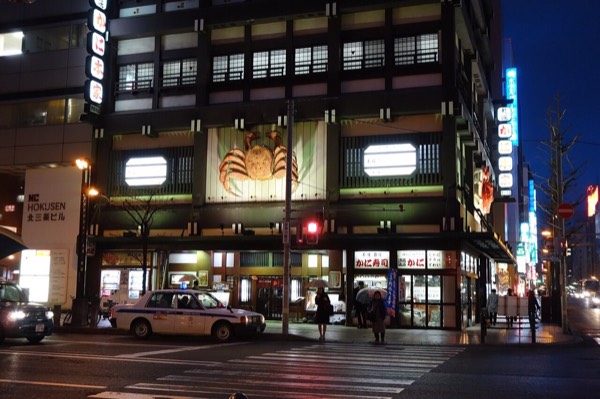
Sapporo Nijo Market Guide: Seafood Bowl Breakfast, Opening Hours, Buying Crab and the Curb Market Compared
Sapporo Nijo Market hours, access and seafood bowl prices, how to choose and buy crab, and how it compares with the Curb Market and Otaru's Sankaku Market.
Quick answer
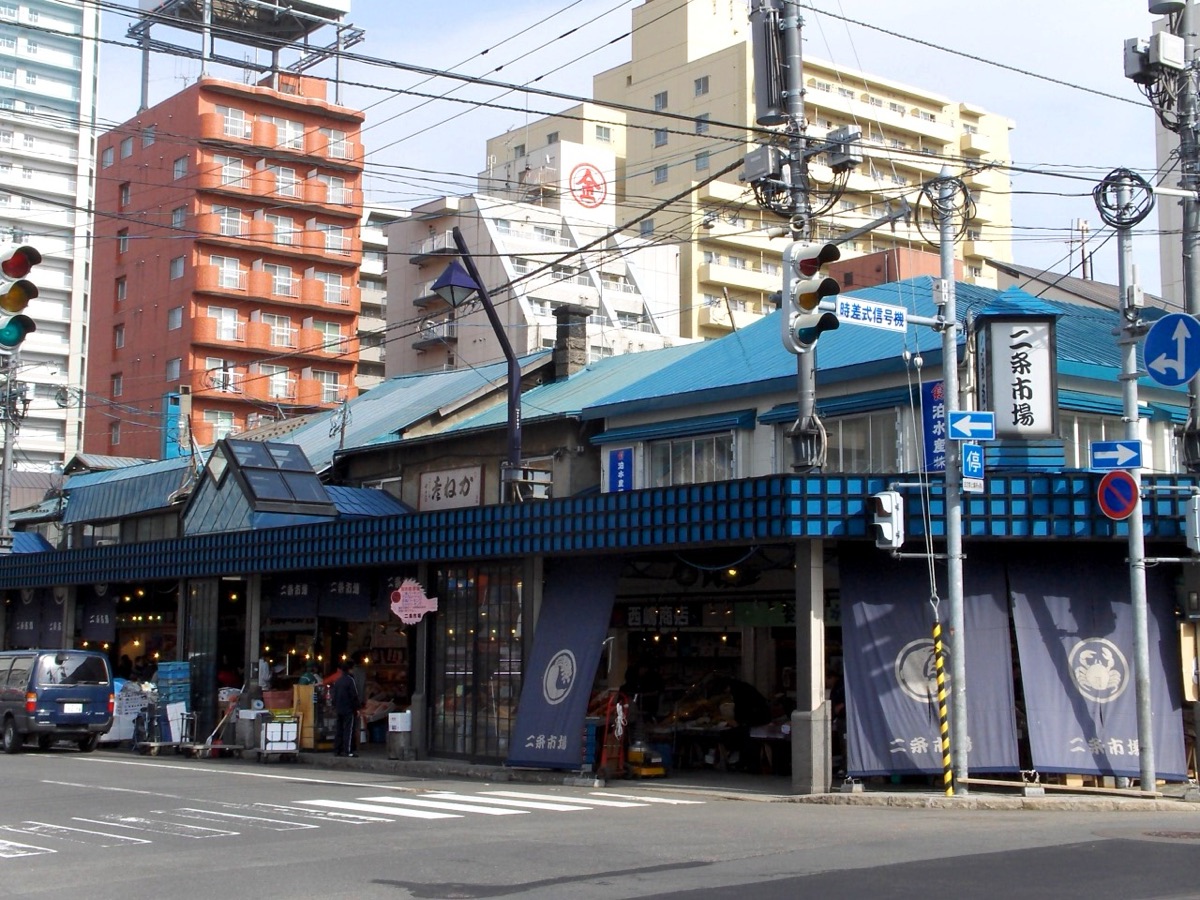
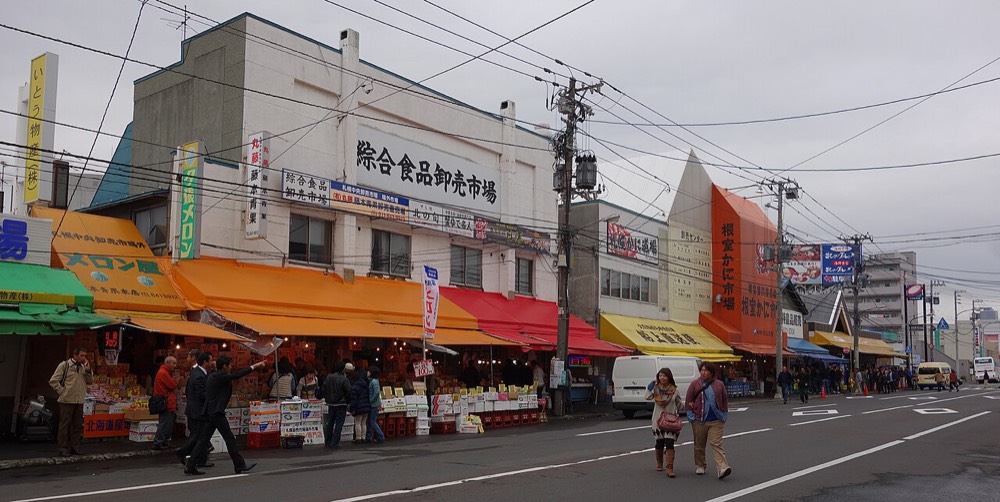
Sapporo's Nijo Market sits in the city centre at Minami 3-jo Higashi 1-2 chome. It opens roughly 7:00-17:00 (some eateries until about 21:00), every day, about 5 minutes on foot from Odori or Bus Center-mae subway stations. It is busiest 7:00-10:00, and a seafood bowl costs about 2,000-6,000 yen. For more choice and crab shopping, go to the Sapporo Curb Market (about 60 shops, from 6:00); if you are heading to Otaru, use Sankaku Market next to JR Otaru Station. Crab is often priced 'market price', so confirm the unit price and total before paying.
Sapporo's Nijo Market (Nijo Ichiba) is the most convenient seafood market in the city centre: about a 5-minute walk from Odori Park, open from around 7 a.m., and a favourite spot for a first Hokkaido seafood bowl breakfast. This guide covers Nijo Market's opening hours and access, real seafood bowl prices, how to choose and buy crab, how to avoid market-price traps, and how it compares with the Sapporo Curb Market and Otaru's Sankaku Market, so you can decide which one fits your hotel and itinerary. Winter is peak season for Hokkaido crab and seafood, and the earlier you go, the more choice you have.
Nijo Market, Curb Market or Sankaku Market? The Three Markets Compared
The short answer: if you are staying in the centre with limited time, choose Nijo Market; for a dedicated breakfast trip and crab price comparison, choose the Curb Market; if you are going to Otaru that day, choose Sankaku Market. All three are busiest in the morning and start closing in the afternoon, so none suits an evening visit.
| Item | Nijo Market (Sapporo) | Sapporo Curb Market | Sankaku Market (Otaru) |
|---|---|---|---|
| Location | Minami 3-jo Higashi 1-2 chome, Chuo-ku, Sapporo | Kita 11-jo Nishi 21 chome, Chuo-ku, next to the Central Wholesale Market | Inaho 3 chome, Otaru, next to JR Otaru Station |
| Hours | About 7:00-17:00; eatery street about 7:00-21:00 | About 6:00-15:00, large shops until 17:00; eateries from about 7:00 | 6:00-17:00 (eateries from about 7:00) |
| Closed | Open year-round (varies by shop) | Open year-round (varies by shop) | January 1 |
| Size | About 25 fish shops and 10 restaurants | About 60 shops | About 20 shops |
| Access | About 5 min on foot from Odori or Bus Center-mae subway stations | About 7 min on foot from Nijuyonken Station (Tozai Line); about 9-10 min from JR Soen Station | About 1 min on foot from JR Otaru Station |
| Atmosphere | Old-town market with vendors calling out; easy to continue sightseeing | Many shops to compare, lots of crab tanks; more of a "go there to shop" place | Small and compact, good for a bowl before or after the train |
| Best for | Staying in Odori or Susukino with only one morning | Buying crab, shipping seafood, driving (about 100 free parking spaces) | Otaru day trips, on the way to or from JR |
Based on Nijo Market's official site and Sapporo's official tourism site[1][2], and the official Hokkaido tourism pages for the Curb Market and Sankaku Market[4][6]. Official pages list the Curb Market's hours as either 6:00-15:00 or 6:00-17:00; in practice larger shops stay open later while smaller ones close in the afternoon, so to be safe, arrive before noon.
When it is not worth it: if you only want a reasonably priced seafood bowl and are not buying crab, there is no need to head west to the Curb Market; Nijo Market is enough. On the other hand, if you plan to buy a whole crab to take to your hotel or ship, the Curb Market lets you compare more shops and usually works out better.
Nijo Market Opening Hours and Access
Nijo Market is open roughly 7 a.m. to 5 p.m., with some eateries on the restaurant street open until around 9 p.m., every day of the year, though each shop sets its own hours[2]. The market's official site also gives about 7:00-17:00 and notes that hours vary by shop[1].
The market dates back to the early Meiji era, when fishermen from the Ishikari area came up the Ishikari River and began selling fresh fish here. A group of 13 shops later became the starting point of the market; it burned down in a major fire in 1902 and was rebuilt, giving it more than 125 years of history[1]. Today it spans Minami 3-jo Higashi 1 chome to Higashi 2 chome, with fresh fish and crab as well as produce, dried goods and souvenir shops, and standing bars, izakaya and seafood bowl shops in the inner lanes[2].
Access (walking times from the official site):
- Odori subway station (Namboku, Tozai and Toho lines): about 5 minutes from Exit 34.
- Bus Center-mae Station (Tozai Line): about 5 minutes from Exit 3.
- From Tanukikoji 1 chome: about 1 minute; Sapporo TV Tower and Odori Park are also about 5 minutes away[1].
There is an indoor entrance on the Sosei River side, which helps you avoid slush when it snows[3]. Visitors staying around Odori, Susukino or the south side of Sapporo Station can all walk here; for hotel areas, see where to stay in Sapporo.
What to Eat for Breakfast at Nijo Market: Seafood Bowl Prices and How to Order
The most popular breakfast at Nijo Market is the seafood bowl (kaisendon). A standard mixed bowl costs roughly 2,000-4,000 yen, while bowls piled with sea urchin often exceed 5,000 yen. For example, travel media Mapple, in an update from April 2024, listed a Nijo Market shop's "omakase kaisendon (jo)" at 3,800 yen and its fresh sea urchin bowl from 5,500 yen; seafood and salmon roe bowls at Curb Market shops mostly ranged from 2,000 to 4,500 yen[9]. These are 2024 prices and seafood prices have generally risen since, so check the shop's menu for 2026 prices.
How to think about what to eat at Nijo Market:
- First time: order a seafood bowl or a three-topping bowl (sea urchin, salmon roe and crab) to try Hokkaido's signature ingredients in one go.
- Sea urchin lovers: fresh uni has the most volatile price and is often marked "market price" (jika); ask today's price before ordering.
- Small appetite or want to try several places: some shops offer small bowls (kodon or mini-don), leaving room for grilled scallops or tastings elsewhere.
- No raw fish: recommended market items also include hokke (Atka mackerel), scallops and processed seafood, so non-raw eaters can order a grilled fish set meal[3].
Ordering tips: signboards at the entrance usually show prices and photos. Check whether miso soup is included and whether it is "market price" or a fixed price before you sit down. Some shops let you choose vinegared rice or plain rice; just say "sumeshi" or "shiromeshi".
How to Buy Crab at Nijo Market: Choosing Hairy, King and Snow Crab
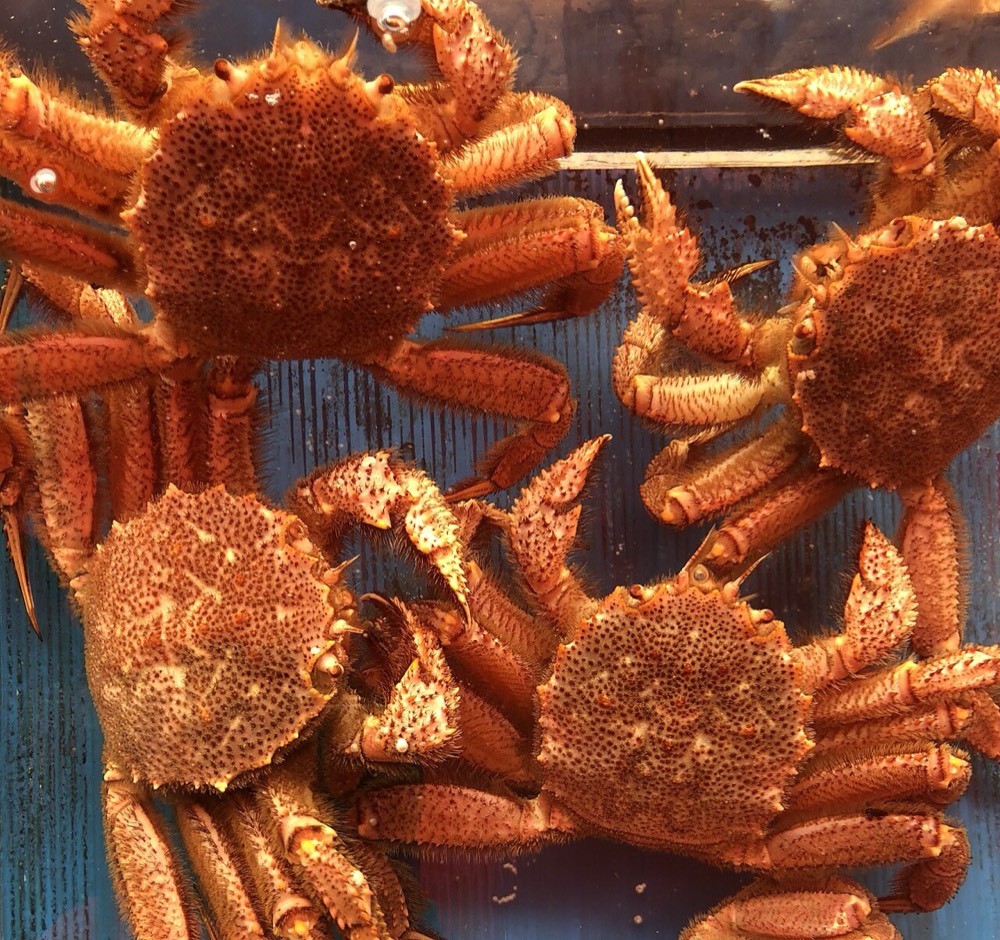
Before buying crab at Nijo Market or the Curb Market, decide three things: which type, whether to eat it there or take it away, and whether you want live or already boiled crab. The most common types in Sapporo's markets are hairy crab (kegani), king crab (tarabagani) and snow crab (zuwaigani).
| Type | Characteristics | What to check | Origin notes |
|---|---|---|---|
| Hairy crab (kegani) | Small, usually 350-500 g each; the crab "miso" (kani-miso) is the highlight | Lift it and shake gently; a heavier feel means more miso | Hokkaido only allows males with a carapace of 8 cm or more to be caught, so it is likely local |
| King crab (tarabagani) | The largest of the three, with thick, springy leg meat; the miso is generally not eaten | Squeeze the first leg joint; firm means full of meat | Market stock is mostly imported, mainly from Russia |
| Snow crab (zuwaigani) | Long thin legs with sweet meat | A hard shell and large claws mean fuller meat | Origins vary; ask the shop |
Selection tips are based on Hokkaido Walker's interview with a Curb Market shop[8]; hairy crab rules and seasons come from the Hokkaido Government Fisheries and Forestry Department[7]; that king crab is mostly Russian imports comes from a Hokkaido Shimbun market report[11].
When is hairy crab at its best?
Hairy crab is available in Hokkaido almost all year because different sea areas open in turn. According to the Hokkaido Government Fisheries and Forestry Department, the fishing season is roughly February-May in Soya, March-August in Abashiri, June-August in Iburi, December-April in Hidaka, and January-March and August-December in Tokachi and Kushiro[7]. In other words, if you visit Sapporo in winter, the hairy crab in the markets mostly comes from the Hidaka, Tokachi and Kushiro areas. For snow crab seasons and producing areas on the Sea of Japan side, see the Japan snow crab season guide.
Why is king crab at Nijo Market so expensive?
King crab is the most expensive crab at the market. The City of Sapporo's year-end price survey, published in December 2025, reported that fewer Russian king crab imports plus the weak yen pushed prices up about 10 percent from the previous year[10]. Shops usually price it as "market price" or by weight, and a whole king crab can easily cost tens of thousands of yen. If you just want a taste, buying one or two legs (ashi) or ordering a king crab bowl costs far less.
Eat it there, take it away, or ship it?
- Eat it on the spot (recommended): many fish shops have an eat-in corner where staff will cut and crack the boiled crab so you can finish it there, with no worries about cooling or quarantine.
- Take it to your hotel: ask the shop to cut it and pack it in a box with ice packs; hotel rooms rarely have a large fridge, so eat it the same day.
- Ship to an address in Japan: many shops at both Nijo Market and the Curb Market offer paid shipping[3][4], useful for sending it to your next hotel or to friends in Japan. Confirm the delivery date and whether the hotel accepts refrigerated parcels.
- Live vs boiled: live crab can be boiled by the shop, with waiting times varying by shop; already boiled crab (hama-yude) can be eaten right away. For eating while travelling, boiled is the easiest.
Check quarantine rules before taking crab home
Taking crab out of Japan depends on the rules of the country you are entering, and restrictions on seafood vary widely, so check your destination's customs and quarantine authorities for current rules. For travellers entering Taiwan, as an example: according to Taiwan's Customs Administration, live animals and live aquatic animals may not be brought in, while dried or processed aquatic products are excepted; agricultural, livestock and aquatic products are limited to 6 kg per traveller, and animal and plant products must be declared through the red channel[12]. Whether boiled crab counts as "processed" is decided by quarantine officers on the spot, so if unsure, do not bring it. Also, parcels cooled with dry ice are subject to separate airline rules, so check with your airline before flying. If you are departing from New Chitose, you can also buy vacuum-packed souvenirs at the airport; see the New Chitose Airport guide.
How to Avoid Overpaying: Market Prices, Weight Labels and Haggling Myths
It is true that Nijo Market is pricier than supermarkets, and it is often described as charging "tourist prices". But in most cases, the gap comes from buying without asking clearly rather than shops making up prices. These steps greatly reduce the risk:
- Check the price unit: a price tag may be per crab (ippai), per 100 g or per kg; the same number can mean very different totals.
- Always ask about "market price": when you see "jika", ask "How much is this?" (kore wa ikura desu ka) and whether preparation is included.
- Have the shop weigh it and state the total first: for crab sold by weight, ask for the total after weighing, and only nod once you agree.
- Do not feel obliged after tasting: free samples carry no obligation to buy; you can politely say "Let me think about it" (chotto kangaemasu).
- Note prices on your phone: check two or three shops before buying; the Curb Market, with more shops, offers the most room to compare.
- Ask before touching crab: shops explain that you should ask before handling live crab, and some provide gloves[8].
How to Plan a Morning at Nijo Market: Two Realistic Schedules
Nijo Market is liveliest from early morning to around 10:00 and quieter after noon; at any of the markets, some items may sell out after 11:00[2]. Here are two winter plans for travellers staying around Odori or Susukino:
Plan A: Nijo Market only, then central Sapporo sightseeing
| Time | Plan | Notes |
|---|---|---|
| 7:30 | Arrive at Nijo Market and do a lap to check menus and prices | Sunrise is late in winter and pavements may be icy |
| 7:45 | Choose a shop for a seafood bowl breakfast | Popular shops may have a queue |
| 8:30 | Browse fish shops, buy crab legs or try samples, decide on shipping | Arrange any shipping now |
| 9:15 | Walk about 5 minutes to Sapporo TV Tower and Odori Park | Photos and a walk to settle breakfast |
| 10:00 | Shopping around Tanukikoji and Sapporo Station | Lunch can be ramen or soup curry |
Plan B: A dedicated trip to the Curb Market for breakfast and crab
| Time | Plan | Notes |
|---|---|---|
| 7:00 | From Odori, take the Tozai Line 5 stops west to Nijuyonken Station | About 7 minutes' walk to the market |
| 7:20 | Do a lap comparing crab prices, then pick an eatery for breakfast | Most eateries open from 7:00 |
| 8:30 | Decide on crab: eat there, take to your hotel or ship | Confirm the total price and delivery date with the shop |
| 10:00 | Head back to the centre, or continue from JR Soen Station | Free parking if you drive |
For Sapporo's other must-eats such as soup curry, Genghis Khan lamb barbecue and ramen, pair this with the Sapporo food guide; for winter itineraries and clothing, see the Hokkaido in December guide.
Going to Otaru? Is Sankaku Market Worth It?
If you are going to Otaru that day, Sankaku Market is right next to JR Otaru Station, about 1 minute on foot. About 20 shops are packed along a passage under a sloping roof, open 6:00-17:00 and closed only on January 1. The eateries serve sea urchin bowls, salmon roe bowls and grilled fish set meals, and most shops can ship purchases[6].
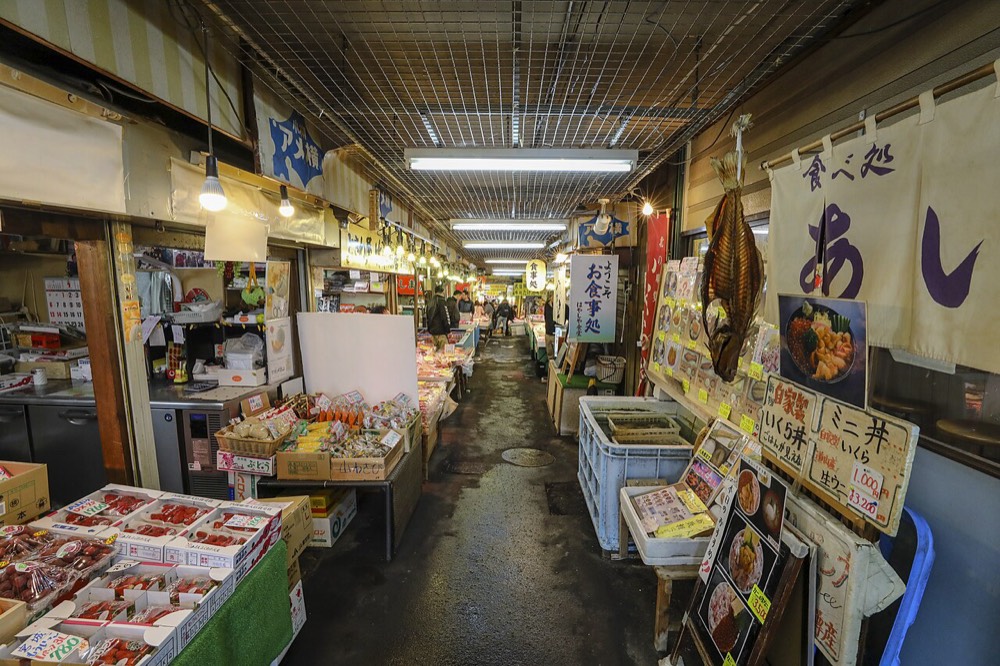
Sankaku Market's advantage is that it needs no detour: you can eat as soon as you get off the train and shop again before heading back. The downsides are the small space and narrow passage, and popular eateries can have queues in peak season. You do not need to visit all three markets on one trip: with only two or three nights in Sapporo, pick either Nijo Market or the Curb Market, and eat at Sankaku Market on your Otaru day trip to try a different style. For Otaru transport and routes, see the Otaru day trip guide.
Before You Go
- The earlier the better: seafood bowl and crab choices are greatest in the morning; in winter, 7:00-9:00 is the best window.
- Carry some cash: payment methods vary by shop; many take cards or e-money, but small shops and stalls may not, so cash is the safer bet.
- Watch the pavements in winter: sidewalks around the markets are often icy; wear non-slip shoes, especially when carrying a crab box.
- Buy only what you can eat: hotels rarely have a fridge big enough for a whole crab, so eat it the same day or have the shop ship it.
- Go by the shop's label: prices in this guide are reference ranges; actual prices depend on the day's catch and each shop, so confirm the total before paying.
FAQ
What time does Nijo Market open, and when should I go for breakfast?
Sapporo's official tourism site lists about 7:00 opening, with the eatery street open about 7:00-21:00, varying by shop. For a seafood bowl breakfast, arrive around 7:30. It is busiest before 10:00 and quieter after noon; some items start selling out after 11:00.
Nijo Market or the Sapporo Curb Market: which is better?
If you are short on time or staying around Odori or Susukino, go to Nijo Market: it is walkable and you can continue to the TV Tower and Tanukikoji. If you want a dedicated breakfast trip, to compare crab prices across shops, or to ship seafood, choose the Curb Market, with about 60 shops opening from 6:00.
Can I take crab bought at the market on a plane?
Whether you can, and how it must be packed, depends on your airline's rules; dry ice used for cooling is a restricted item with quantity limits, so check before you fly. Taking crab abroad also depends on your destination's quarantine rules: for example, Taiwan bans live aquatic animals. The safest options are to eat it in Japan or have the shop ship it to an address in Japan.
Is the king crab at the market from Hokkaido?
Not necessarily. The Hokkaido Shimbun reported that most king crab and snow crab at Sapporo's Central Wholesale Market is imported, mainly from Russia. If you want Hokkaido-caught crab, hairy crab is the safer bet. You can simply ask the shop about the origin (sanchi wa doko desu ka).
Is Nijo Market overpriced, and will I get ripped off?
Prices are usually higher than supermarkets, but most shops display them. Trouble tends to come from crab and seafood marked 'market price' or sold by weight: before ordering, ask the price per crab or per 100 g and the total, and only then have it prepared or boiled.
Sources
- Sapporo Nijo Market official website: About Nijo Market: History, opening hours, open year-round, walking times from stations, warning about phone scams
- Welcome to Sapporo: Nijo Market and the Curb Market: Hours, access, number of shops and best times for both markets
- Welcome to Sapporo: Nijo Market facility page: About 25 fish shops and 10 restaurants, recommended items, paid shipping
- HOKKAIDO LOVE! (official Hokkaido tourism site): Sapporo Central Wholesale Market Curb Market: Hours, 100 free parking spaces, access, nationwide shipping
- Sapporo Curb Market official website: About 60 shops, opening hours, shipping and shop listings
- HOKKAIDO LOVE!: Otaru Sankaku Market: About 20 shops, 6:00-17:00, closed January 1, 1 minute from Otaru Station
- Hokkaido Government Fisheries and Forestry Department: Hairy crab: Fishing seasons by area; only males with a carapace of 8 cm or more may be caught
- Hokkaido Walker: How to choose crab at the market (2017): A Curb Market shop's tips for choosing hairy, king and snow crab
- Mapple Travel Guide: Seafood bowls at Sapporo's markets (updated April 2024): Seafood bowl prices at Nijo Market and the Curb Market
- City of Sapporo: Year-end price outlook for daily goods, FY2025 (December 19, 2025): Fewer Russian king crab imports, prices up about 10 percent
- Hokkaido Shimbun: Crab prices at Sapporo Central Wholesale Market (December 2021): Most king and snow crab at the market is imported from Russia
- Taichung Customs Office, Customs Administration (Taiwan): Arrival declaration guide: Limits on agricultural and aquatic products and the ban on live aquatic animals when entering Taiwan
Fares, opening hours and event dates can change. Information checked on 2026.11.09; please confirm with official sources before you go.