Which Sapporo Day Pass to Buy: Subway 1-Day Pass, Donichika Weekend Ticket, Streetcar 1-Day Pass and Contactless Card Riding Compared
Which Sapporo day pass? The subway 1-day pass is 830 yen, Donichika 520 yen on weekends, and contactless cards cap at the same amounts. Plus streetcar passes.
Quick answer
Sapporo's day passes come in two separate sets, subway and streetcar, with no official combined pass. The Subway-only 1-Day Pass costs 830 yen for adults (any day) and the Donichika Ticket 520 yen (Saturdays, Sundays, national holidays and Dec 29–Jan 3). Since March 26, 2026, tapping a contactless card on the subway stops charging once the same card reaches 830 yen in a day (520 yen on weekends and holidays), so most adult visitors don't need a paper pass. The streetcar is 230 yen a ride and its 1-day pass 570 yen; on weekends and holidays card fares cap at 460 yen.
Whether a Sapporo day pass is worth buying comes down to how you pay your fares: since March 2026, tapping a contactless credit card on the Sapporo Municipal Subway stops charging once you reach 830 yen in a day (520 yen on weekends and holidays), the same as the paper day passes, so most adult visitors can skip buying one. This guide lists every option, the Subway-only 1-Day Pass, the Donichika Ticket (weekend pass), the Streetcar 1-Day Pass, the Dosanko Pass, contactless card riding and IC cards, works out how many rides it takes to break even using real single fares, and tests three common sightseeing days to see which ticket wins.
What Sapporo day passes are there? 2026 fare table
In short: Sapporo's day passes come in two separate sets, subway and streetcar (tram), each valid only on its own lines. Among the tickets currently listed by the Sapporo City Transportation Bureau and the streetcar operator, there is no combined subway + streetcar day pass, and none of them covers city buses[1][6].
| Ticket / method | Adult | Child | Valid days | Coverage | How to get it |
|---|---|---|---|---|---|
| Subway-only 1-Day Pass | 830 yen | 420 yen | Any day | All 3 subway lines | Ticket machines (weekdays only), station offices, commuter pass offices |
| Donichika Ticket | 520 yen | 260 yen | Sat, Sun, national holidays, Dec 29–Jan 3 | All 3 subway lines | Ticket machines, station offices, commuter pass offices; cash only |
| Contactless card (subway) | Cap of 830 yen on weekdays, 520 yen on weekends/holidays | Not available | Any day | All 3 subway lines | Tap a contactless card or phone |
| Streetcar 1-Day Pass | 570 yen | 290 yen | Any day | Entire streetcar line | On board, ticket offices, mobile version |
| Dosanko Pass | 460 yen (1 adult + 2 children) | Same | Sat, Sun, national holidays, Dec 29–Jan 3 | Entire streetcar line | Ticket offices, mobile version |
| Streetcar 24-hour Pass | 840 yen | 420 yen | 24 hours from first use | Entire streetcar line | Mobile only |
| Contactless card (streetcar) | Cap of 460 yen on weekends/holidays, no weekday cap | Not available | Any day | Entire streetcar line | Tap when getting off |
The prices and sales points of the two subway passes come from the Sapporo City Transportation Bureau[3][5], the card caps from the bureau's contactless riding page[4], and the streetcar tickets from the Sapporo Transportation Promotion Corporation's fare page[6]. Note that the Subway-only 1-Day Pass also works on weekends, but the Donichika Ticket is 310 yen cheaper then, and ticket machines don't sell the 830-yen pass on weekends and holidays[5].
How much is a single fare? How many rides make a Sapporo subway day pass worth it
In short: for central Sapporo (zone 1, 210 yen), the day pass pays off on the 4th ride on weekdays and the 3rd ride on weekends. With a credit card the cap applies automatically, so you don't need to do the maths.
The Sapporo Municipal Subway charges by distance zones. Adult single fares are[1]:
| Zones | Adult | Child | Typical trips (from the zone table) |
|---|---|---|---|
| 1 | 210 yen | 110 yen | Sapporo–Odori, Odori–Susukino, Odori–Maruyama-koen |
| 2 | 250 yen | 130 yen | Sapporo–Maruyama-koen, Susukino–Maruyama-koen |
| 3 | 290 yen | 150 yen | Sapporo–Miyanosawa, Odori–Miyanosawa |
| 4 | 330 yen | 170 yen | Outer suburban stations |
| 5 | 360 yen | 180 yen | Outer suburban stations |
| 6 | 380 yen | 190 yen | End to end of the lines |
The trips above were looked up in the official zone table[2]. Break-even points:
| Trips you make in a day | 830-yen weekday pass | 520-yen Donichika Ticket |
|---|---|---|
| All zone 1 (210 yen) | Pays off on 4th ride (840 yen) | Pays off on 3rd ride (630 yen) |
| All zone 2 (250 yen) | Pays off on 4th ride (1,000 yen) | Pays off on 3rd ride (750 yen) |
| All zone 3 (290 yen) | Pays off on 3rd ride (870 yen) | Pays off on 2nd ride (580 yen) |
Sapporo Station, Odori and Susukino are only one or two stops apart, and many visitors only take two or three rides a day, in which case paying per ride is cheaper. On weekends, three rides almost always make the Donichika Ticket worthwhile.
Riding the Sapporo subway with a credit card: an automatic cap that works like a free day pass
In short: an adult with a contactless credit card gets "pay as you go, never more than the day pass price", without having to guess how many rides you'll take.
According to the Sapporo City Transportation Bureau[4]:
- Start dates: contactless riding opened on April 26, 2025 at all 49 stations as a trial; the daily cap was added on March 26, 2026.
- Accepted cards: contactless Visa, Mastercard, JCB, American Express, Diners Club, Discover and UnionPay cards, plus phones and wearables with those cards set up. Some debit and prepaid cards work if the balance is sufficient.
- Cap amounts: each day runs from 3:00 a.m. to 2:59 a.m. the next day. Once the total reaches 830 yen on weekdays, or 520 yen on weekends, holidays and the New Year period, no further fares are charged that day, with no registration needed[8].
- Same device only: the same card number is counted separately on a physical card and in a phone wallet. If you tap your phone in the morning and the plastic card at night, the totals won't combine.
- Adult fares only: child fares, welfare discounts and transfer discounts don't apply, and each card can only be used by one person.
Use gates with a contactless sticker on the reader and a blue mat on the floor in front. Hold your card on the reader until the light turns from blue to green, then walk through; tap the same card when you exit[4]. Fares are billed together a day or more later, and the bureau suggests registering on the Q-move website to check your ride history, which ticket machines cannot show[4].
When is a paper day pass still better? When travelling with children (cards always pay adult fares), when one person wants to pay for companions, when you only have cash or an IC card, or when you prefer a fixed daily transport budget.
How to ride the Sapporo streetcar: Streetcar 1-Day Pass, Dosanko Pass and the weekend card cap
In short: the streetcar is 230 yen a ride, so on weekdays the 570-yen Streetcar 1-Day Pass only pays off from the third ride. On weekends and holidays, paying by credit card stops charging after the second ride (460 yen), which is even cheaper than the pass.
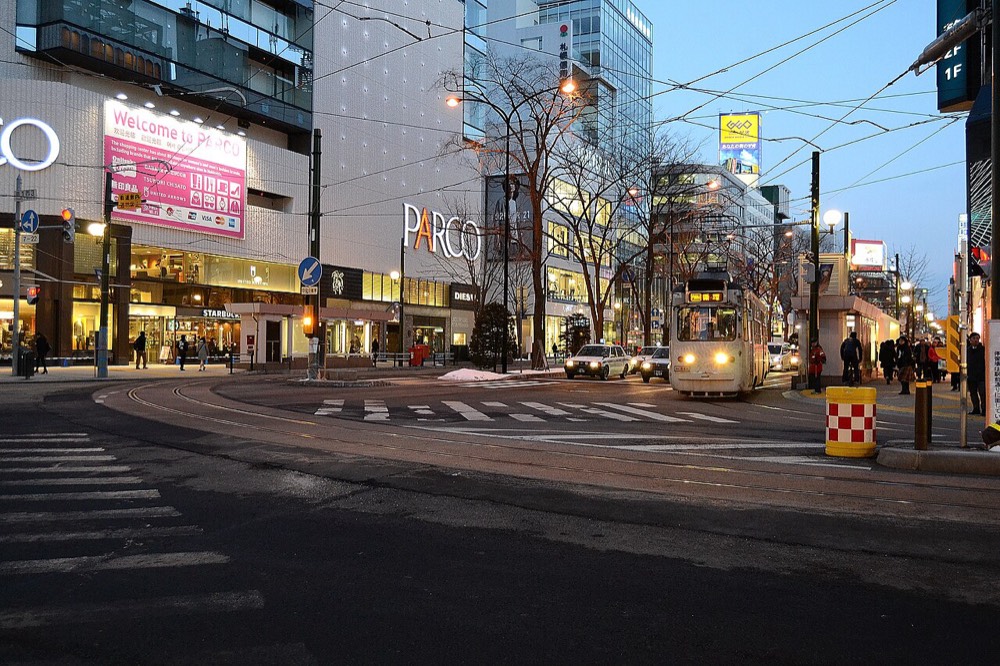
The Sapporo Streetcar is a loop line around the southern part of the city centre, stopping at Nishi 4-chome, Susukino and Ropeway-iriguchi (for the Mt. Moiwa ropeway), among others. Fares went up in December 2024, from 200 to 230 yen for adults and from 100 to 120 yen for children[9]; anything online saying "200 yen" is out of date.
Key points:
- Check the direction first: the line runs as the inner loop (anticlockwise) and outer loop (clockwise), with separate platforms. Most stops sit in the middle of the road, so watch for traffic when crossing.
- Pay when getting off: cash, IC cards such as SAPICA, Kitaca and Suica, or credit cards. The fare box gives no change, so use the change machine on board beforehand.
- Tap your credit card only when getting off: since April 27, 2026 cards work on all cars and lines. You don't tap when boarding; tap once on the dedicated reader inside the car when you get off[7]. Tell the driver before tapping if paying for several people, a child or a welfare discount[6].
- Weekend and holiday cap: on Saturdays, Sundays, national holidays and Dec 29–Jan 3, once the same card reaches 460 yen (two rides) that day, no further fares are charged; when one card pays for several people, only one adult gets the cap[7]. There is no cap on weekdays.
The paper Streetcar 1-Day Pass (570 yen adults, 290 yen children) is valid only on the day of purchase and is sold on board and at designated ticket offices; the mobile version is sold via the Norikae Annai app or the Gurutto Hokkaido website[6]. For a weekend with kids, the Dosanko Pass at 460 yen covers one adult and two children all day and is the cheapest option.
The streetcar will also adjust the intervals of some weekday evening inner-loop trams from December 1, 2026; first and last trams and the weekend timetable stay the same[10]. If you're in a hurry in the evening, check the stop timetable before you go.
Subway + streetcar transfers: an IC card beats a credit card
In short: on a single journey that changes from the subway to the streetcar, an IC card or transfer ticket gets the transfer fare, saving up to 80 yen compared with paying separately; credit cards get no transfer discount.
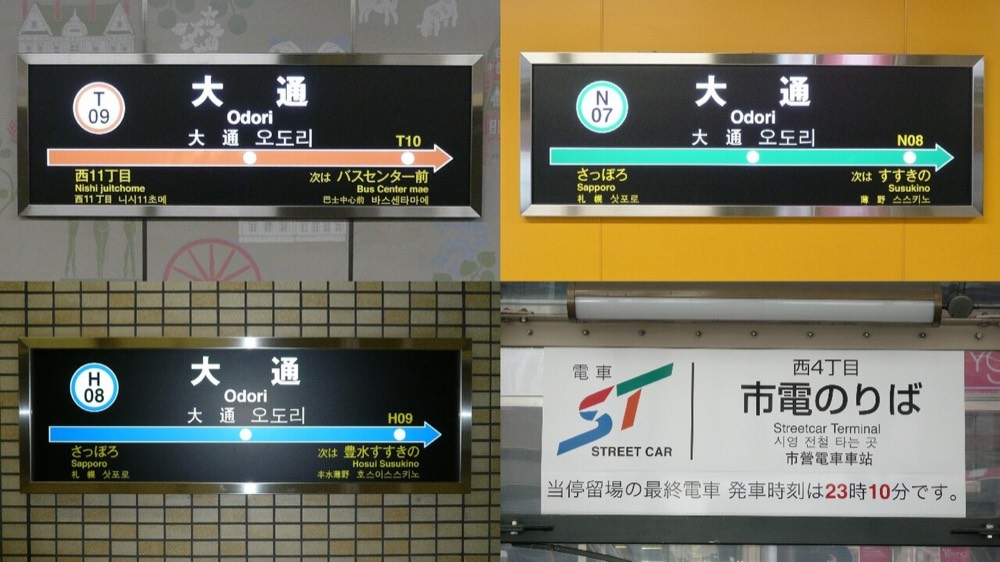
Odori Station is next to the Nishi 4-chome streetcar stop, and Susukino Station is next to the Susukino stop; these are the most common transfer points. The official subway + streetcar transfer fares are[1][6]:
| Subway zones | Transfer fare (adult) | Paid separately (adult) | Difference |
|---|---|---|---|
| 1 | 360 yen | 210 + 230 = 440 yen | Save 80 yen |
| 2 | 400 yen | 250 + 230 = 480 yen | Save 80 yen |
| 3 | 440 yen | 290 + 230 = 520 yen | Save 80 yen |
| 4 | 480 yen | 330 + 230 = 560 yen | Save 80 yen |
Paper transfer tickets are sold at subway ticket machines and on the streetcar. Both the subway and the streetcar state that card riding gets no transfer discount[4][7], so a subway-to-streetcar round trip costs 160 yen more by credit card than by IC card. To confirm exactly when IC card transfers apply, you can ask the Sapporo City Transportation Information Center before riding.
Three sample Sapporo days: which ticket is cheapest?
In short: a day pass only wins if you ride 4+ times on a weekday or 3+ times on a weekend. When your day mixes subway and streetcar, an IC card with the transfer fare is often the lowest price. All figures are for one adult.
Day A: Maruyama Zoo + shopping in Odori + dinner in Susukino (starting from Sapporo Station)
| Time | Trip | Single fare |
|---|---|---|
| 9:30 | Sapporo → Maruyama-koen (change to the Tozai Line at Odori) | 250 yen |
| 10:00–14:00 | Walk about 15 minutes to Maruyama Zoo, or take a JR bus about 5 minutes from bay 4 of Maruyama Bus Terminal[11] | (bus extra) |
| 14:30 | Maruyama-koen → Odori | 210 yen |
| 17:30 | Odori → Susukino | 210 yen |
| 20:30 | Susukino → Sapporo | 210 yen |
The subway total is 880 yen. On a weekday, the 830-yen day pass and a credit card both come to 830 yen, saving 50 yen. On a weekend or holiday, the Donichika Ticket and a card both come to 520 yen, saving 360 yen. Odori to Susukino is only a 10-odd-minute walk through the underground shopping streets; skip that ride and the weekday total is 670 yen, best paid by IC card or credit card.
Day B: Shiroi Koibito Park + Sapporo White Illumination in Odori
| Time | Trip | Single fare |
|---|---|---|
| 13:00 | Sapporo → Miyanosawa (change to the Tozai Line at Odori) | 290 yen |
| 13:30–16:30 | Visit Shiroi Koibito Park, about 7 minutes' walk from Miyanosawa Station | — |
| 16:45 | Miyanosawa → Odori | 290 yen |
| 17:15–19:30 | Walk around the Sapporo White Illumination and the Christmas market | — |
| 19:45 | Odori → Sapporo (or walk the underground passage) | 210 yen |
The subway total is 790 yen. On a weekday that's under 830 yen, so a day pass would lose you 40 yen; just use an IC card or credit card. On a weekend or holiday, the Donichika Ticket or the card cap brings it to 520 yen, saving 270 yen.
Day C: Mt. Moiwa night view (staying around Odori or Susukino)
| Time | Trip | Single fare |
|---|---|---|
| 16:00 | Streetcar Nishi 4-chome → Ropeway-iriguchi | 230 yen |
| 16:15 | Take the free shuttle bus or walk to the ropeway base station, then ride up Mt. Moiwa | Ropeway extra |
| 19:00 | Ropeway-iriguchi → Nishi 4-chome or Susukino | 230 yen |
The streetcar round trip is 460 yen. On a weekend or holiday, a credit card caps on the second ride, so heading somewhere else for dinner afterwards costs nothing more; with two children, buy the Dosanko Pass for 460 yen. On a weekday the round trip is just 460 yen, and the 570-yen Streetcar 1-Day Pass would only pay off on a third ride. If you're staying near Sapporo Station and take the subway to Odori then the streetcar, the IC card transfer fare is 360 yen each way, 720 yen return; by credit card it's 210 + 230 twice, 880 yen, a 160-yen difference. If you'd rather not transfer, walking the underground passage from Sapporo Station to Odori takes about 10 minutes, and you only pay the streetcar fare.
Where to buy a day pass: buying and using it step by step
In short: subway passes are quickest to buy from station ticket machines, but on weekends and holidays the 830-yen pass is only sold at counters; the Donichika Ticket is cash only.
- Find a ticket machine: subway ticket machines sell the Donichika Ticket; the Subway-only 1-Day Pass is sold from machines on weekdays only, and on weekends and holidays you need a station office or commuter pass office[5].
- Bring cash: the bureau states the Donichika Ticket can only be paid in cash, not by IC card or credit card[3].
- Insert the ticket at every gate: put the paper pass through the gate each time you enter and exit, take it back, and keep it until your last ride.
- Valid past midnight on New Year's Eve: a Donichika Ticket first used on December 31 after the first train can be used until the last train after 2 a.m. on New Year's Day[3].
- Refunds for unused tickets only: a used Donichika Ticket can't be refunded or exchanged for another ticket[3].
- Streetcar pass: buy the paper version on board or at a ticket office, valid that day only; buy the mobile version in the app or on the website and use it on your phone[6].
Each adult can also bring up to four preschool children free on the subway or streetcar, as long as they ride the same section[1]. JR trains from New Chitose Airport into the city are not covered by any Sapporo day pass; for airport transport and connection times, see our New Chitose Airport guide.
Getting around in winter: why the Sapporo subway copes best with snow
In short: from December to March, make the subway the backbone of your day, and use the streetcar and buses for short or unhurried trips.
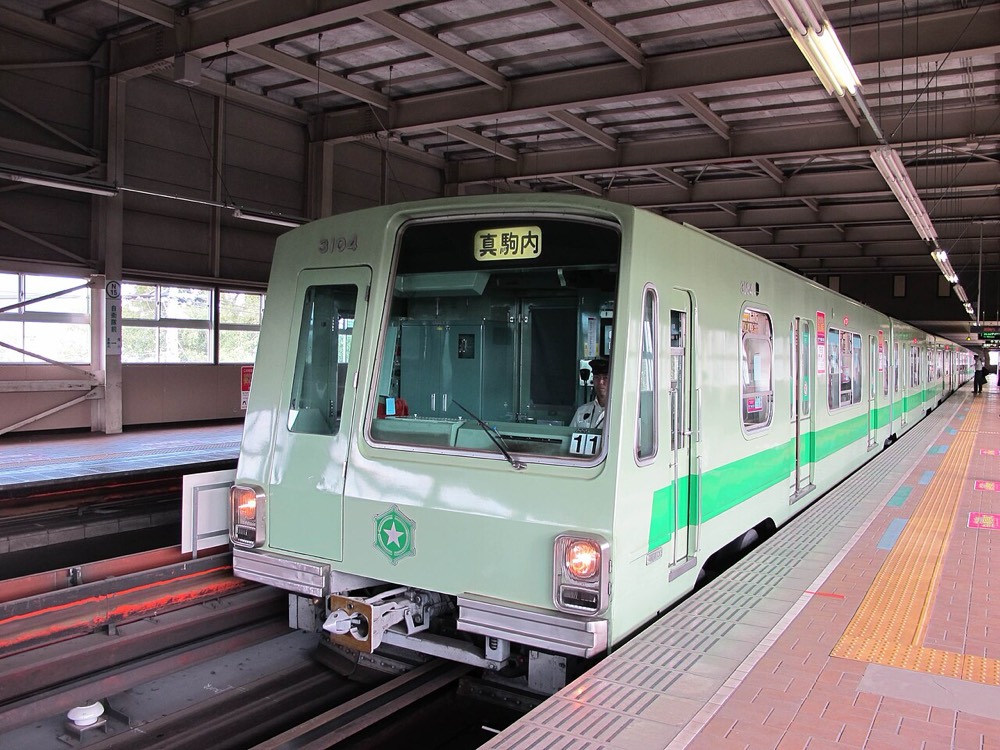
All three subway lines run almost entirely underground, and the few above-ground sections on the southern Namboku Line are fully roofed over, so snow rarely affects service. The streetcar and buses run on surface roads and are easily slowed by heavy snow. Winter tips:
- Use the subway for longer trips (Miyanosawa, Maruyama) and save the streetcar for places like Mt. Moiwa that the subway doesn't reach.
- Sapporo Station, Odori and Susukino are linked by underground passages and shopping streets, so on snowy days you can skip a stop without getting wet; where to stay in Sapporo explains how each area connects to them.
- Non-slip shoes matter while waiting for the streetcar outdoors; see Hokkaido winter clothing.
- For Otaru, Asahikawa and other towns, Sapporo day passes don't help; see getting around Hokkaido without a car.
Who should (and shouldn't) buy a Sapporo day pass?
In short: most adult visitors are fine with "credit card + IC card"; paper passes suit families with children, cash-only travellers and people who know they'll ride a lot.
| Your situation | Recommendation |
|---|---|
| Adult, contactless credit card, subway only | Just tap your card; it caps at 830/520 yen automatically |
| With children, subway on a weekend | Child Donichika Ticket, 260 yen |
| With children, streetcar on a weekend | Dosanko Pass, 460 yen (1 adult + 2 children) |
| 3+ streetcar rides on a weekday | Streetcar 1-Day Pass, 570 yen |
| 2+ streetcar rides on a weekend | Credit card (caps at 460 yen) |
| Subway-to-streetcar round trip on the same day | Transport IC card, for the transfer fare |
| Cash only, don't want to calculate | 830-yen pass on weekdays / 520-yen Donichika Ticket on weekends |
| Only moving around Sapporo Station–Odori–Susukino | No day pass; walk underground and pay per ride |
A day pass isn't worth it if you only ride once or twice, spend the whole day in one area, or travel mainly by JR and suburban buses (for example to Jozankei or Otaru).
Making it work smoothly
- Set up contactless payment on the card you plan to use before you leave, and tap with the same card and the same phone all day so the cap accumulates.
- Weekends and holidays are when Sapporo day passes shine: 520 yen for the subway and a 460-yen card cap on the streetcar, so schedule your busiest sightseeing days then.
- Keep some 100-yen coins handy: the Donichika Ticket is cash only, and the streetcar fare box gives no change.
- Odori and Susukino get crowded during the Sapporo Snow Festival; see our Sapporo Snow Festival 2027 guide and stick to the subway and underground passages when you can.
FAQ
How much is the Sapporo subway 1-day pass? Is it the same price on weekends?
No. The Subway-only 1-Day Pass is 830 yen for adults and 420 yen for children and works on any day. On Saturdays, Sundays, national holidays and December 29 to January 3 there is also the Donichika Ticket at 520 yen for adults and 260 yen for children. Both cover the subway only, not the streetcar or buses.
If I pay by credit card on the Sapporo subway, do I still need a day pass?
Usually not, if you are an adult. Since March 26, 2026, once the same card on the same device reaches 830 yen in a day (520 yen on weekends and holidays), no further fares are charged, matching the day pass prices, with no registration needed. Children, anyone wanting to pay for others with one card, and people without a contactless card should buy a paper pass or use an IC card.
Where can I buy the Sapporo streetcar 1-day pass? Is there a mobile version?
The paper Streetcar 1-Day Pass costs 570 yen for adults and is sold on board and at designated ticket offices, valid on the day of purchase only, with no advance sales. A mobile version at the same price is sold through the Norikae Annai app or the Gurutto Hokkaido website. There is also a mobile-only 24-hour pass at 840 yen for adults.
Can I pay by credit card on the Sapporo streetcar? How does it work?
Yes. Since April 27, 2026, Visa, Mastercard, JCB, American Express, Diners Club, Discover and UnionPay contactless payments work on every car and line. You don't tap when boarding; tap once on the reader inside the car when getting off. On weekends, holidays and Dec 29–Jan 3 fares stop after 460 yen in a day; there is no cap on weekdays.
Can I use the subway day pass on the streetcar? Is there a combined subway and streetcar pass?
No. Neither the Subway-only 1-Day Pass nor the Donichika Ticket is valid on the streetcar, and the streetcar pass is not valid on the subway. The day passes currently listed by the Sapporo City Transportation Bureau and the streetcar operator each cover one mode only. If you use both on one trip, an IC card with the transfer fare is usually cheaper.
What is the cheapest ticket for riding with children in Sapporo?
Contactless card riding always charges the adult fare, so children need a paper ticket or IC card. On weekends and holidays, a child Donichika Ticket is 260 yen for the subway. For the streetcar, the Dosanko Pass at 460 yen gives one adult and two children unlimited rides for the day. Each adult can bring up to four preschool children free.
Sources
- Sapporo City Transportation Bureau | Fares (乗車料金): Subway single fares for zones 1–6, streetcar 230 yen, subway–streetcar transfer fares, rule for accompanying preschool children
- Sapporo City Transportation Bureau | Subway zone table (PDF): Number of zones between stations, used to calculate sample itinerary fares
- Sapporo City Transportation Bureau | Donichika Ticket: 520 yen adult, 260 yen child, valid days, sales points, cash only, overnight use on December 31 (updated October 29, 2026)
- Sapporo City Transportation Bureau | Riding with contactless payment: All 49 stations from April 26, 2025; accepted brands; 830/520 yen cap from March 26, 2026; same card number on different devices counted separately; adults only
- Sapporo City Transportation Bureau | Holiday-Teering 2026: Subway-only 1-Day Pass 830 yen adult, 420 yen child; ticket machines sell it on weekdays only (updated November 9, 2026)
- Sapporo Transportation Promotion Corporation | Streetcar fares and tickets: Streetcar single fare, transfer fares, Streetcar 1-Day Pass, Dosanko Pass, 24-hour pass, contactless riding and the holiday cap
- PR TIMES (Sumitomo Mitsui Card) | Contactless riding starts on the Sapporo Streetcar: Card riding on all streetcar lines from April 27, 2026; tap when alighting; 460 yen weekend and holiday cap; only one adult covered when one card pays for several people
- Impress Watch | Sapporo subway fare cap for credit card riding: Cap amounts match the 1-Day Pass and Donichika Ticket
- City of Sapporo | Streetcar fare revision (before/after comparison): Streetcar adult fare raised from 200 to 230 yen, child from 100 to 120 yen
- Sapporo Transportation Promotion Corporation | December 1, 2026 timetable change: Interval changes for some weekday evening inner-loop trams; first/last trams and weekend timetable unchanged
- Sapporo Maruyama Zoo | Access: About 15 minutes on foot from Maruyama-koen Station, or about 5 minutes by JR bus from bay 4 of Maruyama Bus Terminal
Fares, opening hours and event dates can change. Information checked on 2026.11.20; please confirm with official sources before you go.