Okinawa Cherry Blossoms 2027: Kanhizakura Bloom Times, Yaedake and Nago Festivals, Night Sakura at Nakijin Castle
Okinawa cherry blossoms open from mid-January, Japan's earliest. 2027 timing, past Yaedake and Nago festival dates, Nakijin night sakura, transport and weather.
Quick answer
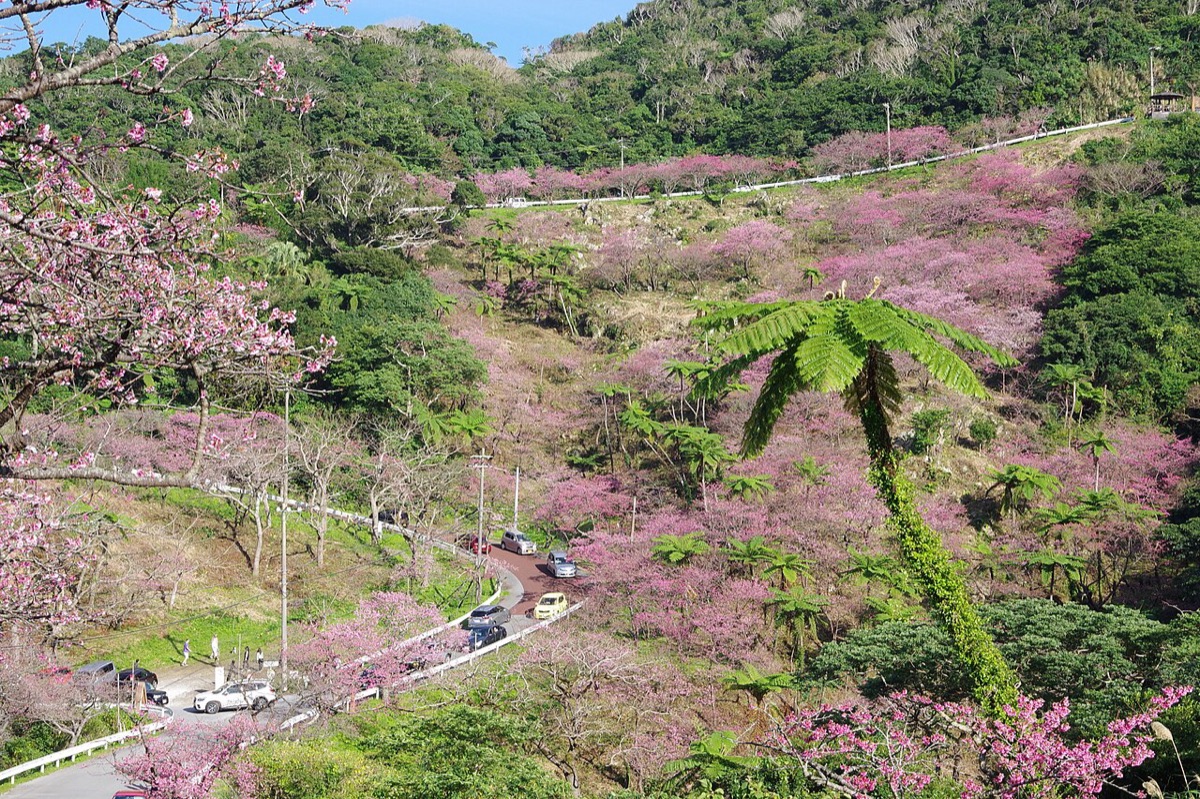
Okinawa's cherry blossoms are deep-pink kanhizakura that start opening in mid-January in the north (Motobu, Nago) and reach Naha in the south around February, making them the earliest in Japan. Dates for the 2027 festivals have not been announced yet. For reference, in 2026 the Motobu Yaedake Sakura Festival ran January 17 to February 1 and the Nago Cherry Blossom Festival ran January 31 to February 1, both free. Naha averages about 17°C in January.
Okinawa's cherry blossoms are the earliest in Japan: every year in mid-January, hillsides in the north of the main island turn deep pink with kanhizakura, more than two months ahead of Tokyo. This guide covers expected 2027 bloom timing for Okinawa cherry blossoms, past dates of the Motobu Yaedake and Nago cherry blossom festivals, night sakura at Nakijin Castle, viewing spots around Naha, and how to get around and what to wear in January, so you can plan a winter trip to Okinawa.
When will Okinawa's cherry blossoms bloom in 2027?
The short answer: based on past years, Okinawa's cherry blossoms in 2027 should start opening in the north around mid-January, with the northern peak from late January to early February and Naha and the south from early to mid-February. The exact bloom date will only be known from the meteorological office and local bloom reports in January 2027.
The Okinawa Meteorological Office uses a cherry tree in Shuri-Sueyoshi-cho, Naha, as its observation tree. In 2026 it declared Naha's bloom on January 18, two days later than normal and 13 days later than the previous year[8]; in other words, Naha bloomed in early January in 2025, and the difference between years can exceed ten days. That is because kanhizakura depend heavily on winter cold, and in a warm winter they can open later or more patchily.
Here are the usual viewing periods by area (2027 information has not been officially announced; the following is from past years for reference)[2][3]:
| Area | Main spot | Usual viewing period | Past festival (reference) |
|---|---|---|---|
| North: Motobu | Yaedake Sakura no Mori Park | Mid-January to early February | January 17 to February 1, 2026 |
| North: Nago | Nago Central Park (Nago Castle Ruins) | Late January to early February | January 31 to February 1, 2026 |
| North: Nakijin | Nakijin Castle Ruins | Late January to early February | January 25 to February 2, 2025 |
| South: Yaese | Yaese Park | Late January to early February | January 20 to February 2, 2025 |
| Naha | Yogi Park | Early to mid-February | No major festival |
What is kanhizakura, and why does it bloom from north to south?
The short answer: Okinawa's cherry blossoms are mainly kanhizakura (カンヒザクラ, also called hikanzakura or Ryukyu kanhizakura), with deep pink flowers shaped like small bells that hang downward. They need a certain amount of winter cold to wake from dormancy, so the north and the mountains, which cool down earlier, bloom first.
The Japan National Tourism Organization (JNTO) describes Okinawa's kanhizakura as deeper in color than the Somei-Yoshino common on Honshu, with flowers that hang downward[10]. As for the direction of blooming, the usual explanation is that cherry flower buds form in summer and then go dormant, and they need a period of winter cold to "break dormancy" and start growing. The north and mountainous parts of Okinawa's main island cool down earlier than the south, so the blossoms open first in Motobu and Nago in the north and then move south to Naha, the opposite of Honshu's south-to-north cherry blossom front[11].
This also means that at the same moment, the north may be in full bloom while Naha is still in bud. If you visit Okinawa in mid- to late January, focus on the north; if you go in early to mid-February, Naha and the south will look better.
Yaedake Sakura Festival: 7,000 kanhizakura in Motobu
The short answer: Mount Yae (八重岳, Yaedake, 453 m) in Motobu is Okinawa's signature early-blooming cherry spot, with about 7,000 kanhizakura lining the road from the foot of the mountain to the summit[2]. The festival usually opens in mid-January and is free.
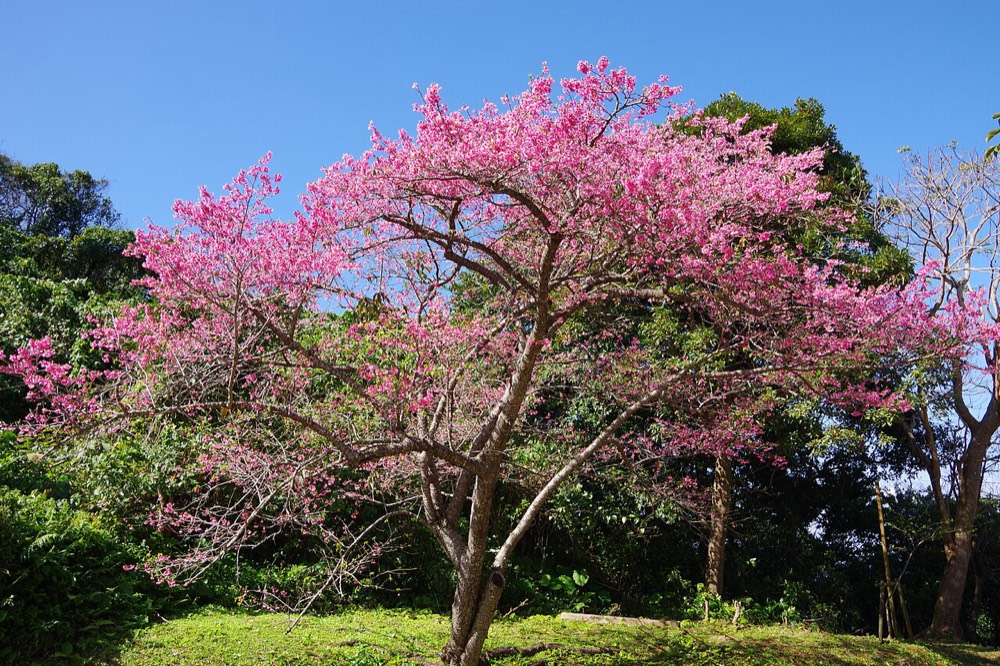
The Motobu Yaedake Sakura Festival is held at Yaedake Sakura no Mori Park, halfway up the mountain. The 48th festival in 2026 ran from January 17 to February 1, with free admission and about 500 free parking spaces[1]; the 47th in 2025 ran from January 18 to February 2[3]. As of October 2026, Motobu Town has not announced the dates of the 49th festival in 2027; based on past practice it will likely open on a Saturday in mid-January again, but check Motobu Town's announcement.
| Item | Past reference (48th festival, 2026) |
|---|---|
| Dates | January 17 to February 1, 2026 (2027 not yet announced) |
| Venue | Yaedake Sakura no Mori Park (921 Namizato, Motobu) |
| Fee | Free |
| Parking | About 500 spaces, free |
| Night illumination | 17:00–21:00, only some trees lit[2] |
| By car | About 40 minutes from Kyoda IC on the Okinawa Expressway via National Routes 58 and 449 and Prefectural Route 84[1] |
Traffic up the mountain is heavy on blossom-season weekends. The Ryukyu Shimpo reported that during the 2025 festival a shuttle bus ran from the Motobu Town Industry Support Center to Sakura no Mori Park[3]; watch for announcements on whether it runs in 2027. It is cooler on the mountain than on the coast, so bring an extra layer for the evening illumination.
Nago Cherry Blossom Festival: Nago Castle Ruins and Japan's Top 100 Cherry Blossom Spots
The short answer: the Nago Cherry Blossom Festival (名護さくら祭り) is held around Nago Central Park (Nago Castle Ruins). In recent years it has been on the last Saturday of January and the following Sunday; the 63rd festival in 2026 ran January 31 to February 1[4]. The 2027 dates have not been officially announced.
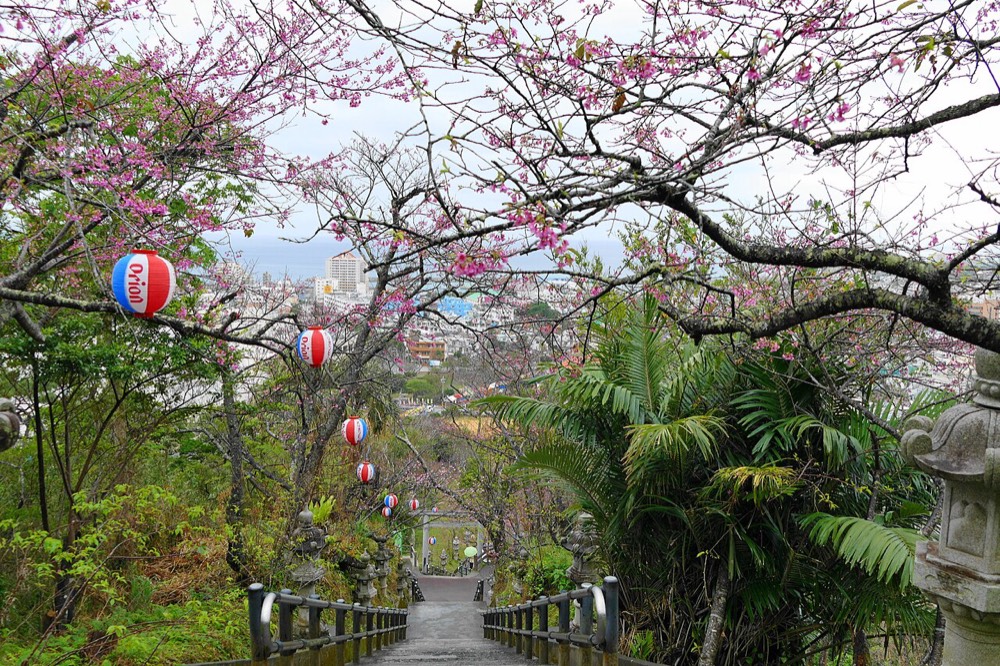
The Nago Castle Ruins, where Nago Central Park sits, are on the list of Japan's Top 100 Cherry Blossom Spots, and the park has about 3,000 Ryukyu kanhizakura[2]. During the festival, besides blossom viewing in the park, Nago Crossroads main street and Nago Fishing Port host stage shows, parades and stalls; Visit Okinawa Japan notes that the stage features eisa (Okinawan drum dance) and Ryukyu dance[5].
- Past dates: January 25–26, 2025[3] and January 31 to February 1, 2026[4]. If the "last weekend of January" pattern continues, 2027 may be January 30–31, but this is only an estimate; check the Nago City Tourism Association's announcement.
- Fee: free admission[4].
- Access: about 2 hours by bus from Naha Airport to the Nago Shiyakusho-mae stop, then about a 20-minute walk; by car, about 15 minutes from Kyoda IC via National Route 58[4].
- Tip: in past years a free shuttle ran from Nago Fishing Port to the Tenjo Observation Deck inside the park, saving you the uphill walk[4].
Night sakura at Nakijin Castle: World Heritage walls and illumination
The short answer: the Nakijin Castle Ruins (なきじんじょうあと) are part of the World Heritage site "Gusuku Sites and Related Properties of the Kingdom of Ryukyu." Each year from late January to early February they host the Nakijin Gusuku Cherry Blossom Festival, with the trees lit up at night; stone castle walls with night sakura are a rare sight in Okinawa.
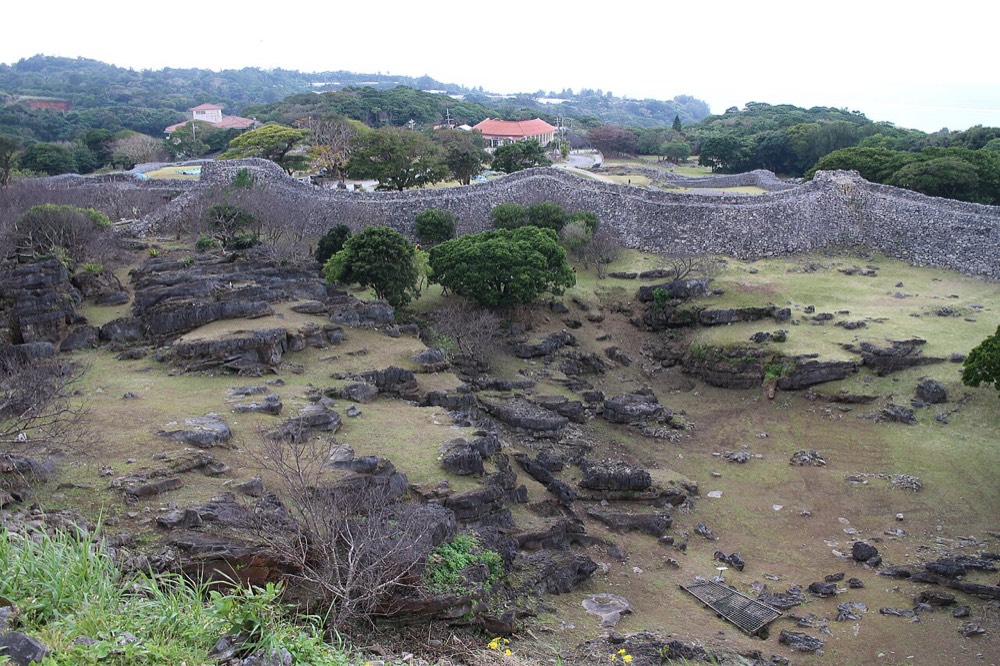
Nakijin Castle was the residence of the Hokuzan king in the Sanzan period and was inscribed as a World Heritage site in 2000[6]. Past festival details for reference (2027 not yet announced):
- 2025 (18th): January 25 to February 2, 8:00–21:00 (last entry 20:30), with night sakura illumination 18:00–21:00; adult admission at the time was ¥600[3].
- 2026: travel media reported January 31 to February 8, with illumination 18:30–21:00[7].
Note that regular admission to the Nakijin Castle Ruins changed on September 1, 2025 to ¥1,000 for adults, ¥500 for junior and senior high school students, and free for elementary school children and younger[6]; check the official site for prices during the 2027 festival. The official site also says Parking Lot 1 has been closed since September 2026 because of nearby construction, while Lots 2 to 4 remain open[6].
Where to see cherry blossoms in Naha and the south
The short answer: if you visit in early to mid-February or don't plan to head north, you can see cherry blossoms in Naha and the south: Yogi Park is right in central Naha, and Yaese Park in the south has held a cherry blossom festival with evening illumination in past years.
- Yogi Park (Naha): known for its avenue of kanhizakura, usually best in early to mid-February[2]; good for travelers without a car to visit on the way, and a route planner will show how to get there.
- Yaese Park (Yaese Town): the 2025 Yaese Cherry Blossom Festival ran January 20 to February 2, with lantern illumination 18:00–21:00 and free admission[3].
- Around Shuri: the meteorological office's observation tree is in Shuri-Sueyoshi-cho[8], so when Naha's bloom is announced, the south is entering its season too.
Getting around for Okinawa cherry blossoms: rental car or bus?
The short answer: to cover Yaedake, Nakijin Castle and Nago in one day, a rental car is the most efficient. Without a car, the Nago festival or Yogi Park in central Naha are easier, and for Yaedake you will need to rely on the shuttle bus.
| Option | Best for | Notes |
|---|---|---|
| Rental car | Yaedake, Nakijin Castle and Nago in one day | About 2 hours from Naha Airport to Yaedake[1]; weekend mountain traffic is heavy, so go on a weekday or in the morning |
| Bus + shuttle | Nago festival, Yaedake festival | About 2 hours from Naha Airport to central Nago[4]; Yaedake had a shuttle bus in past years[3], check that year's notice |
| Monorail / city bus | Yogi Park in Naha | Only covers southern blossoms; the north needs separate planning |
| Day tour | Seeing the north without driving | Search platforms such as KKday or Klook for northern day trips and compare content and meeting points |
Check licence rules before you drive: travelers from Taiwan need their original Taiwanese licence plus a Japanese translation, while travelers from other countries and regions should check whether they need an International Driving Permit or a translation. See our Okinawa car rental and licence guide for details. If you would rather not drive, see the bus routes in our Okinawa without a car guide.
What is the weather like in January and February, and what else can you do?
The short answer: Naha averages about 17.3°C in January with an average low of 14.9°C, and February is similar[9], so long sleeves and a light jacket are enough during the day. But the north wind is strong and it is colder on the mountains, so bring a windproof jacket for night sakura.
| Month | Mean temperature | Mean high | Mean low | Rainfall |
|---|---|---|---|---|
| January | 17.3°C | 19.8°C | 14.9°C | 101.6 mm |
| February | 17.5°C | 20.2°C | 15.1°C | 114.5 mm |
(Japan Meteorological Agency, Naha normals 1991–2020[9])
Average wind speed in January and February exceeds 5 m/s[9], so it feels colder than the numbers suggest, and there are plenty of cloudy, rainy days, so pack a folding umbrella. Winter Okinawa is less crowded and accommodation is easier to book, and on the same trip you can also:
- Go whale watching: January to March is humpback season in the Kerama Islands, which fits on the same trip as the blossoms; see our Okinawa whale watching guide.
- Plan a winter itinerary: the sea is cool in winter, so lean toward the aquarium, castle ruins and food; see our Okinawa winter travel guide.
Before you go: how to plan Okinawa cherry blossom viewing in 2027
- Decide between north and south first: in mid- to late January focus on Yaedake, Nago and Nakijin in the north; in early to mid-February look at Naha and the south.
- The safest dates: if the Nago festival keeps to its last-weekend-of-January pattern, late January to early February lets you catch the Yaedake, Nago and Nakijin Castle festivals all at once, which has been the liveliest period in the north in past years.
- Reconfirm the 2027 dates: Motobu Town, Nago City and Nakijin Village usually announce shortly before each event, so check each official website and local bloom news before you leave.
- Bring a jacket for night sakura: the illumination hours at Yaedake and Nakijin Castle are on high ground, windy and chilly.
- Avoid peak traffic when driving: Yaedake is most congested around weekend midday, so set off in the morning or go on a weekday.
FAQ
When will Okinawa's cherry blossoms bloom in 2027?
No official 2027 forecast has been issued yet. Based on past years, Yaedake in Motobu and Nago in the north start blooming around mid-January, the northern peak is late January to early February, and Naha and Yaese in the south bloom around early to mid-February. The Okinawa Meteorological Office's Naha tree bloomed on January 18 in 2026.
What are the dates of the 2027 Yaedake Sakura Festival?
As of October 2026, Motobu Town has not announced the dates of the 49th festival in 2027. For reference, the 47th festival in 2025 ran January 18 to February 2 and the 48th in 2026 ran January 17 to February 1. Both opened on a Saturday in mid-January, lasted about two weeks and were free.
When is the 2027 Nago Cherry Blossom Festival?
It has not been announced. In recent years the Nago festival has been held on the last Saturday of January and the following Sunday: January 25–26 in 2025 and January 31 to February 1 in 2026. If the pattern continues, 2027 may fall on January 30–31, but check the Nago City Tourism Association's official announcement.
Do I need a rental car to see cherry blossoms in Okinawa?
Not necessarily, but driving is the most convenient. Yaedake and Nakijin Castle are in the north of the main island, about two hours by car from Naha Airport, and the mountain road gets congested on blossom-season weekends. Without a car, you can take a bus to central Nago for the Nago festival, Yaedake's festival has had shuttle buses in past years, and Yogi Park in Naha needs no car.
How are Okinawa's cherry blossoms different from those on Honshu?
Okinawa's main variety is kanhizakura, with deep magenta-pink, bell-shaped flowers that hang downward, blooming in January. The Somei-Yoshino common on Honshu is pale pink and blooms in March to April. Okinawa's blossoms also open from north to south, the opposite direction to Honshu's south-to-north cherry blossom front.
Sources
- Rurubu&more: 48th Motobu Yaedake Sakura Festival: 2026 dates, venue, parking, access
- Rurubu&more: Cherry blossom spots in Okinawa Prefecture: Viewing periods by spot, number of trees at Nago Central Park, Yaedake illumination
- Ryukyu Shimpo: Okinawa cherry blossom festivals 2025: 2025 dates for the Yaedake, Nago, Nakijin and Yaese festivals and the shuttle bus
- Rurubu&more: 63rd Nago Cherry Blossom Festival: 2026 Nago festival dates, venues, access
- Visit Okinawa Japan: Nago Cherry Blossom Festival: Venues and festival content
- Nakijin Castle Ruins official site: Admission (from September 2025), hours, parking notice
- Tabinesu: Nakijin Gusuku Cherry Blossom Festival: 2026 festival dates and illumination hours
- Weathernews: Hikanzakura bloom declared in Naha: 2026 Naha bloom date compared with normal
- Japan Meteorological Agency: Naha climate normals: 1991–2020 January and February temperature, rainfall, wind speed
- JNTO: Cherry blossoms bloom early in Okinawa: Kanhizakura characteristics, Yaedake and Nakijin Castle
- Tabinesu: Japan's earliest bloom declaration in Okinawa: Why kanhizakura bloom from north to south (breaking dormancy)
Fares, opening hours and event dates can change. Information checked on 2026.10.31; please confirm with official sources before you go.