Mojiko Retro Guide: Yaki Curry, Mojiko Station, the Kanmon Strait Tunnel and Karato Market in One Day
Mojiko day trip guide: direct JR from Hakata (about 1h40, ¥1,730), Mojiko Station, Old Moji Customs, Blue Wing Moji, yaki curry, the Kanmon tunnel and Karato Market.
Quick answer
Mojiko is a historic port at the northern tip of Kitakyushu that thrived from the Meiji to early Showa eras. It keeps Western-style buildings such as Mojiko Station, completed in 1914 and the first station in Japan designated an Important Cultural Property. A direct JR rapid train from Hakata takes about 1 hour 40 minutes and costs ¥1,730. Eat yaki curry, walk the 780 m Kanmon pedestrian tunnel (free, 6:00–22:00), or take a 5-minute ferry to Shimonoseki's Karato Market for weekend sushi. The 2026 illumination runs November 14, 2026 to May 23, 2027.
Mojiko (門司港) is one of Kitakyushu's signature sights and an easy day trip from Fukuoka. From the Meiji to the early Showa era it was an international trading port, and it left behind many red-brick and wooden Western-style buildings; the whole district is now called Mojiko Retro. This guide covers how to get to Mojiko, how to see Mojiko Station and the Former Moji Customs, where to eat yaki curry, and a full route that walks the Kanmon Strait pedestrian tunnel and takes the ferry to Shimonoseki's Karato Market for sushi, so you can cover both sides of the strait in one day.
Where is Mojiko and why is it worth the trip?
The short answer: Mojiko sits at the northern tip of Kyushu, facing Shimonoseki in Yamaguchi Prefecture on Honshu across the narrow Kanmon Strait. A century-old station, Western-style buildings, strait views and seafood are all within walking distance, so half a day to a full day covers it well.
After it opened as a port in the Meiji era, Mojiko became an important hub for foreign trade, and banks, trading houses and shipping companies set up offices here, leaving many buildings in the Taisho-romantic style. When port functions later moved elsewhere, Kitakyushu City began restoring and reusing these buildings in the 1990s, creating today's Mojiko Retro district[1]. For visitors, the appeal is how compact it is: the station, the old customs house, the drawbridge and the observation room are all within 10 minutes on foot, and you can extend along the strait to the tunnel and to Shimonoseki on the other side.
If you are based in central Fukuoka, Mojiko fits neatly into one day of your Fukuoka stay; you can also pair it with a Dazaifu day trip on the day before or after: one day of old shrines and temples, one day of port town.
Getting to Mojiko: from Hakata and Kokura
The short answer: the JR Kagoshima Line Kukan Kaisoku (rapid) train runs from Hakata straight to Mojiko Station with no transfer, taking about 1 hour 40 minutes for ¥1,730 one way[11]. If you are in a hurry, take the shinkansen to Kokura and change to JR to Mojiko.
| From | How | Time | Fare (adult, one way) |
|---|---|---|---|
| Hakata | JR Kagoshima Line Kukan Kaisoku, direct | About 1h40 | ¥1,730 |
| Hakata | Shinkansen to Kokura + JR local train | Shinkansen varies by train + about 15 min | Kokura→Mojiko ¥340, plus shinkansen fare |
| Kokura | JR Kagoshima Line | About 13–15 min | ¥340 |
| Shimonoseki (Karato) | Kanmon Kisen ferry | About 5 min | About ¥400 (check the operator's notice) |
A few common questions:
- Can I use an IC card? Yes. SUGOCA, Suica and other transit IC cards work, and the IC fare from Hakata to Mojiko is also ¥1,730[11].
- How do I check times? Kukan Kaisoku trains are not very frequent, so check the last train back on the JR Kyushu website or a route planner before you go.
- Should I buy a rail pass? For a simple round trip to Mojiko, single tickets are enough. If the same trip also includes Beppu, Nagasaki and other places, compare the JR Kyushu Rail Pass; see our Kyushu transport guide for details.
Mojiko Retro must-sees: Mojiko Station, Former Moji Customs and Blue Wing Moji
The short answer: on a first visit, see at least three things: Mojiko Station (an Important Cultural Property), the red-brick Former Moji Customs, and the Blue Wing Moji drawbridge that rises at set times each day. All three are free, and a loop takes about 1–2 hours.
Mojiko Station: the first station in Japan named an Important Cultural Property
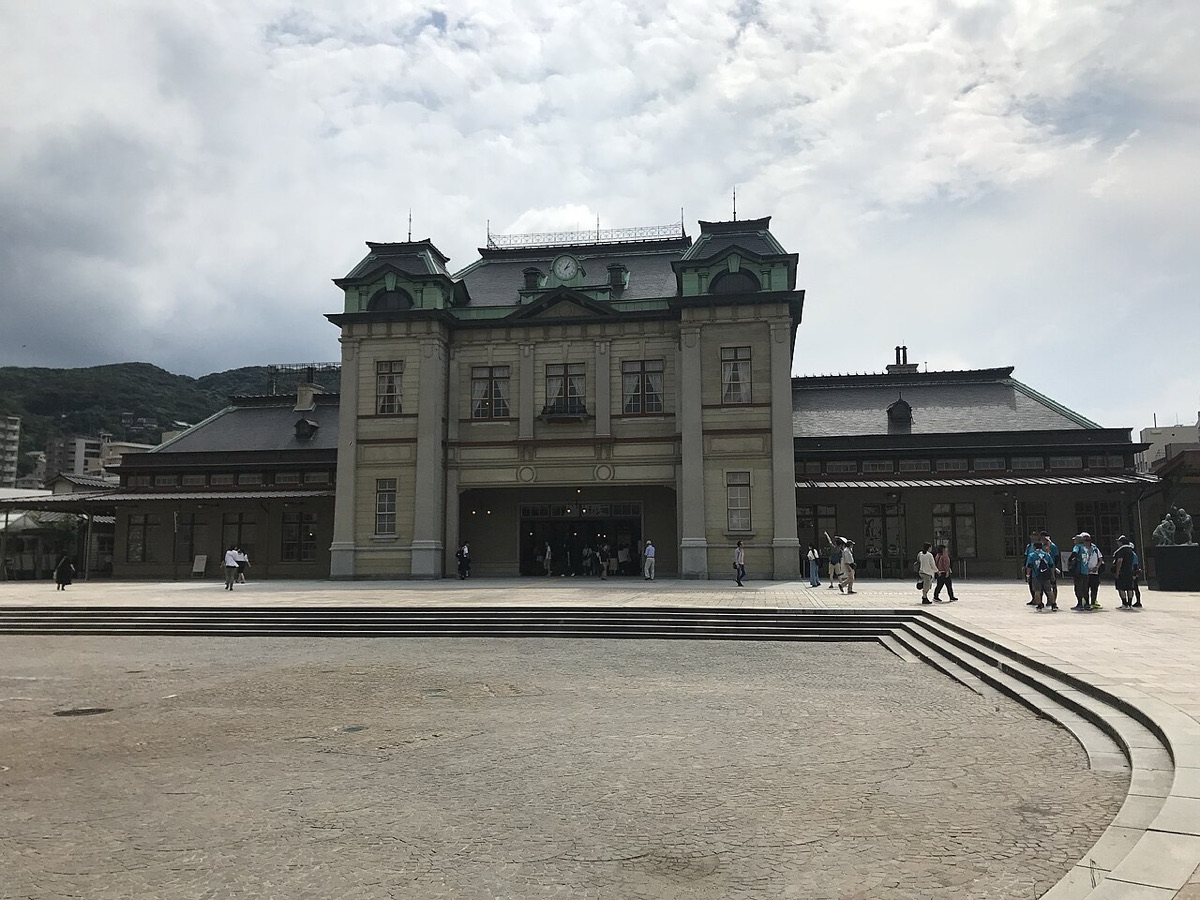
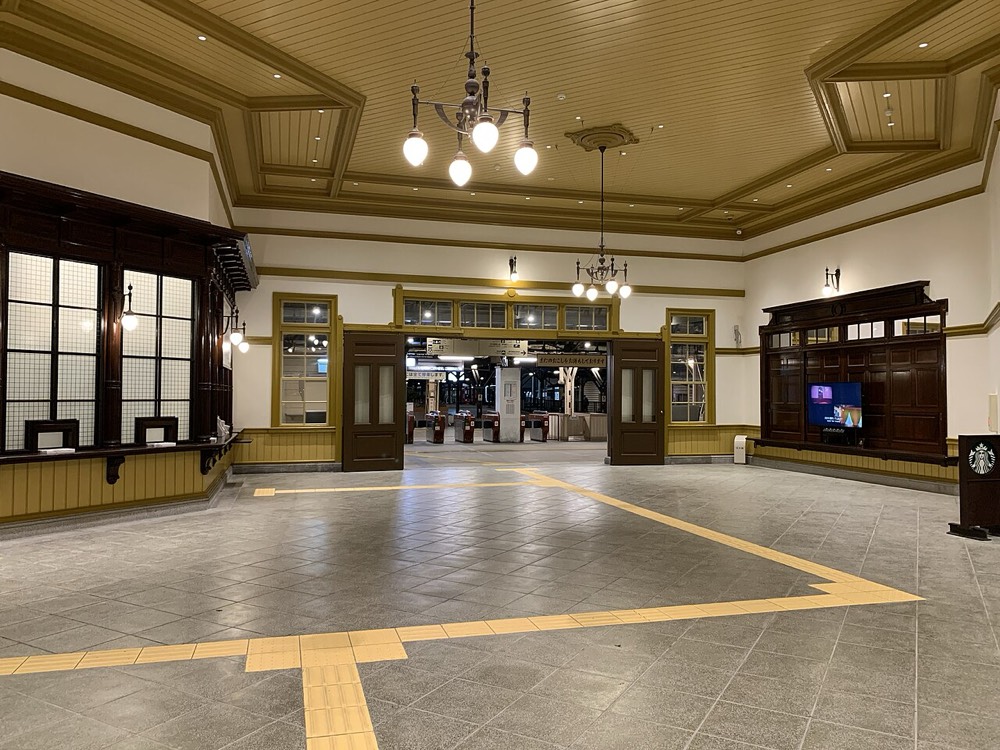
The current building of Mojiko Station is the second-generation station completed in 1914 (Taisho 3), and in 1988 it became the first railway station in Japan designated a national Important Cultural Property[6]. Starting in 2012 it underwent about six years of conservation work aimed at restoring its original appearance, and it fully reopened in March 2019[6]. The symmetrical wooden Western-style building, the large clock on the façade and the wide plaza in front are all photogenic, and inside there are plenty of restored details worth slowing down for.
Former Moji Customs: red brick and a free viewing deck
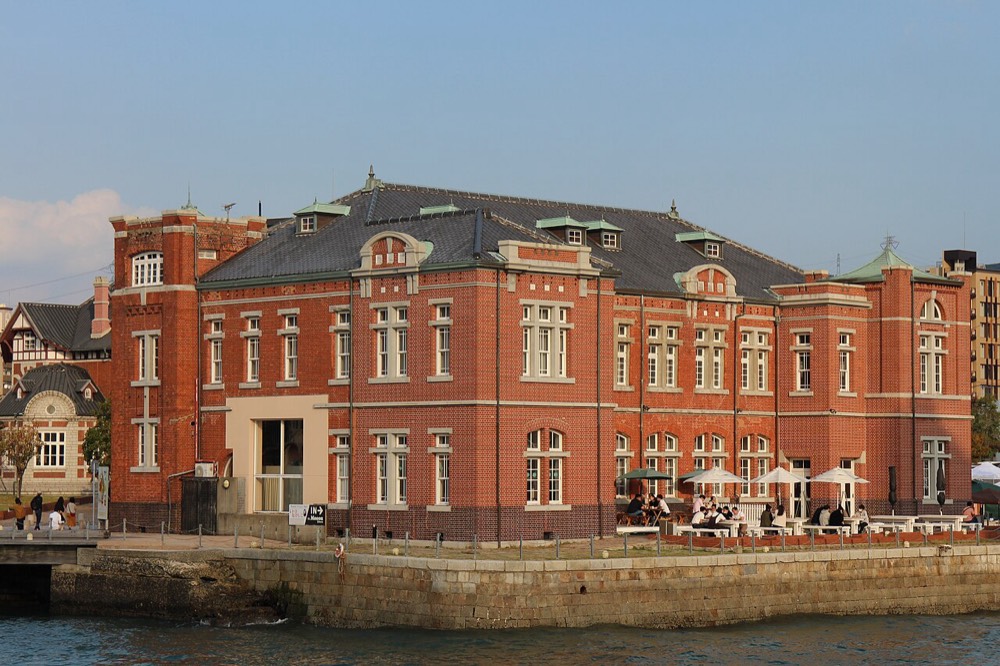
The Former Moji Customs (旧門司税関) was built in 1912 as a two-story red-brick building, served as the customs office until the early Showa era, and was restored by Kitakyushu City in 1994[3]. It is open 9:00–17:00, free and open all year. The ground floor has a high-ceilinged hall, a café and a customs exhibit on smuggling methods, and upstairs there is a viewing space overlooking the Kanmon Strait and the drawbridge[3].
Blue Wing Moji: six bridge openings a day
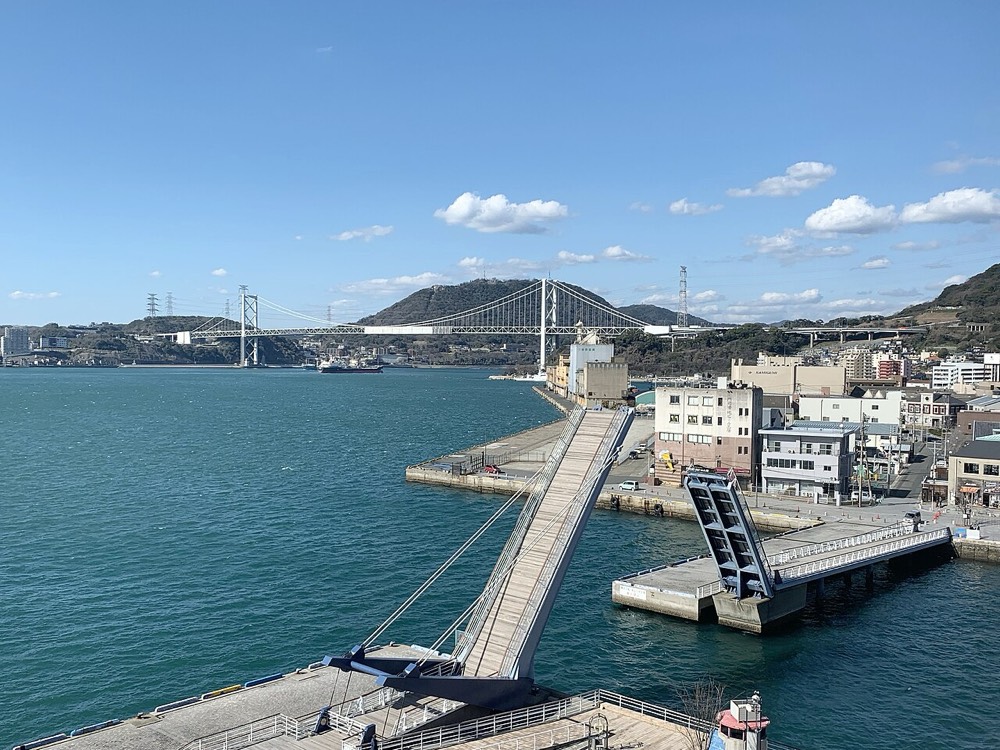
Blue Wing Moji (ブルーウィングもじ) is one of Japan's largest pedestrian-only drawbridges. It rises daily at 10:00, 11:00, 13:00, 14:00, 15:00 and 16:00 and comes back down about 20 minutes later each time[4]. The bridge is certified as a "Lovers' Sanctuary," and couples who cross it together are said to find happiness. To see the whole process, arrive at the bridge about five minutes early.
What is Mojiko yaki curry and how do you choose a shop?
The short answer: yaki curry (焼きカレー) is Mojiko's signature dish: curry poured over rice, topped with cheese or egg and baked in an oven. Many shops around the retro area serve their own version, so just pick one that is on your route.
According to Fukuoka Prefecture's official tourism website, yaki curry is said to have been born in the Showa 30s (1955–1964), when a Mojiko coffee shop baked leftover curry gratin-style and it turned out so fragrant that it went on the menu, though there are several versions of the story[12]. In 2007 local shops formed the Mojiko Yaki Curry Club and published a shop map so visitors can compare[12].
How to choose? Consider these points:
- Flavor: there are sweeter home-style curries, seafood versions, and ones with wagyu or special sauces; pick from the menu photos.
- Location: shops in the retro area are close to the station and the drawbridge, which saves time; older shops a little farther from the station tend to be less crowded.
- Timing: weekend lunchtimes often mean a queue, so go before 11:00 or after 14:00.
Yaki curry is extremely hot straight from the oven, and the curry under the cheese keeps steaming, so break the surface with your spoon to let it cool first. Hours and prices vary by shop; check the shop's website or a map site before you go.
How to enjoy the Kanmon Strait: pedestrian tunnel, ferry and night view
The short answer: there are three ways to experience the Kanmon Strait: walk the undersea pedestrian tunnel from Fukuoka Prefecture to Yamaguchi Prefecture, take the 5-minute ferry to Karato in Shimonoseki, and watch the strait at night. The three can be combined into a loop.
Kanmon Tunnel Pedestrian Walkway: walk between two prefectures
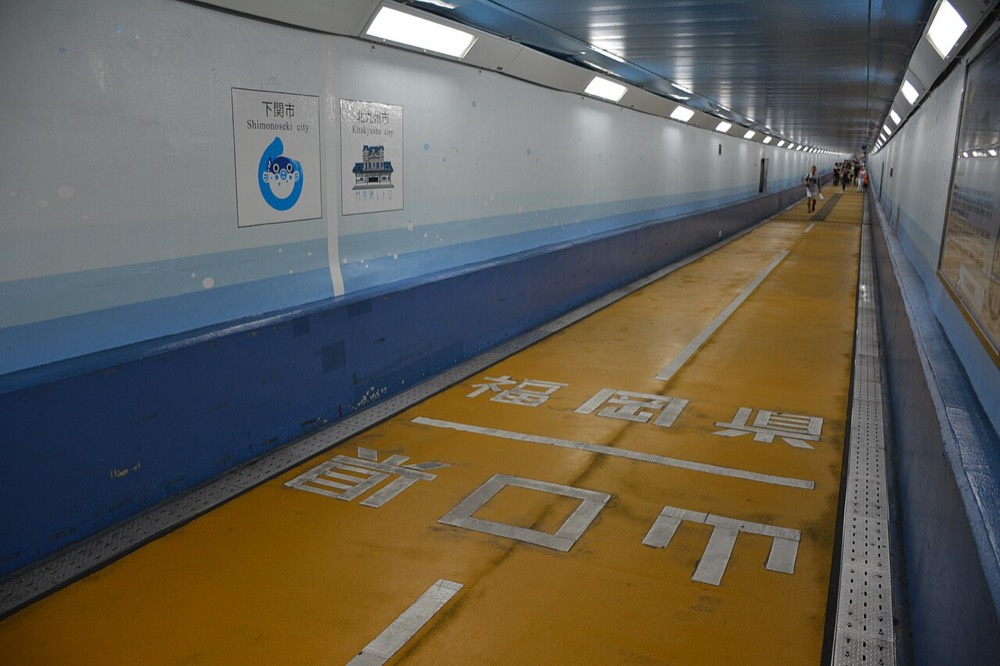
The Kanmon Tunnel Pedestrian Walkway (関門トンネル人道) is 780 m long and runs under the sea. It is open daily 6:00–22:00; pedestrians walk free, and bicycles and small motorbikes pay ¥20[7]. The Moji entrance is near Mekari Shrine, where an elevator takes you about 60 m underground; walking to the Mimosusogawa exit on the Shimonoseki side takes about 15 minutes[7]. The Fukuoka–Yamaguchi prefectural border is marked on the floor in the middle, a popular photo spot.
The Moji entrance is some distance from Mojiko Retro, so take a bus or taxi; when it is running, you can also ride the Mojiko Retro sightseeing trolley (Shiokaze) to its terminus, Kanmon Kaikyo Mekari Station, and walk to the entrance. Check the official site for operating days and times.
Kanmon ferry: 5 minutes to Karato in Shimonoseki
From Mojiko Pier near Mojiko Station, Kanmon Kisen ferries cross to Karato in Shimonoseki in about 5 minutes. A third-party transit site lists the one-way fare as ¥400 for adults and ¥200 for children[8]; boats run roughly every 20 minutes, but we could not confirm the latest 2026 fares and times directly on the operator's website, so check Kanmon Kisen's notices before you travel.
A good route is "ferry out, tunnel back": take the ferry from Mojiko to Karato Market for lunch, stroll along the waterfront to the tunnel entrance at Mimosusogawa, walk through the tunnel back to the Moji side, and then take a bus or taxi back to the retro area, so you never retrace your steps.
Mojiko night view and illumination
The easiest night view is from the Mojiko Retro Observation Room (門司港レトロ展望室): it is on the 31st floor of a tower, 103 m up, open until 22:00 (last entry 21:30), and costs ¥600 for adults and ¥300 for elementary and junior high students[5]. From here you can see the Kanmon Bridge and the strait at night.
The annual winter illumination, Mojiko Retro Roman Tosai, is also worth planning for. The 2026 season runs from November 14, 2026 to May 23, 2027; lights are on from about 18:00 to 24:00 from November to February and about 19:00 to 24:00 from March to May, and on the opening night of November 14 a lighting ceremony is held at 19:00[2]. Viewing has been free in past years; check the official site for venues and events.
How to explore Karato Market: weekend sushi stall times and how to eat
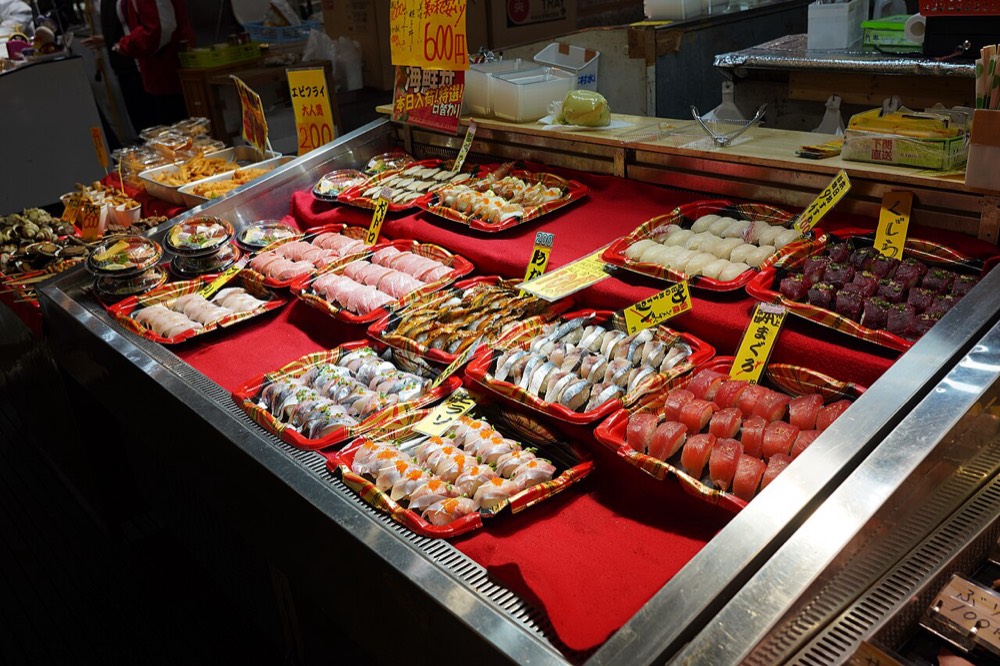
The short answer: Karato Market (唐戸市場) is across the strait in Shimonoseki, Yamaguchi Prefecture. On Fridays, Saturdays, Sundays and national holidays it hosts Ikiiki Bakangai, a sushi and seafood stall event where you pick nigiri piece by piece and eat by the sea.
| Item | Details |
|---|---|
| Days | Fridays, Saturdays, Sundays and national holidays (not held over New Year) |
| Hours | From about 8:00 on Sundays and holidays; Friday and Saturday start times differ between sources (9:00 or 10:00), until about 15:00 |
| Note | Each stall keeps its own hours, supply affects opening, and stalls close early when sold out |
| Closing days | See the calendar on the market's official site |
The times above come from Yamaguchi Prefecture's tourism website and Karato Market's official site[10][9]; the market also notes that start and end times change with the day's supply[9]. Eating is simple: walk one lap to compare prices and items at each stall, pick the sushi you want onto a tray or box, pay, and find a spot around the market or by the waterfront. Shimonoseki is famous for fugu (pufferfish), so fried fugu and fugu miso soup are common too.
How to plan a Mojiko day trip
The short answer: the smoothest plan is "Mojiko Retro in the morning → Karato Market at noon → tunnel or observation room in the afternoon → night view in the evening," which takes a full day. With only half a day, focus on the retro area and yaki curry.
| Time | Plan |
|---|---|
| 8:30 | Leave Hakata on the JR Kukan Kaisoku to Mojiko |
| 10:15 | Arrive at Mojiko Station and see the building; watch Blue Wing Moji open at 11:00 |
| 11:20 | Former Moji Customs and a walk around the retro area |
| 11:45 | Ferry from Mojiko Pier to Karato (sushi Friday to Sunday) |
| 13:30 | Walk the Kanmon Tunnel Pedestrian Walkway from the Shimonoseki side back to Moji, then ride back to the retro area |
| 15:00 | Back in the retro area for yaki curry as a late lunch or snack |
| 17:30 | Sunset and night view from the observation room; illumination in winter |
| 19:00 | JR back to Hakata |
If you visit on a non-holiday Monday to Thursday, the Karato sushi event is not held, so have yaki curry for lunch and walk the tunnel there and back in the afternoon instead. For more eating ideas, see our Fukuoka food guide.
Before you go: how to plan Mojiko smoothly
- Plan around the bridge times: Blue Wing Moji opens only six times a day, so decide which one to see first and fit other sights around it.
- Check the day for Karato sushi: the sushi stalls run only Friday to Sunday and on holidays; on other weekdays you will miss them.
- It is windy: the strait is breezy, so bring a windproof jacket in winter; it feels colder during the night view and illumination hours.
- Check your return train: Kukan Kaisoku trains run at long intervals, so check the last train before heading back to Fukuoka at night.
- Information changes: for fares, hours, ferry schedules and illumination dates, follow the latest notices from the Mojiko Retro official site, Karato Market and each operator.
FAQ
How much time do I need for a Mojiko day trip?
Half a day is enough for the Mojiko Retro area alone: Mojiko Station, the Former Moji Customs, Blue Wing Moji and a yaki curry lunch. If you also want the Kanmon pedestrian tunnel or the ferry to Karato Market in Shimonoseki, plan a full day: leave in the morning and return to Fukuoka after the night view.
What is the cheapest way from Hakata to Mojiko?
The cheapest option is the JR Kagoshima Line Kukan Kaisoku (rapid) train straight to Mojiko with no transfer, about 1 hour 40 minutes and ¥1,730 one way (checked October 2026). To save time, take the shinkansen to Kokura and change to a local train; Kokura to Mojiko is about 15 minutes and ¥340, plus the shinkansen fare.
Does the Kanmon pedestrian tunnel cost anything?
Pedestrians walk free; bicycles and small motorbikes pay ¥20 and must be pushed. It is open daily 6:00–22:00, is 780 m long and takes about 15 minutes to walk. In the middle is the Fukuoka–Yamaguchi prefectural border, where many people take a photo standing in two prefectures.
When should I go to Karato Market for sushi?
The sushi stall event at Karato Market, Ikiiki Bakangai, is held only on Fridays, Saturdays, Sundays and national holidays, and not over the New Year period. On Sundays and holidays it starts around 8:00; Friday and Saturday start times differ between sources. It is busiest around midday and popular items sell out, so go in the morning.
What is Mojiko yaki curry?
Yaki curry is curry poured over rice, topped with cheese or egg and baked in an oven. It is said to have started in the Showa 30s (1955–1964) at a Mojiko coffee shop that baked leftover curry gratin-style. Today many shops around the retro area serve their own versions.
When is the best time to see the Mojiko night view?
Any time after sunset. The Mojiko Retro Observation Room on the 31st floor, 103 m up, is open until 22:00 and overlooks the Kanmon Bridge and the strait. From mid-November to May there is also an illumination; the 2026 season starts November 14, with lights from about 18:00 between November and February.
Sources
- Mojiko Retro official site: Area overview and latest news
- Mojiko Retro Illumination 2026: 2026–2027 illumination period and lighting hours
- Mojiko Retro: Former Moji Customs: Opening hours, free admission, year built
- Mojiko Retro: Blue Wing Moji: Bridge opening times
- Mojiko Retro: Mojiko Retro Observation Room: Hours, admission, height
- Norimono News: Mojiko Station grand reopening: Station restoration and Important Cultural Property designation
- Crossroad Fukuoka: Kanmon Tunnel Pedestrian Walkway: Tunnel hours, fees, length
- NAVITIME: Kanmon ferry (Mojiko pier): Mojiko–Karato fare (third-party information)
- Karato Market official site: Hours, closing-day calendar, sushi event
- Oidemase Yamaguchi: Karato Market: Ikiiki Bakangai days and hours
- Ekitan: Hakata Station to Mojiko Station: JR fare and travel time (checked October 2026)
- Crossroad Fukuoka: Mojiko Yaki Curry: Origin of yaki curry and the Mojiko Yaki Curry Club
Fares, opening hours and event dates can change. Information checked on 2026.10.31; please confirm with official sources before you go.