Kyoto Kimono Rental Guide: Prices, What's Included, Photo Routes in Gion, Kiyomizu-dera and Arashiyama, and Etiquette
How to choose a kimono rental in Kyoto: basic plans from about 3,300 yen, what's included, return times, photo routes, men's and kids' plans, rain, winter and Gion rules.
Quick answer
Basic kimono rental plans in Kyoto start at about 3,300 yen including tax and usually include the kimono, obi, nagajuban, bag, tabi socks, zori sandals and dressing; hair styling is usually an extra 500 to 1,650 yen. Homongi start at about 11,000 yen and furisode at about 16,500 yen. Most shops require same-day return by 17:30 to 17:50, and shops cluster around Gion, Kiyomizu-dera and Arashiyama (confirmed October 2026).
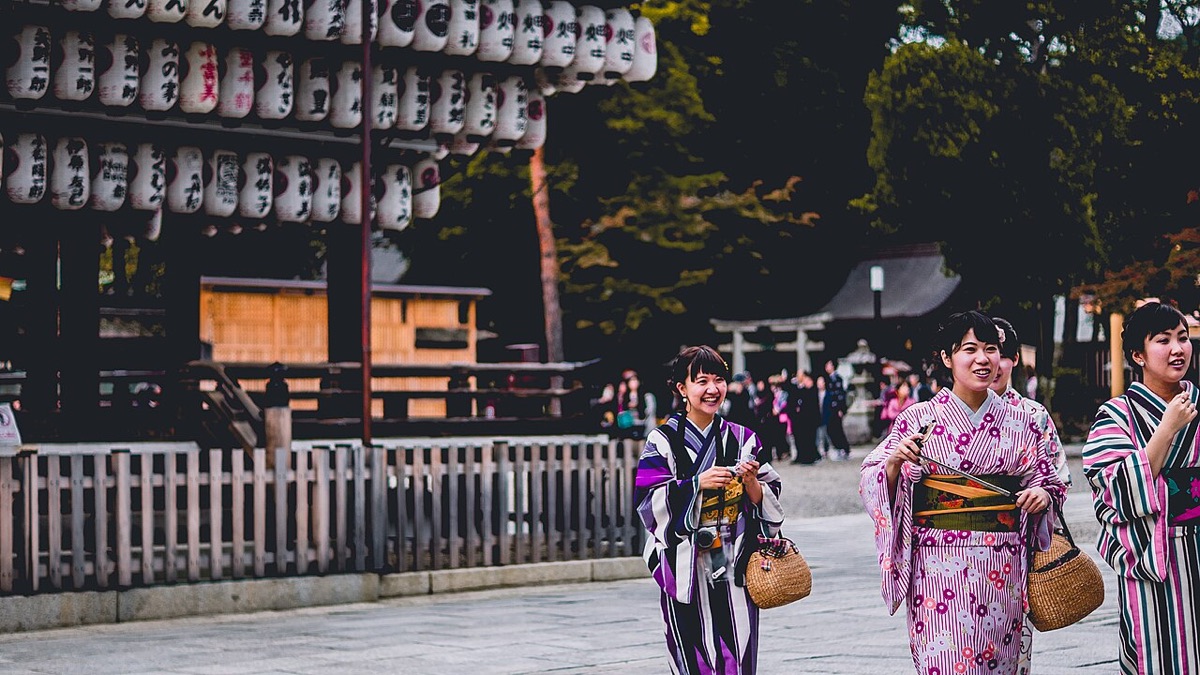
Kimono rental in Kyoto is the experience many first-time visitors most want to fit into their trip: walking in a kimono along the stone slopes near Kiyomizu-dera, the approach to Yasaka Shrine or the bamboo grove in Arashiyama makes for photos unlike any you take in everyday clothes. This guide covers Kyoto kimono rental prices and what plans include, the difference between kimono, yukata and furisode, the process from booking to return, photo routes in Gion, Kiyomizu-dera and Arashiyama, what to know about rain, winter, men's and kids' rentals, and the photography etiquette that matters especially in Gion today.
How much does kimono rental in Kyoto cost? Typical plan prices
Bottom line: the most basic sightseeing plans start at about 3,300 yen including tax, plans with more choice cost about 4,400 to 5,500 yen, and formal styles such as furisode and homongi cost over 10,000 yen.
Kyoto has a huge number of kimono rental shops, and prices differ mainly by how many styles you can choose from, the type of obi and whether hair styling is included. Two chains with several Kyoto branches serve as examples:
- Rental Kimono Okamoto: the basic "Set Plan" is 3,278 yen including tax, the wider-choice "Select Plan" is 4,378 yen, the "Full-Scale Attire Plan" is 5,478 yen, and the Nagoya-obi plan is 6,578 yen. Same-day homongi plans start at 11,000 yen and furisode plans at 16,500 yen[1].
- Kyoto Kimono Rental wargo: the standard plan starts at 3,300 yen including tax when paid online, the retro-modern homongi plan starts at 5,500 yen, and the student plan starts at 4,400 yen; the site notes that prices vary by date and season[3].
| Plan type | Example price (incl. tax) | Best for |
|---|---|---|
| Basic sightseeing plan | From about 3,278–3,300 yen | First-timers, tighter budgets |
| Wider-choice plan | About 4,378–5,500 yen | Choosing patterns, more polished photos |
| Men's kimono | 4,378 yen (Okamoto) | Men, couples dressing together |
| Kids' kimono | 5,478 yen (Okamoto, from 85 cm tall) | Families with children |
| Homongi | From about 11,000 yen (Okamoto same-day plan) | A more formal, mature look |
| Furisode | From about 16,500 yen (Okamoto same-day plan) | Glamorous formal wear for unmarried women |
(Prices from the two shops' official sites as of October 2026[1][3]; other shops may differ.)
Common add-ons are hair styling, next-day return and return to your hotel. At Okamoto, for example, hair styling costs 550, 1,100 or 1,650 yen depending on the style, next-day return is 1,100 yen, hotel return is 1,650 yen, and same-day return to the original store is free[1]. When comparing prices, include these add-ons rather than looking only at the lowest price.
Kimono, yukata or furisode: what's the difference and which should you rent?
Bottom line: sightseeing rentals are usually casual komon-style kimono; yukata are for summer only; furisode and homongi are formal wear that cost more and take longer to put on.
- Kimono (sightseeing plans): mostly brightly patterned komon or synthetic kimono with an easy-to-tie hanhaba obi. They can be worn year-round and are the mainstay of Kyoto kimono rental.
- Yukata: cotton, single-layer and worn without a nagajuban underrobe. Originally summer wear for festivals and strolls, they are cool but cold in autumn and winter, and shops usually promote yukata plans in summer.
- Furisode: a glamorous kimono with very long sleeves, traditionally formal wear for unmarried women and common at Coming of Age ceremonies; dressing and the obi are more elaborate.
- Homongi: a formal kimono with a pattern flowing from the hem up to the shoulders, worn regardless of marital status, good if you want a more understated look.
- Hakama: pleated trousers or skirt worn over the kimono below the waist; women's hakama are common at graduation ceremonies, and men's hakama are a more formal outfit.
For a first try with plenty of walking, a basic plan is enough. For coming-of-age photos or something special, consider a furisode or homongi and allow more time for dressing.
How to book kimono rental in Kyoto: process, inclusions and return times
Bottom line: book a plan and arrival time on the shop's website, choose your kimono and get dressed at the shop, then return it to the same shop before evening.
- Book online: choose the store, date, arrival time and number of people; some shops charge less online than in-store.
- Choose at the shop: pick a kimono and obi from the range your plan covers, then add a bag and hair accessory.
- Dressing and hair: staff dress you, and style your hair if you added that option. Allow about 30 minutes to 1 hour, plus waiting time in peak season.
- Leave your belongings: shops usually keep your own clothes and bags; wargo, for example, says it stores one large bag free of charge[3].
- Return the same day: come back to the original shop by the set time and change back.
What do plans usually include? Okamoto's basic plan, for example, includes the kimono, hanhaba obi, nagajuban, Japanese-style bag, new tabi socks and zori sandals, with free dressing[2]. wargo's standard plan also includes the kimono, obi, kanzashi hairpin, nagajuban, zori, bag and tabi, plus a simple hairstyle and one hair accessory for free[3]. Note that wargo's site says online bookings have a 1,100 yen hair option pre-selected, so uncheck it if you don't want it[3].
Return times: Okamoto is open 9:00–18:00, with returns by 17:50[1]; wargo's Kyoto Station and Gion stores are open until 17:30, with last dressing at 15:30[3]. If you want to stay in your kimono for night views, choose a next-day return option.
Cancellation rules differ widely: Okamoto allows free cancellation until 13:00 the day before[1], while wargo is free until 2 days before and charges 100% for cancellations the day before or on the day[3]. If your plans are uncertain, read the cancellation terms before paying.
Kyoto kimono photo routes: Kiyomizu-dera, Gion and Arashiyama
Bottom line: the classic is the Higashiyama route from Kiyomizu-dera to Yasaka Shrine; to avoid crowds, start early or go to Arashiyama or Fushimi Inari instead.
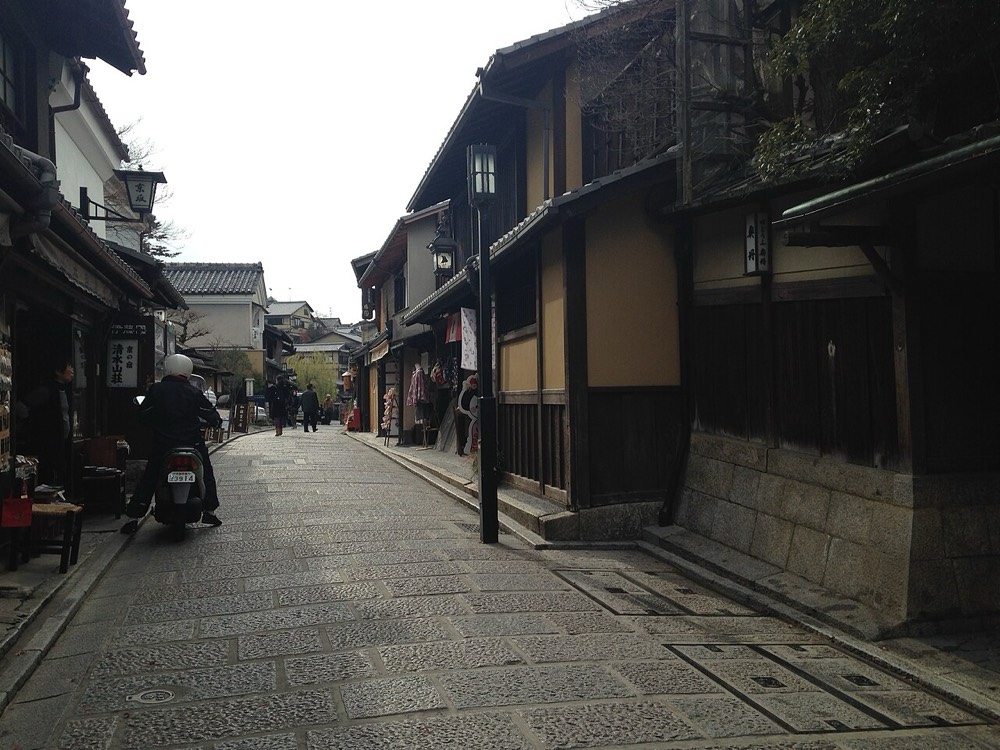
Higashiyama route (about half a day): Kiyomizu-dera → Sannenzaka → Ninenzaka → around the Yasaka Pagoda → Ishibe-koji Lane → Yasaka Shrine → Hanamikoji. Most kimono shops are around Gojozaka, Kiyomizu-dera and Gion, so you can start this route right from the shop door. For Kiyomizu-dera's hours and stage, see the Kiyomizu-dera guide. Sannenzaka and Ninenzaka are stone slopes and steps, so take small, slow steps in zori.
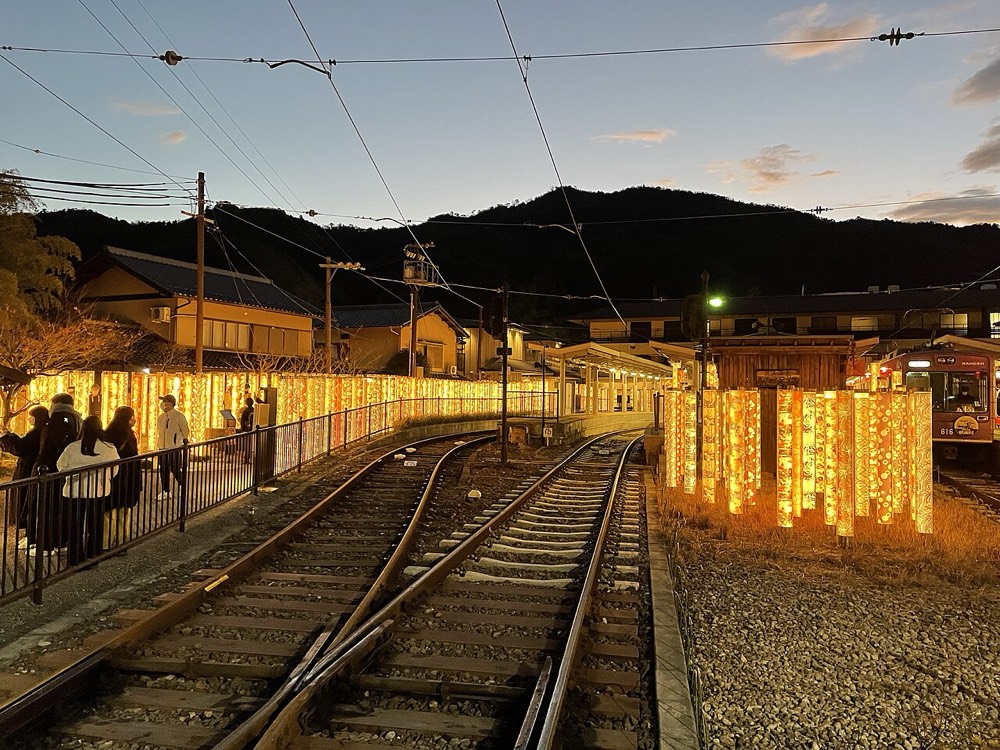
Arashiyama route (about half a day): Bamboo Grove → Nonomiya Shrine → Togetsukyo Bridge → the "Kimono Forest" beside Randen Arashiyama Station. Arashiyama has kimono shops too and works well as a full-day trip; combine it with the Arashiyama day trip guide.
Fushimi Inari route: the thousand torii gates look great with a colorful kimono, and some chains have branches near Fushimi Inari; Okamoto, for example, has a Fushimi Inari store[1]. Inariyama gets steeper with more steps as you climb, so in a kimono it's best to turn back around the Yotsutsuji intersection.
| Area | Key photo spots | Pros | Watch out for |
|---|---|---|---|
| Kiyomizu-dera / Higashiyama | Sannenzaka, Ninenzaka, Yasaka Pagoda | Most kimono shops, the most classic Kyoto streetscape | Very crowded by day, many steps |
| Gion | Yasaka Shrine, Hanamikoji, Shirakawa | Lantern-lit atmosphere at night | Private alleys are off-limits for entry and photos |
| Arashiyama | Bamboo Grove, Togetsukyo, Kimono Forest | Natural scenery, more space | Far from central Kyoto; plan your return time |
| Fushimi Inari | Thousand torii gates | Vermilion backdrop is very photogenic | Many steps on the mountain path |
For more sights you can fit into the same day, see Kyoto attractions.
What to watch out for in Gion while wearing a kimono: photo etiquette and rules
Bottom line: you can take photos normally on public roads, but do not enter private alleys, do not follow or photograph geiko and maiko without permission, and do not block shop entrances while taking photos.
The Gion-machi Minamigawa area is a working geisha district where teahouses still operate, and residents and businesses have long been affected by tourists. A March 2024 report said a local group, the Gion-machi Minamigawa District Council, planned to put up signs from April in the private alleys branching off the public roads, stating that they are private roads with no through passage and warning of a 10,000 yen fine; the public roads remain open[5]. The report also noted that the fine is mainly a warning and its legal force is unclear[5]. Fine or not, if you see a private-road sign, do not go in.
In a May 2025 notice, the City of Kyoto also said that in the Gion-machi Minamigawa area and elsewhere, people were still following geiko and maiko or photographing them without permission, and photographing or trespassing on private property such as shop frontages, making residents uneasy, and it asked visitors to be considerate of local life[4]. In practice, this means:
- Keep your distance from geiko and maiko; do not block their way, follow them or ask for photos.
- Do not take photos in front of shops, at the doors of homes or inside private alleys.
- Do not line up across the whole street for group photos; move aside once you're done.
- Follow each temple's or shrine's photo rules; photography is often banned inside main halls.
For other basic manners while in a kimono, such as at temples and shrines, in queues and with trash, see Japan travel etiquette.
Rain, winter, men and kids: common Kyoto kimono rental questions
Bottom line: you can wear a kimono in rain and in winter with some extra preparation, and most shops offer men's and kids' plans at prices close to the basic plan.
Rain: stone paths get slippery, so walk slowly in zori, wear the kimono slightly shorter so the hem stays out of muddy water, and bring a large umbrella. Whether you pay extra if the kimono or obi gets dirty depends on the shop, so check when booking. In heavy rain or strong wind, consider rescheduling or taking photos for a short time near the shop.
Winter (late November to February): Kyoto mornings and evenings are cold in winter, and in December it gets dark before 5 p.m. Okamoto's site says its basic plan includes a shawl in winter[2], and some shops offer a haori jacket as an add-on; check each shop's information. You can wear thin thermal underwear underneath as long as it doesn't show at the collar or sleeves, and stick heat packs on your back or waist rather than directly on your skin. Toes get cold in tabi socks, so consider bringing spare socks to change into after returning the kimono.
Men: men's kimono are mostly plain or finely striped, worn with a kaku-obi and zori, and dressing is faster than for women. Okamoto's men's plan is 4,378 yen including tax[1], and many shops offer couple plans.
Kids: kids' plans are usually sized by height or age; Okamoto's kids' plan, for example, starts from 85 cm tall at 5,478 yen including tax[1]. Children tire quickly in zori, so keep the outing short and consider bringing comfortable shoes as a backup.
Tips before renting a kimono in Kyoto
Bottom line: book early, arrive early and leave plenty of time before the return deadline, and you'll have a relaxed day.
- Take the first slot of the morning: crowds around Kiyomizu-dera grow quickly after 10:00, so the earlier you head out, the better your photos.
- Carry only a small bag: the Japanese-style bags shops provide are small, so take just your wallet, phone and IC card, and leave everything else at the shop.
- Mind the return time: most shops want the kimono back at the original store by 17:30 to 17:50, so allow travel time if you're returning to Higashiyama from Arashiyama or Fushimi Inari.
- Be careful when eating: soy sauce and matcha ice cream are the most likely to drip onto a kimono, and eating while walking is frowned upon anyway, so sit down to eat.
- Check the cancellation rules: if bad weather makes you want to reschedule, free cancellation deadlines differ by shop, so note yours when booking.
FAQ
How much does kimono rental in Kyoto cost?
Based on the official sites of two large chains, the most basic sightseeing plans start at about 3,278 to 3,300 yen including tax, and plans with more choice cost about 4,400 to 5,500 yen. Homongi start at about 11,000 yen and furisode at about 16,500 yen. Hair styling and next-day return are usually add-ons, and prices may rise on weekends and in peak season.
Do I need to book kimono rental in Kyoto in advance?
Booking on the shop's website is recommended. Most shops accept walk-ins, but weekends and the cherry blossom and autumn leaf seasons often fill up, and online prices are sometimes lower than in-store. Check the cancellation rules too: one shop allows free cancellation until 13:00 the day before, while another charges the full price for cancellations the day before.
Can men rent a kimono in Kyoto?
Yes. Most shops have men's plans, which usually include the kimono, obi, zori and other accessories, at prices similar to women's basic plans. For example, Okamoto's men's plan is 4,378 yen including tax. Dressing takes less time for men, and many shops also offer couple plans so two people can book together.
Can I wear a kimono on a rainy day?
Yes, but prepare: wear the kimono a little shorter and lift the hem to keep it out of the mud, bring a large umbrella, and walk slowly on the stone slopes. Whether you pay extra if the kimono gets dirty depends on the shop, so ask beforehand. In heavy rain, consider rescheduling or shortening your time outdoors.
Is it too cold to wear a kimono in Kyoto in winter?
It is cold, but manageable. A kimono has several layers, so you can wear thermal underwear underneath (keep it hidden at the collar and sleeves) and add a shawl or haori jacket. Some shops include a shawl in winter; Okamoto's site, for example, says its winter plans include one. Stick heat packs on your back and waist, never directly on your skin.
Can I take photos anywhere in Gion while wearing a kimono?
You can take photos on public roads, but the private alleys in the Gion-machi Minamigawa area are off-limits for entry and photography, and signs there warn of a 10,000 yen fine. The City of Kyoto also asks visitors not to follow or photograph geiko and maiko without permission, and not to enter private property such as shop frontages to take photos.
Sources
- Rental Kimono Okamoto official site | Plans, returns and stores: Tax-inclusive plan prices, hair and return options, opening and return times, store locations, cancellation rules
- Rental Kimono Okamoto official site | Set plan: What the basic plan includes, winter shawl, return time
- Kyoto Kimono Rental wargo official site: Standard and homongi plan prices, inclusions, hair styling, cancellation rules, Kyoto store hours
- Kyoto Travel Navi | Enjoy Kyoto sightseeing with good manners (City of Kyoto, May 2, 2025): Following, unauthorized photography and entry onto private property in the Gion-machi Minamigawa area
- Travel Voice | Tourists to be barred from private roads in Gion, Kyoto (March 11, 2024): Private-road signs in Gion and the 10,000 yen fine warning
Fares, opening hours and event dates can change. Information checked on 2026.10.28; please confirm with official sources before you go.