Tokyo to Osaka: Shinkansen vs Flight vs Night Bus Compared (Prices, Door-to-Door Time and Which to Choose)
Tokyo to Osaka compared: Nozomi, Hikari and Kodama fares, door-to-door times for Haneda-Itami and Narita-Kansai flights, night bus prices and the 2027 fare rise.
Quick answer
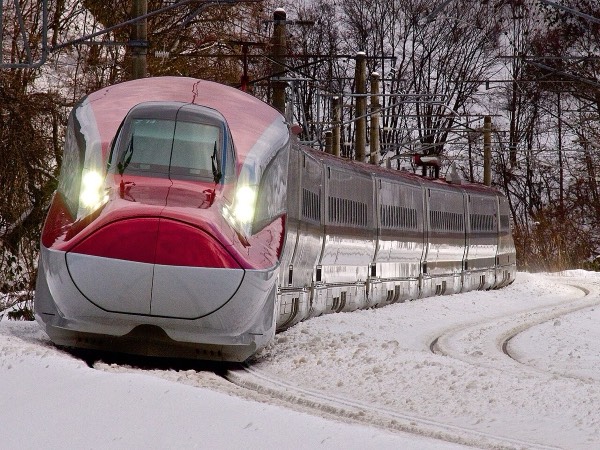
The best all-round option from Tokyo to Osaka is the Nozomi shinkansen: about 2 hours 30 minutes, 14,720 yen for an ordinary reserved seat or 13,870 yen non-reserved. Booking 21 days ahead on smartEX (EX Hayatoku 21) costs 12,980 yen. Haneda-Itami flights take just over an hour in the air, but door to door they take about as long as the train. The cheapest is the night bus, from about 3,000 yen according to WILLER, taking 8-9 hours. Nozomi reserved seats rise to 15,420 yen for tickets bought from July 1, 2027 (checked November 2026).
There are four main ways to get from Tokyo to Osaka: the Tokaido Shinkansen, a flight (Haneda or Narita to Itami or Kansai Airport), a night bus, and, on a tight budget, local trains. Looking only at time on board leads to the wrong choice, so this guide works out door-to-door time from central Tokyo to central Osaka, the real total cost and who each option suits. It also covers recent changes, including the 2027 Nozomi fare rise and the end of round-trip tickets, so you can decide in one go.
How to choose between Tokyo-Osaka options: door-to-door time and cost
Bottom line: the Nozomi shinkansen gives the best balance of time and price; the night bus is cheapest; flying only wins with an early-bird fare or if you are staying close to an airport. The table below estimates a trip from a hotel in Shinjuku to a hotel in Namba, with door-to-door time including city transport, waiting and check-in.
| Option | Time on board | Door-to-door estimate | One-way cost (adult) |
|---|---|---|---|
| Shinkansen Nozomi | About 2 hr 30 min | About 3 hr 30 min | Reserved 14,720 yen, non-reserved 13,870 yen |
| Shinkansen Hikari / Kodama | About 3 hr / about 3 hr 40 min | About 4-4.5 hr | Reserved 14,400 yen; EX Hayatoku 7 is 12,490 yen |
| Flight Haneda → Itami | Just over 1 hr | About 4-4.5 hr | Varies by date; check ANA and JAL |
| LCC Narita → Kansai | About 1.5 hr | About 5-6 hr | Jetstar from 3,920 yen, plus baggage and airport transport |
| Night bus | About 8-9 hr | About 9-10 hr (sleeping on board) | From about 3,000 yen; premium seats cost more |
| Local trains (Seishun 18 Ticket) | Fastest about 9 hr, about 5 changes | About 10 hr | Winter 3-day ticket 10,000 yen |
Shinkansen journey times and fares are based on JR announcements and Ekitan[1][8]; the Jetstar price is the lowest fare published with its winter 2026 schedule[12]; the night bus figures are those listed by WILLER[13]. Door-to-door times are our own estimates using typical transfer times and will vary with where you stay.
Nozomi vs Hikari vs Kodama: Tokyo to Osaka shinkansen prices
Bottom line: all three run on the same Tokaido Shinkansen line and differ in how often they stop. The Nozomi is fastest and most frequent; Hikari and Kodama reserved seats are slightly cheaper and come with better advance-purchase deals.
| Train | Tokyo → Shin-Osaka | Ordinary reserved | Ordinary non-reserved | Notes |
|---|---|---|---|---|
| Nozomi (のぞみ) | About 2 hr 30 min | 14,720 yen | 13,870 yen | Fewest stops; very frequent at peak times |
| Hikari (ひかり) | About 3 hr | 14,400 yen | 13,870 yen | Stops at some Shizuoka stations; JR Pass covers it directly |
| Kodama (こだま) | About 3 hr 40 min | 14,400 yen | 13,870 yen | Stops at every station; cars are usually quieter |
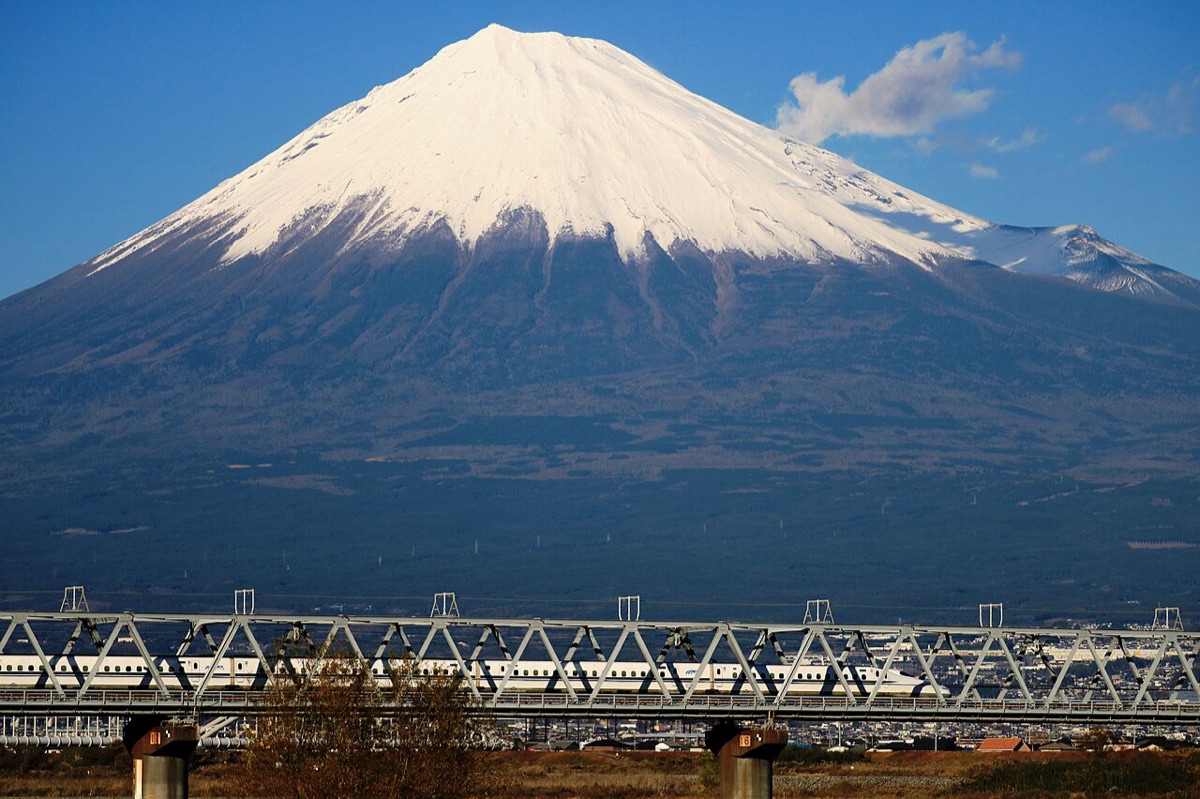
Journey times and Hikari/Kodama reserved fares are from Ekitan[8]; the current Nozomi reserved fare is from the JR Central and JR West announcement[1]. The Green Car from Tokyo to Shin-Osaka currently costs 19,590 yen[1]. To see Mount Fuji heading toward Osaka, pick a reserved E seat on the right-hand side.
Book early to pay less: EX Hayatoku 21, EX Hayatoku 7 and Kodama packages
smartEX, the booking service run by JR Central, JR West and JR Kyushu, sells advance tickets cheaper than station prices:
- EX Hayatoku 21: book a Nozomi ordinary reserved seat 21 days before travel; Tokyo to Shin-Osaka is 12,980 yen, 1,740 yen less than a station ticket[3]. Since the 2025 revamp, you can't switch to another train after buying[6].
- EX Hayatoku 7: book a Hikari or Kodama 7 days ahead; Tokyo to Shin-Osaka is 12,490 yen[4].
- Platto Kodama (ぷらっとこだま): a one-way Kodama package from JR Tokai Tours, still listed on its "one-way and day-trip plans" page[9]. Prices change by date and seat, booking usually closes the day before travel, and if you miss your train you can't switch to another; check the conditions on the official booking screen.
Advance-purchase seats are limited and can sell out fast on popular dates. These products will also be repriced with the 2027 fare rise, and JR says details will be announced separately[2].
Round-trip tickets no longer save money
Round-trip tickets between Tokyo and Osaka used to be discounted; that has ended. JR East stopped selling round-trip tickets on March 13, 2026[7], and JR Central and its partners announced that, as the JR group ends round-trip tickets, the smartEX round-trip discount would only apply to travel up to March 31, 2026[6]. Now you simply buy two one-way tickets at no extra cost.
The 2027 Nozomi reserved-seat fare rise: which tickets are affected?
JR Central and JR West announced on October 16, 2026 that the reserved-seat limited express charge on the Nozomi and Mizuho, and the Green Car charge on all trains, will go up, citing inflation driving up the cost of maintaining safety and service[1].
| Item | Current | New | When it applies |
|---|---|---|---|
| Nozomi ordinary reserved (station ticket) | 14,720 yen | 15,420 yen | Tickets bought from July 1, 2027 |
| Nozomi ordinary reserved (smartEX) | 14,520 yen | 15,220 yen | Tickets bought from July 1, 2027 |
| Green Car (station ticket) | 19,590 yen | 23,290 yen | Travel from December 15, 2027 |
| Ordinary non-reserved | 13,870 yen | No change | — |
Source: official JR Central and JR West press releases[1][2]. Note the two different triggers: reserved seats go by purchase date, so tickets bought by June 30, 2027 keep the old price even for travel from July; Green Car prices go by travel date. Hikari and Kodama reserved seats are not part of this rise, so the gap between Nozomi and Hikari reserved seats will widen, making the Hikari better value when you are not in a hurry.
All-reserved Nozomi during holiday periods
During year-end and other holiday periods, the Nozomi drops its non-reserved cars and becomes all-reserved, so a non-reserved ticket won't get you a seat. Periods in FY2026 include November 21-23, 2026, December 25, 2026 to January 5, 2027, January 9-11, 2027 and March 20-22, 2027; Hikari and Kodama keep their non-reserved cars[5].
Who the shinkansen suits, and who it doesn't
- Good for: people staying around Tokyo Station, Shinagawa or Shinjuku who want to reach Osaka with half a day left to explore; travelers with children or older relatives who don't want the hassle of check-in and security; anyone planning a stop in Nagoya or Kyoto on the way.
- Not ideal for: travelers on a very tight budget who will trade time for money; people heading to Osaka straight from Narita Airport (getting to Tokyo Station first takes over an hour).
Is the JR Pass worth it? Usually not for Tokyo-Osaka alone
Bottom line: for a single Tokyo-Osaka round trip, the JR Pass doesn't pay off. The nationwide 7-day ordinary pass costs 50,000 yen online, while a Nozomi reserved round trip from Tokyo to Shin-Osaka is about 29,440 yen, a difference of more than 20,000 yen.
Also, JR Pass holders need to buy a separate NOZOMI MIZUHO Ticket to ride the Nozomi, 4,960 yen from Tokyo to Shin-Osaka[10]; to avoid the extra cost, take the Hikari, about 30 minutes slower. The JR Pass only starts to pay off if you are also going to Hiroshima, Kanazawa, Tohoku or other far-off places within 7 days; see Is the JR Pass worth it for the full calculation.
Flying from Tokyo to Osaka: how long Haneda-Itami, Narita-Kansai and LCCs really take
Bottom line: flying from Tokyo to Osaka is quick in the air, but door to door it is usually no faster than the shinkansen. Full-service airlines fly Haneda to Itami (Osaka International Airport) and Haneda to Kansai, while LCCs mostly fly Narita to Kansai.
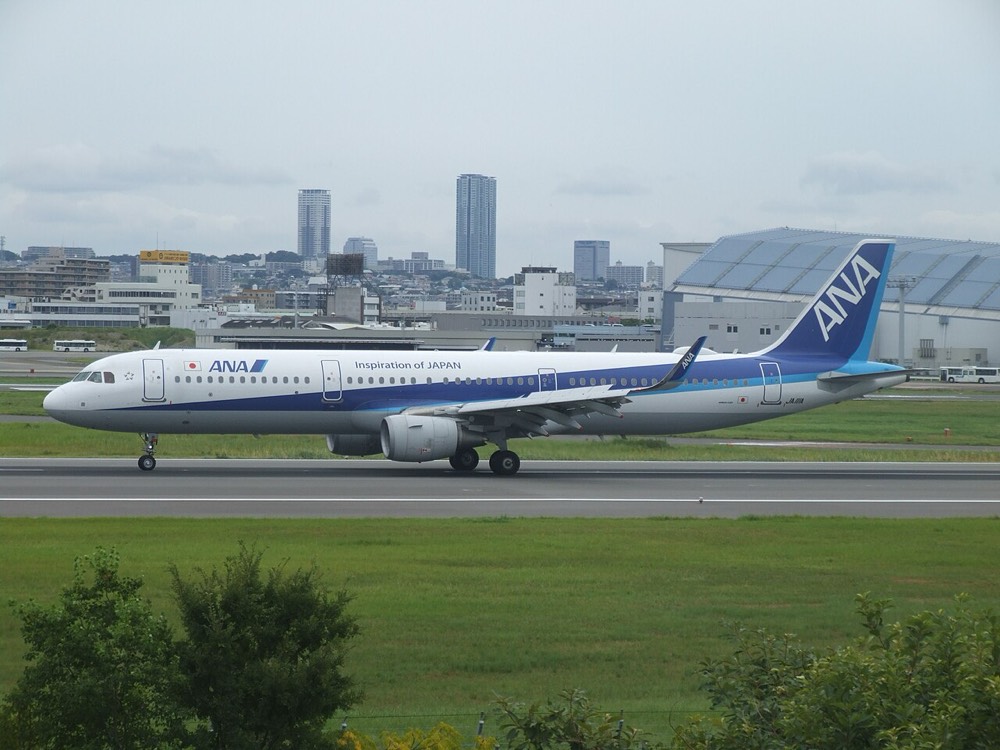
Haneda → Itami: adding up the time
Starting from Shinjuku, a rough door-to-door breakdown looks like this:
- Shinjuku to Haneda Airport: about 45 minutes to 1 hour.
- Check-in and security: ANA requires you to clear domestic security 20 minutes before departure, but plan to arrive at least an hour early, and earlier during holidays[16].
- Flight: just over 1 hour.
- Getting off and collecting bags: 10-30 minutes.
- Itami to Umeda: Osaka Monorail to Hotarugaike, then the Hankyu line, about 30 minutes and 440 yen (2025 figures)[15]; airport buses also run to Umeda, Shin-Osaka and elsewhere.
That adds up to about 4-4.5 hours, the same as the Nozomi or longer. Airfares swing widely with date and how early you book: early-bird fares are sometimes cheaper than the shinkansen, while last-minute fares are often more expensive, so compare directly on airline websites.
LCC Narita → Kansai: cheap, but count the extras
In its winter 2026 schedule, Jetstar Japan flies Narita-Kansai 4 round trips a day from 3,920 yen one way; the cheapest Starter fare excludes checked baggage, and payment and airport fees are extra[12]. Peach is based mainly at Kansai Airport; check its official site for Tokyo flight schedules and baggage fees.
Extra costs to add:
- Getting to Narita: from central Tokyo, the Keisei Skyliner reaches Nippori in as little as 36 minutes for 2,580 yen; see the Tokyo transport guide.
- Checked baggage fees: depend on weight and when you buy; adding bags online in advance is usually cheaper than at the airport counter.
- Kansai Airport to the city: the Nankai Airport Express to Namba is 970 yen and about 45 minutes; for other options see Kansai Airport to Osaka city.
Once these are added, the total often approaches an EX Hayatoku shinkansen fare, while door-to-door time is 1-2 hours longer.
Who flying suits, and who it doesn't
- Good for: people who have just landed at Narita from abroad and want to go straight on to Osaka; anyone who grabs an early-bird fare; people staying near Haneda or in northern Osaka near Itami.
- Not ideal for: people staying in central areas like Tokyo Station or Shinjuku with large luggage; anyone worried that a delayed flight will disrupt their plans; travelers with lots of luggage on an LCC, where baggage fees erase the savings.
Tokyo to Osaka night bus: prices, seat types and arrival times
Bottom line: the night bus is the cheapest way from Tokyo to Osaka and saves a night's accommodation, but you need to be able to sleep on board. WILLER lists Tokyo to Osaka from about 3,000 yen, taking about 8-9 hours[13].
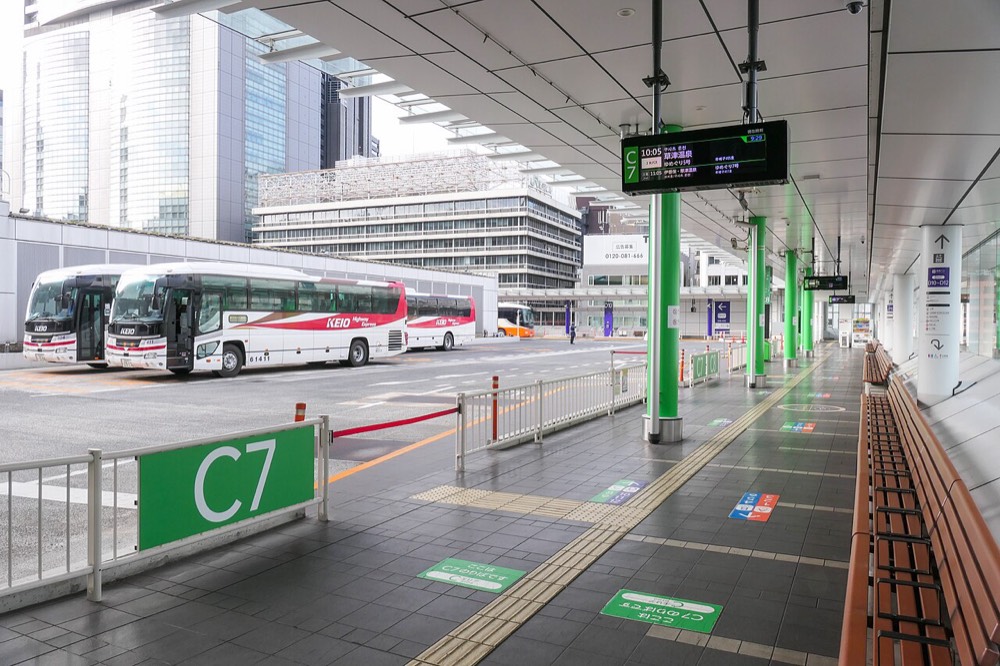
Choosing a seat type
Several companies run highway buses from Tokyo to Osaka, boarding at places such as Tokyo Station and Shinjuku depending on the company and service. Seats fall roughly into three types:
| Seat type | Features | Best for |
|---|---|---|
| 4 seats per row | Cheapest; you sit next to another passenger | Budget-first and younger travelers |
| 3 seats per row (individual seats) | Your own seat with aisles on both sides and deeper recline | People who want better sleep |
| 2 seats per row or semi-private | Curtains or hoods for the most privacy; highest price | Solo women and anyone who prioritizes sleep |
WILLER EXPRESS's original seats include Prime, Relax, Comodo, Dome, Luxia and ReBorn, and its site lets you filter by seats per row, individual seats, privacy curtains, restrooms and more, with buses shown up to 3 months ahead[14]. Prices on the same bus change with the date and remaining seats, and weekends and holidays cost more.
After you arrive
Night buses mostly leave in the evening and reach Osaka early the next morning, when hotels usually can't check you in yet. Leave your bags at the hotel front desk or a station locker, freshen up at a café or public bath, then head out. Daytime highway buses also exist, but they take about as long as night buses, which means spending a whole day on board, so few people choose them unless they want the scenery.
Who the night bus suits, and who it doesn't
- Good for: backpackers and budget-first travelers; people who want to save a night's accommodation and start exploring Osaka first thing in the morning.
- Not ideal for: people who sleep badly on the road or get motion sick; travelers with children or older relatives; anyone with a packed day ahead who needs to be well rested.
How to book Tokyo to Osaka transport: steps for each option
Bottom line: book the shinkansen on smartEX, flights on airline websites and buses on bus company or bus comparison sites; all three can be done online with a credit card before your trip.
Shinkansen
smartEX has no annual fee; register with a credit card to book before your trip, change bookings for free and enter the gates with a QR code, and it is also where you buy advance-purchase tickets. For full registration, change and ticket pickup instructions, see the shinkansen booking guide. If you'd rather not book online, you can buy on the day from a reserved-seat ticket machine or ticket office at Tokyo Station.
Flights
- Search Tokyo to Osaka for your date on the website of ANA, JAL, Jetstar or another airline.
- Check the departure airport (Haneda or Narita) and arrival airport (Itami or Kansai), since their travel times to the city differ a lot.
- On an LCC, add checked baggage when you book; adding it later usually costs more.
- On the day, check in and clear security by the airline's deadline; LCC deadlines can be earlier than those of full-service airlines.
Night bus
- Search Tokyo to Osaka on a bus company website such as WILLER, or on a Japanese highway bus comparison site.
- Filter by boarding stop (Tokyo Station, Shinjuku, etc.), drop-off stop (Osaka Station, Namba, etc.) and seat type.
- Check the arrival time and baggage limits, pay, and save your e-ticket or QR code.
- Get to the boarding point early on the day; bus terminals and roadside stops can be hard to find at night, so check the location in daylight if you can.
What about large luggage? Shinkansen oversized baggage seats and alternatives
Bottom line: on the Tokaido Shinkansen, baggage over 160cm and up to 250cm in total dimensions needs a seat with an oversized baggage area reserved; bring it on without one and you pay 1,000 yen. Simply choose a seat with a baggage area when booking on smartEX, at no extra charge[11]; bags of 160cm or less usually fit on the overhead rack.
- Flights: full-service airlines usually include a free checked baggage allowance on domestic flights; LCCs charge by weight, so add that to the total if you have a lot of luggage.
- Night bus: large bags go in the luggage hold under the bus; limits on number and size depend on the company, so check when booking.
- Don't want to carry it: send your suitcase from your Tokyo hotel to your Osaka hotel and travel light; see the Japan luggage delivery guide.
Planning it smoothly: pick by your situation
- First trip to Japan, Tokyo then Osaka: take the Nozomi, leave in the morning and arrive around midday, with the afternoon free for Dotonbori; once your dates are set, book 21 days ahead with EX Hayatoku 21 for the lowest price.
- Flexible on time and want to save a little: a Hikari or Kodama with EX Hayatoku 7, or a JR Tokai Tours Kodama package; after the Nozomi fare rise in July 2027 this option becomes even more attractive.
- Budget first: the night bus; a 3-across individual seat strikes a good balance between comfort and price.
- Landing at Narita and heading straight to Osaka: compare the total time and cost of an LCC from Narita to Kansai against going into Tokyo and taking the shinkansen.
- Traveling over New Year: the Nozomi is all-reserved from December 25 to January 5, so book your seat in advance; if you'd like to take local trains slowly in winter, see the route examples in Seishun 18 Ticket winter 2026.
FAQ
What is the cheapest way to get from Tokyo to Osaka?
On ticket price alone, the night bus is cheapest: WILLER lists Tokyo to Osaka from about 3,000 yen, varying by date and seat. LCC sale fares can also be a few thousand yen, but once you add checked baggage and the trip out to Narita Airport they are not always cheaper than the bus.
How much is the shinkansen from Tokyo to Osaka?
For an adult one-way ticket in the regular season, the Nozomi costs 14,720 yen for an ordinary reserved seat and 13,870 yen non-reserved; Hikari and Kodama reserved seats cost 14,400 yen. EX Hayatoku 21 for the Nozomi, booked 21 days ahead on smartEX, is 12,980 yen, and EX Hayatoku 7 for the Hikari or Kodama is 12,490 yen (checked November 2026).
Is flying from Tokyo to Osaka faster than the shinkansen?
Only in the air. Haneda to Itami takes just over an hour, but with getting to the airport early, security and about 30 minutes from Itami to Umeda, door-to-door time from central Tokyo usually ends up close to the Nozomi's roughly 3.5 hours. Flying an LCC from Narita to Kansai Airport often takes 5 hours or more door to door.
When will Nozomi shinkansen fares go up, and by how much?
JR Central and JR West announced on October 16, 2026 that Nozomi and Mizuho ordinary reserved seats bought from July 1, 2027 will cost more: Tokyo to Shin-Osaka goes from 14,720 yen to 15,420 yen. Green Car tickets rise for travel from December 15, 2027, to 23,290 yen for Tokyo to Shin-Osaka. Non-reserved seats do not change.
Is a round-trip ticket between Tokyo and Osaka cheaper?
Not any more. The JR group stopped selling round-trip tickets in spring 2026, and the smartEX round-trip discount ended with travel on March 31, 2026. To save money now, look at advance-purchase deals such as EX Hayatoku 21 and EX Hayatoku 7, or JR Tokai Tours' Kodama packages.
What time do Tokyo to Osaka night buses arrive?
Most leave in the evening and arrive in Osaka early the next morning; WILLER lists the ride at about 8-9 hours. Arrival times differ by route and stop, so check them when booking. Your hotel usually won't let you check in that early, so drop your bags first and head out.
Sources
- JR Central & JR West: Revision of Nozomi/Mizuho reserved-seat limited express charges and Green Car charges (October 16, 2026): Nozomi reserved seats rise for purchases from July 1, 2027; Green Car for travel from December 15, 2027; current and new fares
- JR Central, JR West & JR Kyushu: Price revision of Express Reservation, smartEX and LINE kara EX products (October 16, 2026): smartEX Nozomi reserved 14,520 yen to 15,220 yen; early-booking products to be announced separately
- smartEX: EX Hayatoku 21 fares (as of March 13, 2026): Tokyo to Shin-Osaka 12,980 yen
- smartEX: EX Hayatoku 7 fares (as of February 27, 2026): Hikari/Kodama Tokyo to Shin-Osaka 12,490 yen
- JR Central: Nozomi all-reserved periods: Periods in FY2026 when all Nozomi seats are reserved
- JR Central, JR West & JR Kyushu: Revision of Express Reservation and smartEX products (January 30, 2025): Early-booking product overhaul, no changes after purchase on EX Hayatoku 21, round-trip discount ending with travel on March 31, 2026
- Tetsudo Channel: JR East fare revision of March 14, 2026: Round-trip tickets discontinued after March 13, 2026; limited express and Green charges unchanged
- Ekitan: Tokyo to Osaka by Shinkansen: Nozomi, Hikari and Kodama journey times and Hikari reserved fare
- JR Tokai Tours: One-way and day-trip plans (Platto Kodama, etc.): Platto Kodama still listed for sale
- JAPAN RAIL PASS official site: Using the Nozomi/Mizuho: NOZOMI MIZUHO Ticket, Tokyo to Shin-Osaka 4,960 yen
- smartEX: Taking Baggage Onboard: How to reserve a seat with an oversized baggage area
- Jetstar Japan: Winter 2026 flight schedule (August 28, 2026): Narita-Kansai 4 round trips a day, one-way from 3,920 yen, Starter fare excludes checked baggage
- WILLER TRAVEL: Search Bus Routes: Tokyo-Osaka night bus from 3,000 yen, about 8-9 hours
- WILLER TRAVEL: Highway bus / night bus from Tokyo to Osaka: Original seat types; bookings shown up to 3 months ahead
- Norimono News: Getting between Itami Airport and central Osaka (April 30, 2025): Osaka Monorail plus Hankyu to Umeda, 440 yen, about 30 minutes
- ANA: Change to domestic security checkpoint deadline: Pass domestic security 20 minutes before departure (older notice; check the latest on the official site)
Fares, opening hours and event dates can change. Information checked on 2026.11.03; please confirm with official sources before you go.