Miyajima and Itsukushima Shrine Guide: Getting There from Hiroshima, the Visitor Tax, Tides for the Great Torii, Ropeway and Momijidani
How to get to Miyajima from Hiroshima, the 100-yen visitor tax, tide timing for the floating torii, Itsukushima Shrine fees, ropeway booking and autumn leaves.
Quick answer
From Hiroshima Station, take the JR line about 30 minutes to Miyajimaguchi, then a roughly 10-minute ferry. The JR West Miyajima Ferry costs 200 yen one way for adults and is covered by the Japan Rail Pass. Since October 2023 every visitor also pays a 100-yen Miyajima Visitor Tax per entry (preschoolers and some others are exempt). Itsukushima Shrine admission is 300 yen for adults; the Miyajima Ropeway is 2,000 yen round trip, and on weekends and holidays in November 2026 riders must reserve in advance. High tide gives you the floating torii; at low tide you can walk to its base. Check the tide table before you go.
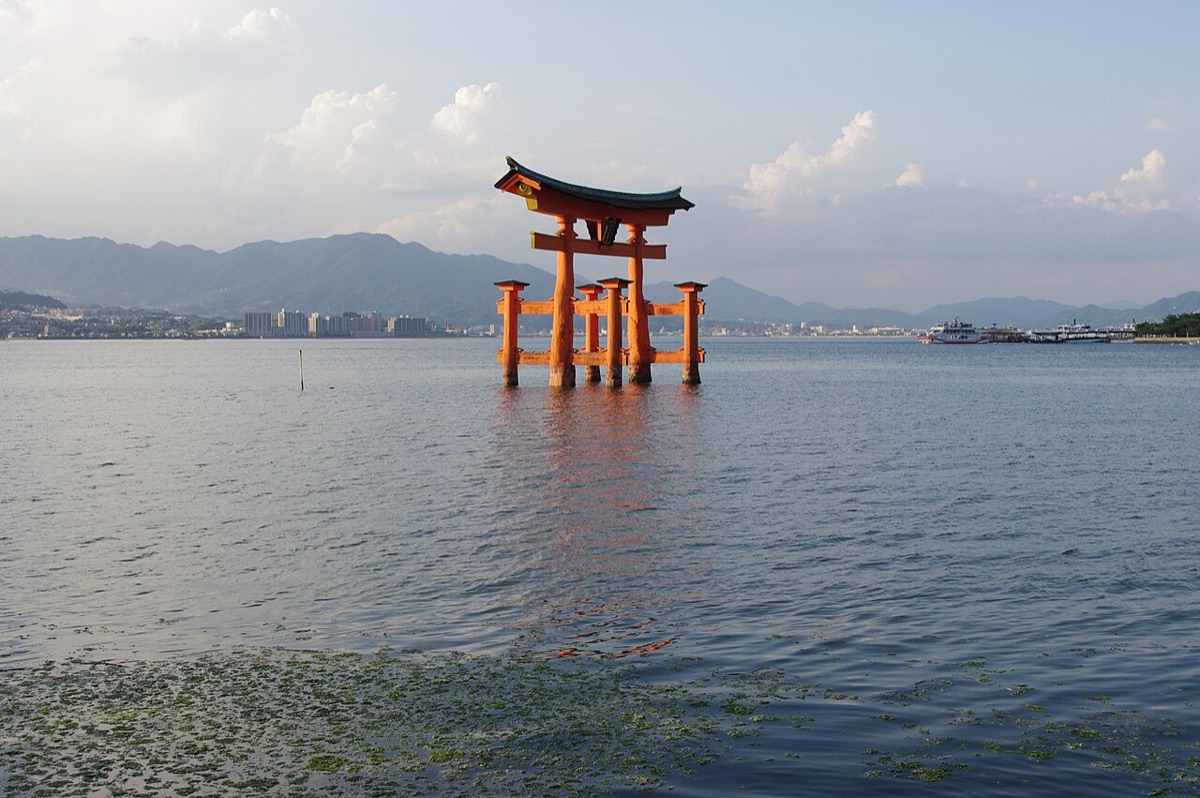
Miyajima (officially Itsukushima) is a small island in Hiroshima Bay. Itsukushima Shrine and its Great Torii standing in the sea are a World Heritage Site and one of Japan's Three Views. This guide covers the things that most often trip up first-time visitors to Miyajima: getting there from Hiroshima, the Miyajima Visitor Tax, reading the tides to choose between a "floating torii" and walking to its base, fees for Itsukushima Shrine and the Miyajima Ropeway, the timing of autumn leaves at Momijidani, and how to plan a Hiroshima day trip.
How do I get from Hiroshima to Miyajima? JR plus ferry is easiest
In short: take the JR Sanyo Line from Hiroshima Station to Miyajimaguchi, about 30 minutes for 420 yen, walk a few minutes to Miyajimaguchi pier, and take a ferry of about 10 minutes to the island.
Two ferry companies sail from Miyajimaguchi, from neighboring piers and with similar crossing times:
- JR West Miyajima Ferry: 200 yen one way for adults and 100 yen for children, with the visitor tax charged separately[2]. Its English website states that the Japan Rail Pass and JR West rail passes can be used[3]. Sailings from Miyajimaguchi between 9:10 and 16:10 detour close to the Great Torii before docking; these are called "Great Torii" sailings, so pick this window if you want photos of the torii from the sea[3].
- Miyajima Matsudai Kisen: also 200 yen one way for adults, but it is not JR, so JR Pass holders must buy a ticket.
Other options:
- Hiroden streetcar: Line 2 from central Hiroshima to Hiroden-Miyajimaguchi. It is slower than JR, but you can board in front of the Atomic Bomb Dome, which suits people visiting Peace Park first.
- World Heritage Route direct boat: sails from a pier beside Peace Memorial Park straight to Miyajima with no transfer. It is not covered by the JR Pass; check the operator for schedules and fares.
If you are coming from Tokyo or Osaka by shinkansen, Hiroshima is a major Sanyo Shinkansen station: about 4 hours from Tokyo on the Nozomi and about an hour and a half from Shin-Osaka. See our shinkansen booking guide for reservations, and is the JR Pass worth it for the math on a nationwide pass.
What is the Miyajima Visitor Tax? 100 yen per person per entry
The Miyajima Visitor Tax is a local tax that Hatsukaichi City began collecting on October 1, 2023. Everyone arriving on Miyajima by boat pays 100 yen per entry[1]. Key points:
- How to pay: When you travel on a passenger vessel (ferries, charter boats and so on), the operator collects the tax along with the fare, so there is no need to visit a city office[1]. The JR ferry fare does not include the tax, so the outbound trip is effectively a 200-yen fare plus the 100-yen tax[2].
- Annual option: Frequent visitors can pay 500 yen per person per year instead, but it must be arranged by the 10th of the month before your first planned visit at Hatsukaichi City Hall or its Miyajima or Ono branch[1]. Most tourists will not need it.
- Exemptions: Preschool children, students and accompanying teachers on school educational activities such as school trips (excluding universities), and holders of rehabilitation or disability certificates (the certificate must be shown)[1]. Island residents and people who commute or attend school on the island beyond set hours are not subject to the tax.
- JR Pass holders pay too: The pass covers the ferry fare; the visitor tax is separate and paid as directed at the Miyajimaguchi pier.
How do Miyajima tides work? High and low tide each have their appeal
The short answer: choose high tide for photos of the Great Torii "floating" on the sea, and low tide if you want to walk to its base and touch the pillars. Miyajima has two high tides and two low tides a day, and the times shift later each day, so always check the Miyajima Tourist Association tide table[9] against the hours you plan to be on the island.
| Tide | What you see | Best for |
|---|---|---|
| High tide (common guideline: about 250 cm or more) | The torii and shrine corridors appear to float on the sea | Photos from the corridors, the shore or a Great Torii ferry sailing |
| Low tide (common guideline: about 100 cm or less) | The water recedes and the tidal flat under the torii is exposed | Walking to the base of the torii; watch your footing on wet ground |
| In between | The lower part of the torii stands in shallow water | A bit of both, good if your time is limited |
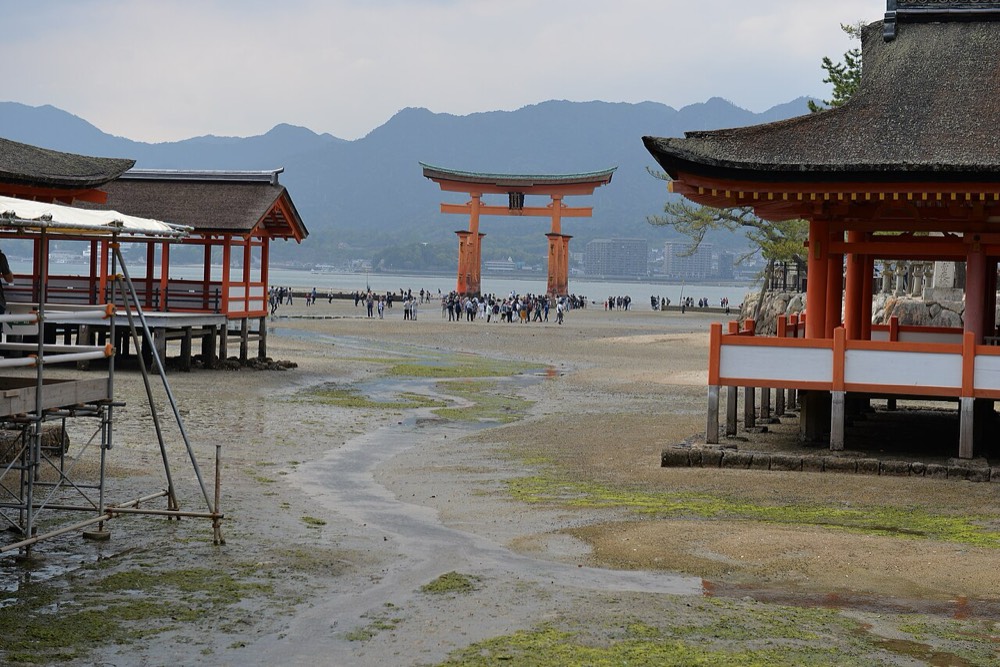
The centimeter figures in the table are rough guidelines often used in guidebooks and online, not official rules; whether you can actually reach the torii also depends on waves and the state of the flats that day. Ideally, stay on the island for at least half a day so you catch both a high and a low tide. Wear shoes you do not mind getting wet on the flats, watch out for hermit crabs and shellfish, and do not treat the torii as something to climb.
Itsukushima Shrine admission and hours
Admission to Itsukushima Shrine is 300 yen for adults, 200 yen for high school students and 100 yen for elementary and junior high students. If you also want to see the Treasure Hall, the combined ticket is better value at 500 yen for adults[4]. Combined tickets are sold only at the shrine entrance, and the Treasure Hall does not accept credit cards[4].
| Item | Adults | High school | Elementary / junior high |
|---|---|---|---|
| Itsukushima Shrine only | 300 yen | 200 yen | 100 yen |
| Treasure Hall | 300 yen | 200 yen | 100 yen |
| Shrine + Treasure Hall combined | 500 yen | 300 yen | 150 yen |
| Senjokaku Hall | 100 yen | — | 50 yen (elementary / junior high) |
The gates open at about 6:30 most of the year, with closing time varying by season: 17:30 from October 15 to November 30, 17:00 in December, 17:30 from January 4 to the end of February, and 18:00 from March 1 to October 14. The Treasure Hall is open 8:00-17:00 and Senjokaku 8:30-16:30[4]. Crowds are thinnest soon after opening, the best time for photos in the corridors.
Do I need to reserve the Miyajima Ropeway? On certain November 2026 dates, yes
The Miyajima Ropeway runs from Momijidani Station up to Shishiiwa Station and is the easiest way up Mt. Misen. Fares are 2,000 yen round trip and 1,100 yen one way for adults, and 1,000 yen round trip for children (elementary school age); visitors 65 and over who show ID get a senior round-trip fare of 1,800 yen[5].
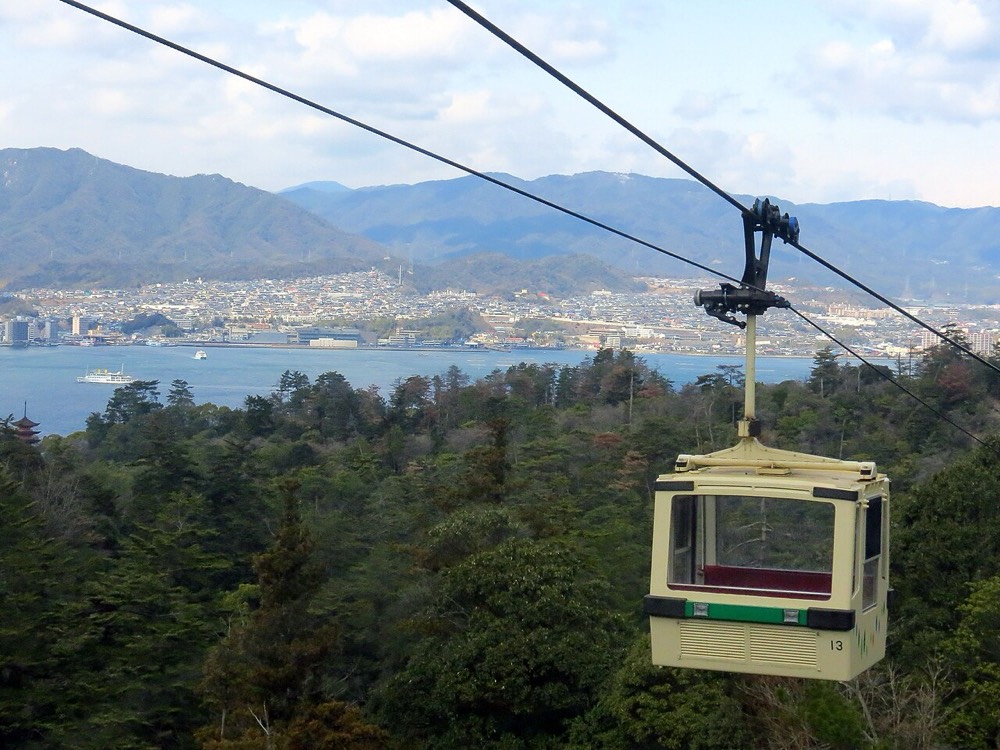
Note that the official site lists weekends and holidays in November 2026 as "specified dates" on which you must reserve a ride online in advance, with bookings opening three months ahead; there are currently no specified dates in December or January 2027[5]. As of November 1, 2026, the site listed uphill service from 9:00 to 16:00 and downhill from 9:20 to 16:30, with possible suspensions in bad weather. From the shrine area you can walk through Momijidani Park to Momijidani Station, and the official site also mentions a free shuttle bus to Momijidani Station (from 9:50, about every 20 minutes).
From Shishiiwa Station there is still a mountain path to the summit of Mt. Misen, so allow 1.5 to 2 hours for the round trip and wear good walking shoes.
When do the leaves turn at Momijidani Park?
Momijidani Park lies just below the ropeway's Momijidani Station, with maples lining both sides of a stream valley. In typical years the color starts in early November and is best from mid- to late November[6]; some media put the peak around November 20[7]. These are typical patterns that shift with the weather each year. As of October 31, 2026, the leaves were still green[6], so check the latest updates before you go or compare with our Japan autumn leaves 2026 forecast.
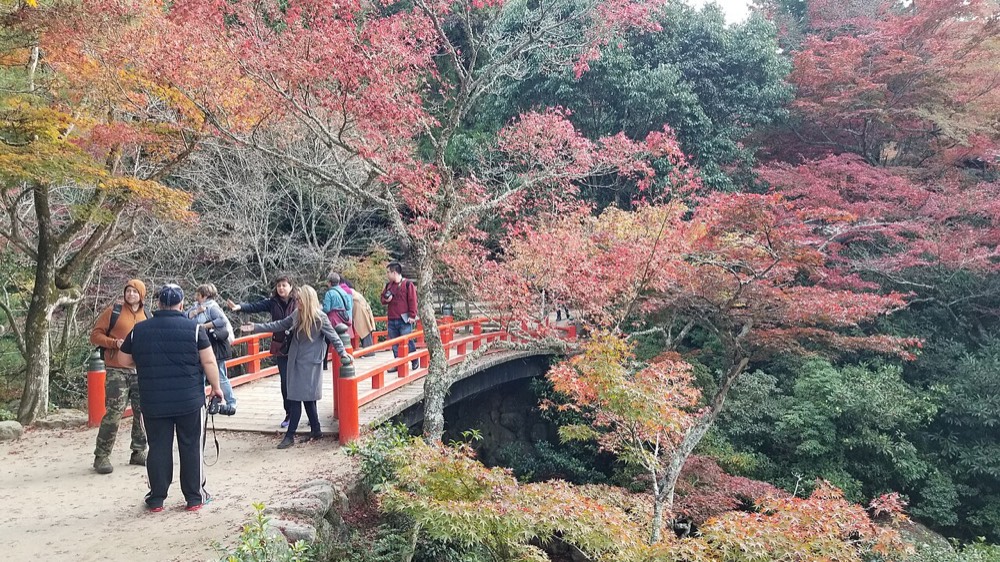
The park is open around the clock and free, and the most popular photo spot is around the vermilion Momiji Bridge[6]. Mid-November weekends get very crowded and also coincide with the ropeway's reservation-only dates, so go on a weekday, or arrive early and see Momijidani before visiting the shrine.
What to eat on Miyajima: momiji manju and grilled oysters
Miyajima's signature sweet is momiji manju, a small maple-leaf-shaped cake. The classic filling is red bean paste, but you will also find custard, cheese and chocolate. Several long-running shops on Omotesando shopping street bake them fresh, and some sell a deep-fried version. Hiroshima Bay is also an oyster-growing area, and grilled-oyster stalls are common along the street, especially in winter; for the season, prices, and oyster boats and huts in the city, see our Hiroshima oysters guide.
The deer on the island are wild animals. They will come over to chew paper bags and maps, so do not feed them and keep food and maps put away.
How to plan a Hiroshima day trip: Peace Park plus Miyajima
With only one day, linking Hiroshima city and Miyajima is the most efficient plan, and you can swap the order to suit the tides:
| Time | Plan | Transport |
|---|---|---|
| 8:00-10:30 | Atomic Bomb Dome (exterior), Peace Memorial Park, Peace Memorial Museum | Streetcar from Hiroshima Station to Genbaku-Dome-mae |
| 10:30-11:30 | Head to Miyajima | Streetcar, or back to Hiroshima Station for JR, then ferry |
| 11:30-13:00 | Lunch and momiji manju on Omotesando | On foot |
| 13:00-14:30 | Itsukushima Shrine and Treasure Hall | On foot |
| 14:30-16:30 | Momijidani Park, or the ropeway up Mt. Misen | On foot / free shuttle bus |
| Evening | See the Great Torii by the tide, return to Hiroshima | Ferry + JR |
The Peace Memorial Museum's permanent exhibition costs 200 yen for adults and 100 yen for high school students, and is free for junior high students and younger. It opens 7:30-19:00 from September to November and 7:30-18:00 from December to February, and some time slots, including 7:30-8:30 in the morning, require an advance online reservation[8]. The Atomic Bomb Dome can only be viewed from outside, and the park itself is open at all hours.
Before you go
- Check the tides first, then choose your hours on the island: this makes or breaks a Miyajima visit. High tide gives you the floating torii, low tide lets you walk underneath, so try to cover at least one of them.
- Reserve the ropeway for November weekends: weekends and holidays in November 2026 are reservation-only dates, and you may not be able to ride without a booking.
- Coins and IC cards: the visitor tax and ferry fare are handled at Miyajimaguchi pier, and having coins or an IC card ready speeds things up when lines are long.
- Stay overnight for the evening view: most day-trippers leave by late afternoon, so staying on the island lets you see the torii after the crowds are gone. For lodging, our Japan ryokan guide explains how staying at a ryokan works.
FAQ
How do I pay the Miyajima Visitor Tax?
The ferry company collects it together with your ticket when you sail to the island: 100 yen per person per entry, with no trip to a city office needed. Preschool children, students and teachers on school activities, and holders of disability certificates are exempt. Frequent visitors can choose a 500-yen annual payment, but it must be arranged in advance at a Hatsukaichi City office.
Can I use the Japan Rail Pass on the Miyajima ferry?
Yes, on the JR West Miyajima Ferry. Its English website states that the Japan Rail Pass and JR-WEST Rail Passes are accepted. Miyajima Matsudai Kisen, which sails from the same pier, is not JR and needs a separate ticket. The visitor tax is not covered by any rail pass.
When does the Great Torii appear to float?
At high tide. A commonly quoted guideline is a tide level of about 250 cm or more for the floating look, and about 100 cm or less if you want to walk to the base. High and low tides happen twice a day and shift daily, so check the Miyajima Tourist Association tide table before you go.
How much is Itsukushima Shrine and what are the hours?
Adults 300 yen, high school students 200 yen, elementary and junior high students 100 yen. A combined ticket with the Treasure Hall is 500 yen for adults. Gates open at 6:30 and close at 17:30 from October 15 to November 30, 17:00 in December, and 18:00 from March 1 to October 14.
Can I see Miyajima and Hiroshima city in one day?
Yes, if you stick to the highlights. A common plan is Peace Memorial Park and the Atomic Bomb Dome in the morning, then Miyajima from midday for the shrine and Omotesando shopping street, timing the torii with the tide in the late afternoon. For the ropeway up Mt. Misen or a relaxed autumn walk, stay on the island or add half a day.
Sources
- Hatsukaichi City: About the Miyajima Visitor Tax: Tax amount, annual option, who is taxed, exemptions and how it is collected
- JR West Miyajima Ferry: Fares: 200 yen adult / 100 yen child one way, visitor tax extra
- JR West Miyajima Ferry (English site): Japan Rail Pass and JR-WEST Rail Pass accepted; Great Torii sailing hours
- Itsukushima Shrine official site: Admission and hours: Admission, Treasure Hall combined ticket, seasonal opening hours
- Miyajima Ropeway official site: Fares: Fares; operating hours and November 2026 reservation-only dates on the top page
- Walkerplus Autumn Leaves: Miyajima Momijidani Park: Typical color change and peak periods; status as of October 31, 2026
- Rurubu&more: Miyajima (Momijidani Park) autumn leaves: Typical peak around November 20
- Hiroshima Peace Memorial Museum: Visitor information: Admission and monthly opening hours
- Miyajima Tourist Association: Tide table: Daily high and low tide times and levels
Fares, opening hours and event dates can change. Information checked on 2026.11.01; please confirm with official sources before you go.