Okinawa Souvenirs: How to Choose Yukishio Chinsuko, Beni-imo Tarts and Awamori, and Where to Buy Them at Naha Airport, Kokusai-dori and Supermarkets
Best Okinawa souvenirs compared by price and shelf life, where to buy at Naha Airport, Kokusai-dori and supermarkets, plus awamori and sweet potato rules.
Quick answer
The safest Okinawa souvenir mix: Nanpudo's Yukishio Chinsuko for sharing (432 yen for 6 packs of 2, 810 yen for 24 pieces, 70-day shelf life), an Okashigoten beni-imo tart box for family, and awamori kusu (aged 3+ years) for drinkers. Okashigoten Kokusai-dori Matsuo opens 9:00–22:00, its Naha Airport shop 7:00–20:30; most airport souvenir shops run 7:00–20:30. Japanese domestic flights have no 100 ml liquid rule, but drinks of 24–70% ABV are capped at 5 liters per person, and raw purple sweet potatoes must be disinfected before leaving Okinawa.
Okinawa souvenirs can feel endless, but three questions cut the list in half: how long it needs to keep, how many people you are giving to, and whether it fits in your luggage. This guide compares classics such as Yukishio Chinsuko, beni-imo tarts, brown sugar and awamori by maker, official price and shelf life, then compares Naha Airport, Kokusai-dori, supermarkets and Okashigoten stores, and ends with a buying timeline from the day before you leave Okinawa to boarding. How to explore the Kokusai-dori area and Don Quijote's floors and hours are already covered in our Kokusai-dori guide; this page focuses only on what to buy, where to buy it and how to carry it.
Best Okinawa souvenirs compared: price and shelf life at a glance
Bottom line: for handing out to lots of people, choose individually wrapped Yukishio Chinsuko; for one impressive box, choose beni-imo tarts; for someone who knows their drinks, choose an awamori kusu with an age statement. The table lists only prices published on makers' official sites; where none could be found it says "see store label" rather than guessing.
| Item | Representative maker | Official price (tax incl.) | Shelf life | Easy to carry? |
|---|---|---|---|---|
| Yukishio Chinsuko (雪塩ちんすこう) | Okinawa Nanpudo | 432 yen for 6 packs of 2, 810 yen for 24 pieces, 1,512 yen for 48 pieces | 70 days | Light, individually wrapped; crumbly but heat-tolerant |
| Beni-imo tart (元祖紅いもタルト) | Okashigoten | See store label | Go by the date on the box | Boxed; avoid heavy pressure |
| Traditional chinsuko (ちんすこう) | Many makers | See store label | See package | Light, good for bulk gifts |
| Okinawa brown sugar (kokuto) | Island sugar mills | See store label | See package | Small wrapped pieces, very portable |
| Shima series snacks (Shima Karinto, Shima Sata Andagi) | Okinawa Nanpudo | 270 yen each | See package | Small bags, good add-ons |
| Shima Butter (brown sugar, beni-imo) | Okinawa Nanpudo | 972 yen each | See package | Jarred spread; may count as a liquid in international carry-on |
| Awamori, kusu | Distilleries across Okinawa | See store label | No best-before date on spirits | Glass bottle; check in on international flights |
| Instant and dried Okinawa soba | Many makers | See store label | See package | Bulky but light |
| Shrimp crackers (えびせん) | Many makers | See store label | See package | Takes up space, fragile |
| Rafute (braised pork belly) cans and pouches | Many makers | See store label | See package | Contains meat; check entry rules before flying home |
Yukishio Chinsuko prices and shelf life are taken from Nanpudo's official pages for the Milk Flavor and bagged products[4][5]; check boxed prices for the plain version in store or on the official site.
Yukishio Chinsuko vs. Yukishio Sand
What people call "Yukishio cookies" is usually Nanpudo's Yukishio Chinsuko, the traditional Okinawan shortbread chinsuko made with snow salt from Miyako Island; the official site lists a 70-day shelf life[4]. Often confused with it is Yukishio Sand, a sandwich cookie from the Miyakojima no Yukishio company, which has a Kokusai-dori main store and a counter on the first floor of Don Quijote Kokusai-dori in Naha, both open 10:00–21:00 from November to June[6]. They come from different companies and have different textures; if you want both, you can get them on Kokusai-dori in one trip.
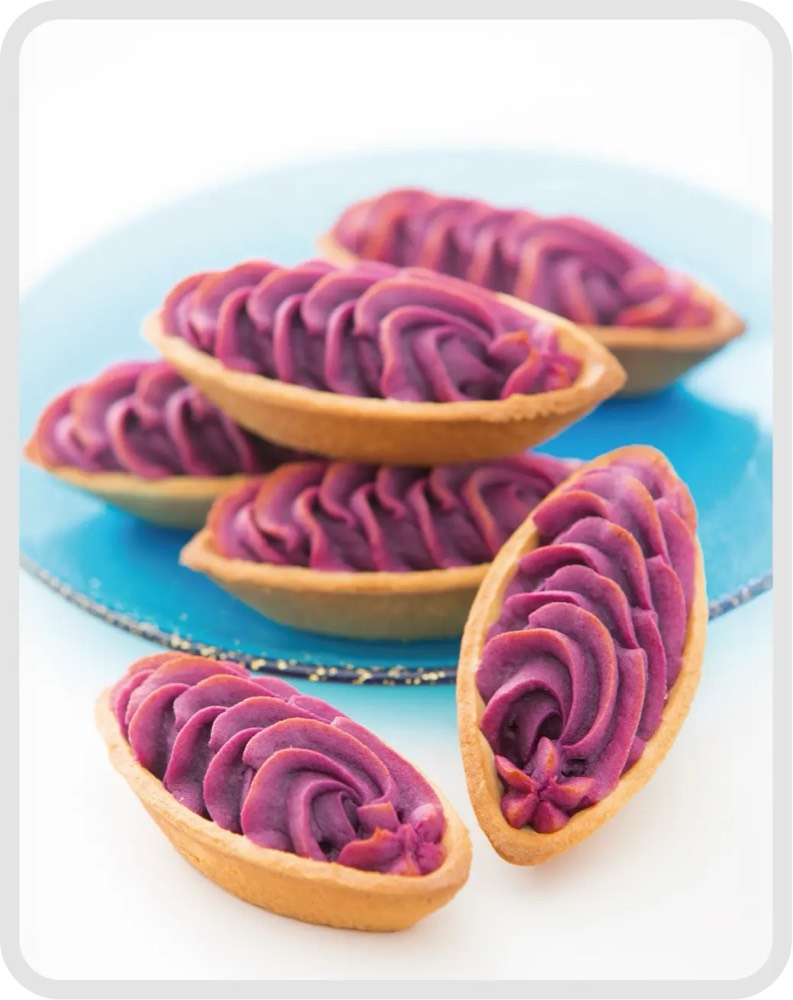
Beni-imo tarts: check the date on Okashigoten's "original"
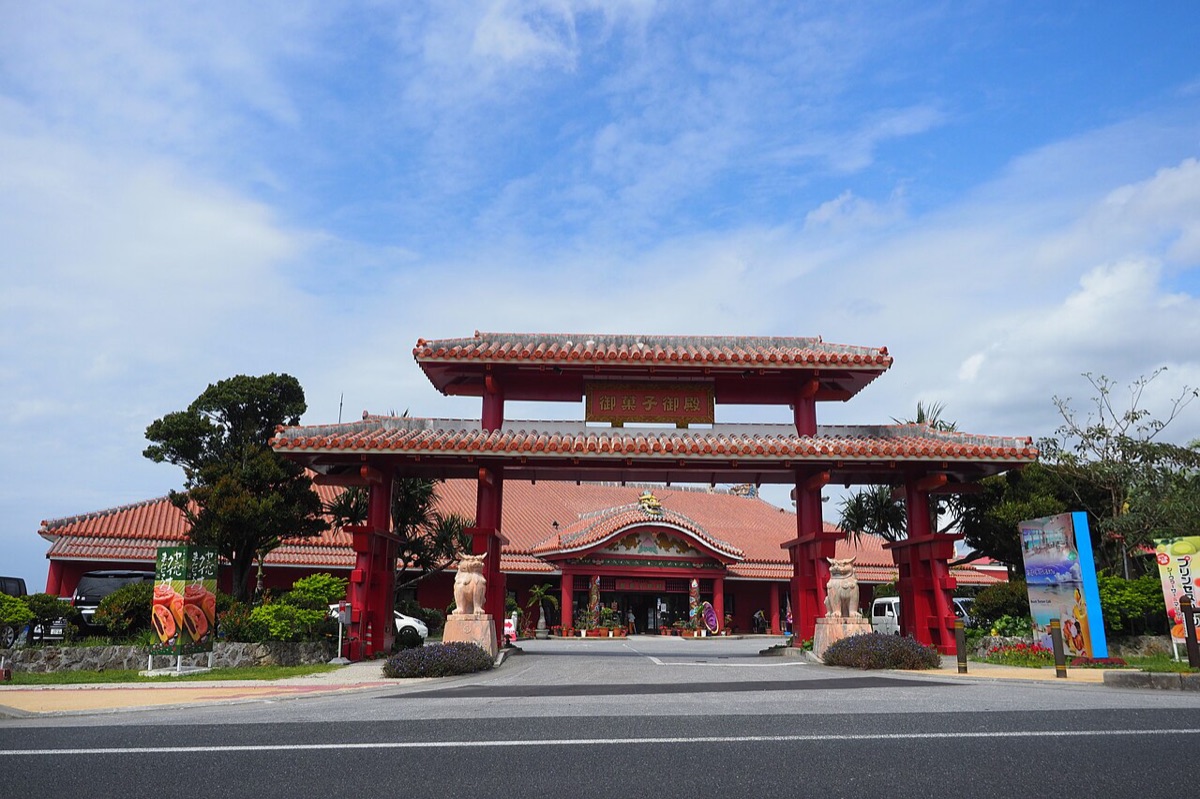
Okashigoten's beni-imo tart is one of Okinawa's most common souvenirs, with shops on Kokusai-dori, at Naha Airport, and in Yomitan and Onna. Its FAQ explains that when a label says "XX days from production," the production day is not counted, and the letter on the box shows which factory made it (A for Yomitan main store, N for Onna, Z for Matsuo)[3]. We could not find the tart's price or number of days on the official site, so simply check the best-before date on the box. The Yomitan main store has an attached factory serving freshly baked tarts only available there[16], an easy stop if you are driving north.
Brown sugar: know "Okinawa kokuto" from "processed brown sugar"
Bottom line: for pure brown sugar, pick packages labeled 沖縄黒糖 (Okinawa kokuto) or 純黒糖 (pure brown sugar). According to the Cabinet Office, Okinawa kokuto is made on eight remote islands, Tarama, Hateruma, Iriomote, Yonaguni, Kohama, Ie, Iheya and Aguni, by boiling down sugarcane juice and letting it set with nothing added; "processed brown sugar" (加工黒糖) is blended with raw sugar or molasses[12]. Price and flavor differ, so turn the package over and check the ingredients.
How to choose awamori and kusu: 3 things to read on the label
Bottom line: for a gift, look first for "kusu" and the age on the label, then the alcohol strength, and only then the bottle.
- "Kusu" (古酒) has rules: awamori bottled since 2015 may only be called kusu if it is 100% awamori aged at least 3 years; for blends of different ages, the front label must show the age of the youngest component[11].
- Strength decides how you carry it: most awamori is above 24% ABV, so it counts toward the 5-liter-per-person limit on flights (details below).
- Small bottles are more practical: kusu is pricey and comes in glass; to sample several distilleries, a set of small bottles travels better than one big bottle.
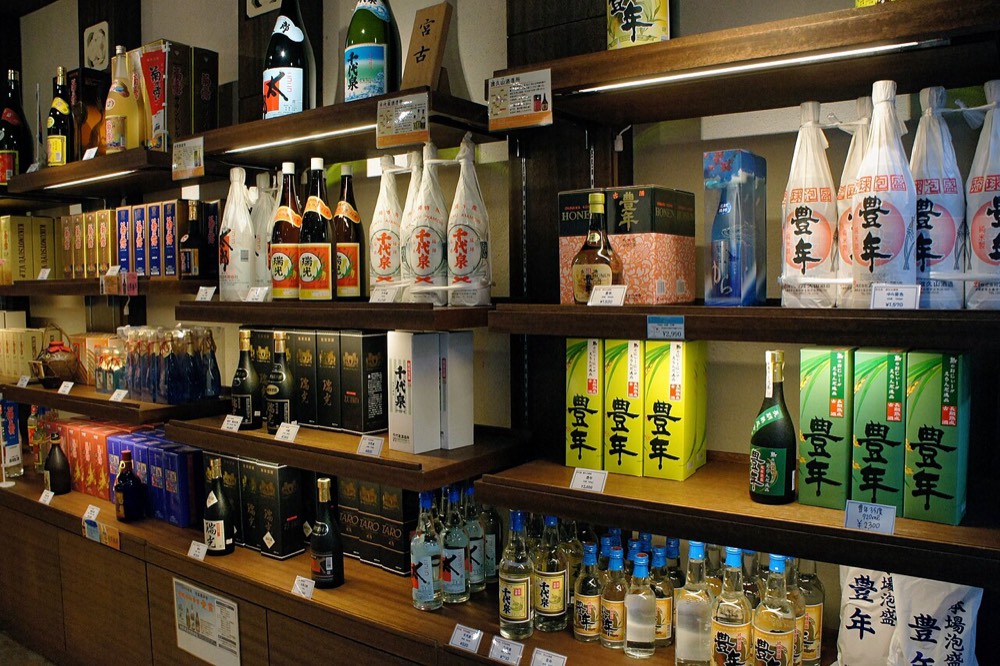
On the second floor of Naha Airport's domestic area there is an awamori specialist, Awamoriya Airport South, which says it helps customers choose and offers tax-free sales[7]. If you are unsure, tell the staff whether the recipient prefers light or rich flavors; it is faster than decoding labels yourself.
Kokusai-dori, airport or supermarket: where to buy Okinawa souvenirs for the best value
Bottom line: buy bulk gifts and look for specials in town (Kokusai-dori, Don Quijote, supermarkets); leave branded boxes and awamori for the airport if needed; visit a large Okashigoten store for the full range or freshly baked tarts.
| Place | Hours (checked November 2026) | Pros | Watch out for |
|---|---|---|---|
| Kokusai-dori (Okashigoten Matsuo and others) | Matsuo 9:00–22:00[2]; Kumoji and Makishi currently shortened to 9:00–21:00[1] | Many shops, wide range, open in the evening | Prices for the same item can differ by shop; compare a few |
| Don Quijote Kokusai-dori | Open late into the night (see our Kokusai-dori guide) | Snacks and drugstore items in one place, tax refunds available | Long checkout lines at night |
| Supermarket (e.g. San-A Naha Main Place) | 9:00–22:00, food hall until 23:00[13] | Okinawa-products souvenir section, many family-size packs | Not on Kokusai-dori; about 7 minutes' walk from Yui Rail Omoromachi Station[13] |
| Naha Airport domestic 2F | Most souvenir shops 7:00–20:30[7] | Last-minute top-up, nearly all classics | Crowded at peak times; some shops close before late flights |
| Naha Airport international area | Mostly 7:00–20:30, some open later[7] | Shioya, Dear Okinawa, a drugstore and an electronics shop | Duty-free (DFS) currently 7:30–19:30[7] |
| Okashigoten Yomitan main store | Currently shortened to 9:00–19:00[16] | Attached factory, freshly baked tarts | Needs a car; fits a trip north |
Naha Airport souvenirs: domestic vs. international area
Naha Airport's official shop listings show that most general souvenir shops are on the second floor of the domestic area, including Okashigoten Naha Airport (2F departure lobby near the north-side B and C departure gates, 7:00–20:30)[1], Washita Shop (Okinawan produce and chilled goods), Awamoriya, and airline-run shops such as JAL PLAZA and ANA FESTA[7]. The international area has Shioya (with snow-salt soft serve), the Okinawan craft select shop Dear Okinawa, the drugstore Cocokara Fine and AirBic Camera, among others[7].
The official site specifically marks the DFS ROYCE shop as inside the international gates, while most other shops carry no such note[7]; to be sure whether a shop is before or after security, check the official floor map before you go. The DFS Naha Airport duty-free shop in the domestic area focuses on international luxury brands, not general souvenir tax-free sales[7], so there is no need to go there for snacks.
Saving money: loose packs, specials and family sizes
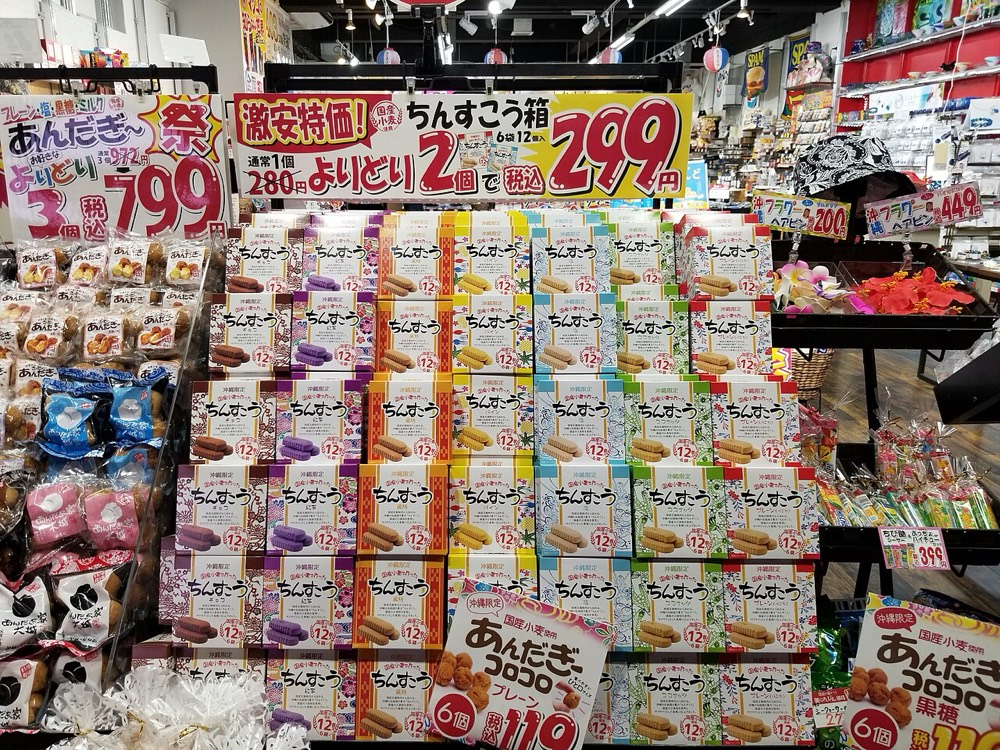
We found no official data on price differences between outlets, so we are not claiming any shop is a certain percentage cheaper. What is clear: branded boxes are mostly the same product wherever you buy them, while town discount souvenir shops, Don Quijote and supermarkets often have special-offer stacks or family-size packs. The chinsuko photo above shows a Naha shop selling boxes at a two-for-one-price deal. For gifts to share with coworkers, loose packs or large boxes bought in town are the best value; for a formal gift box for an elder, where you buy makes little difference.
Tax-free shopping: pay tax first from November 2026
Since November 1, 2026, Japan's tax-free system has switched to "pay the tax-inclusive price, then get the tax back after customs confirmation when you leave," with a minimum of 5,000 yen before tax at the same store on the same day. Snacks are consumables, so if you open and eat them in Japan they are no longer eligible; see Japan's 2026 tax refund system for the full process and Naha Airport procedures.
Most souvenir shop items are inexpensive, so hitting 5,000 yen at one store is most likely during a big Don Quijote haul; see our Don Quijote shopping guide for tips.
Can you take awamori on a plane? Liquids, checked bags and sweet potato rules
Bottom line: on Japanese domestic flights, awamori can go in carry-on or checked baggage; on international flights, check it in or buy it after security; raw purple sweet potatoes must be disinfected before leaving Okinawa.
Liquids and alcohol: domestic and international rules differ
- Domestic flights: Japan's Ministry of Land, Infrastructure, Transport and Tourism says the international liquid restrictions are not applied on domestic flights[10] (normal security screening still applies).
- Alcohol limits: drinks up to 24% ABV have no per-person quantity limit; over 24% and up to 70%, the limit is 5 liters per person; over 70% is banned in both carry-on and checked bags. All must be in retail packaging, not decanted into a flask[9].
- International flights: carry-on liquids are limited to 100 ml[9], so put awamori, Shima Butter and other liquids or spreads in checked baggage, or buy at duty-free after international security. If you connect, liquids may be confiscated at the second security check, so checking them in is the safest option.
- Packing glass bottles: wrap them in clothes and place them in the middle of the suitcase rather than near the edges.
Flying from Okinawa to mainland Japan: plant quarantine for sweet potatoes and produce
The Plant Protection Station FAQ states clearly that sweet potatoes, including purple beni-imo, cannot be taken out of Okinawa unless disinfected[8]. Disinfection uses steam heat at 47–48°C with no pesticides, and is free for personal use at the Naha Plant Protection Station or its Naha Airport office; since it takes time, contact them in advance[8].
The same FAQ says citrus fruit such as shikuwasa, plus its juice and seeds, can be taken freely, as can mangoes and pineapples[8]; citrus seedlings require inspection. Baked sweets like beni-imo tarts are not among the restricted items listed on that page; ask the Plant Protection Station if in doubt.
Back home: every destination has its own entry rules
Being allowed to take something out of Japan does not mean your destination allows it in. Check your home country's customs and quarantine rules for alcohol allowances, meat products and fruit. For travelers entering Taiwan, for example, Taiwan's Customs Administration sets the personal alcohol allowance at 1.5 liters for travelers aged 18 or older[14]; Taiwan also bans meat and processed meat products in passenger baggage, vacuum-packed included[15], so take extra care with meat items such as rafute pouches. Travelers from other places should follow the rules where they live.
Last-day Okinawa souvenir plan: from the evening before to boarding
Bottom line: finish buying and packing bulk gifts in town the night before, and use the airport only to top up gift boxes and awamori. The example below assumes a midday flight the next day and a hotel in central Naha.
| Time | Place | What to do |
|---|---|---|
| Day before 18:00–20:00 | Kokusai-dori | Compare a few souvenir shops; buy Yukishio Chinsuko, brown sugar and other items to share |
| Day before 20:00–21:00 | Yukishio Sand, Okashigoten | Buy gift boxes for family (Kumoji and Makishi currently close at 21:00[1]) |
| Day before after 21:00 | Don Quijote Kokusai-dori | Top up snacks and drugstore items; to reach the tax refund minimum, check out at one store |
| Day before, bedtime | Hotel | Put awamori and liquids in checked luggage; keep sweet boxes on top so they don't get crushed |
| About 2.5–3 hours before departure | Head to Naha Airport | Take the Yui Rail from Kenchomae Station, fare 290 yen |
| After arriving | Airport 2F | Check in and drop bags first, then top up at Okashigoten Naha Airport or Awamoriya |
| Before the security cutoff | Security | Finish shopping before security; on international flights, remember the tax refund confirmation when departing |
Packing the night before is the least stressful approach. If you buy more than you can carry, you can send bags ahead within Japan by courier; see our Japan luggage delivery guide. If you are leaving from Senagajima or near the airport, combine your last shopping with Senagajima Umikaji Terrace.
Budgeting: three gift scenarios
Calculated with Nanpudo's official prices (checked November 2026)[4][5]:
- Office of about 20 people: one 48-piece box of Yukishio Chinsuko (24 packs of 2) at 1,512 yen covers everyone, about 63 yen per person.
- Small group of 5–6: one bag of 6 packs of 2 at 432 yen, exactly 6 packs.
- A varied set for family: Shima Butter 972 yen + Shima Karinto 270 yen, 1,242 yen in total, plus a box of beni-imo tarts (at the store price).
Who each Okinawa souvenir suits, and who it doesn't
Choose Yukishio Chinsuko if: you are handing out to coworkers or classmates, or won't see the recipients for a while after you get home. Individually wrapped with a 70-day shelf life, it is the hardest to get wrong[4].
Choose beni-imo tarts if: you are giving to family or a boss and want a box that says "Okinawa" at a glance. The downside is that the box crushes easily, so think twice if luggage space is tight.
Choose awamori kusu if: the recipient is an elder or friend who already drinks spirits. Not suitable if you travel carry-on only on an international flight, or if your destination has strict alcohol rules.
Choose brown sugar or Shima Butter if: you are on a budget but want something with local character; small pieces of brown sugar are light and ideal for backpackers.
Not recommended: canned or pouched meat dishes (many countries and regions restrict their entry), raw purple sweet potatoes (they need disinfection first), and fresh sweets that need refrigeration (they spoil on a long trip home).
How to plan it smoothly
Split your souvenirs into two batches: buy the items to share on Kokusai-dori or at a supermarket first, and leave some flexibility to top up branded boxes and awamori at the airport. Most airport 2F souvenir shops close by 20:30[7], so if you are on a late flight, don't leave everything to the end. Without a car, Kokusai-dori, Omoromachi and the airport are all on the Yui Rail line; see Okinawa without a car for routes. If you haven't decided what to eat yet, read our Okinawa food guide first; tasting things locally before you buy makes it less likely you'll bring home souvenirs nobody likes.
FAQ
Are Okinawa souvenirs more expensive at the airport?
We found no official data on price differences between outlets. Branded boxes such as beni-imo tarts and Yukishio Chinsuko are mostly the same products at the airport and in town; the difference is selection and discounts. The airport stocks most classics, but Kokusai-dori discount shops, Don Quijote and supermarkets more often have specials or family-size packs, so buy bulk gifts in town.
What are Yukishio cookies? Are they the same as Yukishio Chinsuko?
"Yukishio cookies" usually means Nanpudo's Yukishio Chinsuko, the traditional Okinawan shortbread chinsuko made with Miyako Island's snow salt. Yukishio Sand is a different product: a sandwich cookie from the Miyakojima no Yukishio company, sold at its Kokusai-dori main store and a counter inside Don Quijote Kokusai-dori.
Can I take awamori on a plane?
Yes, but the rules depend on the flight. Japanese domestic flights have no 100 ml liquid limit; drinks between 24% and 70% ABV are limited to 5 liters per person in retail packaging, and anything over 70% is banned. On international flights, carry-on liquids are limited to 100 ml, so check awamori in or buy it at duty-free after security.
Can I take beni-imo tarts from Okinawa to mainland Japan?
The plant protection rules cover raw sweet potatoes, including purple beni-imo: they cannot leave Okinawa without disinfection, which is free for personal use at the Naha Plant Protection Station or its Naha Airport office. Baked sweets like beni-imo tarts are not among the restricted items listed on that page; ask the plant protection station about any processed item you are unsure of.
Which Okinawa souvenirs keep the longest?
Based on what official sites show, Nanpudo's Yukishio Chinsuko has a 70-day shelf life, one of the longer-keeping options. Brown sugar, awamori and dried Okinawa soba noodles also tend to keep well, but check each package. For Okashigoten beni-imo tarts, go by the date on the box; for people you will not see for a while, chinsuko or brown sugar is safer.
Sources
- Okashigoten: Store guide (Kokusai-dori Kumoji, Makishi, Naha Airport, Ishigaki): Hours of the small Kokusai-dori shops and Naha Airport shop, airport shop location
- Okashigoten: Kokusai-dori Matsuo store: Matsuo store hours 9:00–22:00 and products
- Okashigoten: FAQ: How best-before dates are labeled, factory codes
- Okinawa Nanpudo: Yukishio Chinsuko Milk Flavor (small): 810 yen for 24 pieces, 70-day shelf life, 432 yen for 6 packs of 2 and Shima series prices
- Okinawa Nanpudo: Yukishio Chinsuko Milk Flavor (large): 1,512 yen for 48 pieces, 70-day shelf life
- Miyakojima no Yukishio: Stores: Hours of Yukishio Sand Kokusai-dori main store and Don Quijote counter
- Naha Airport: Shops & Restaurants: Floors and hours of domestic and international souvenir and duty-free shops (checked November 2026)
- MAFF Plant Protection Station: FAQ for domestic travelers: Sweet potatoes from Okinawa must be disinfected; citrus fruit and juice may be taken freely
- MLIT: Typical items restricted in carry-on or checked baggage: Alcohol 24–70% limited to 5 liters per person, over 70% banned (updated April 24, 2026)
- MLIT Civil Aviation Bureau: FAQ on liquid restrictions: Domestic flights do not apply the international liquid restrictions
- Japan Tourism Agency multilingual commentary database: Aged awamori: Kusu must be 100% awamori aged 3 years or more
- Cabinet Office (Okinawa development): Okinawa kokuto brown sugar: Pure brown sugar from 8 remote islands vs. processed brown sugar
- Mapple Travel Guide: San-A Naha Main Place: Hours, food hall until 23:00, about 7 minutes' walk from Omoromachi Station
- Customs Administration, Ministry of Finance (Taiwan): Higher duty-free allowances for inbound passengers: Alcohol allowance when entering Taiwan (applies only to entry into Taiwan)
- Central News Agency (Taiwan): Foods that cannot be brought into Taiwan: Taiwan bans meat and processed meat products, including vacuum-packed, in passenger baggage
- Okashigoten: Yomitan main store: Factory-store-only freshly baked beni-imo tarts, opening hours
Fares, opening hours and event dates can change. Information checked on 2026.11.17; please confirm with official sources before you go.