Naminoue Shrine Guide: Access, How Long to Stay, Omamori and Goshuin, New Year Crowds and Naminoue Beach
Naminoue Shrine, head of Ryukyu's Eight Shrines, sits on a cliff above Naha's only beach. Access, office hours, omamori, goshuin, New Year crowds and nearby sights.
Quick answer
Naminoue Shrine is in Wakasa, Naha, and heads the Eight Shrines of Ryukyu. Entry is free; the amulet office (omamori and goshuin) is open about 9:00-16:45. It is about 15 minutes on foot from Asahibashi monorail station, or about 10 minutes and roughly 1,200 yen by taxi from Naha Airport. A visit takes 20-30 minutes, or 1-1.5 hours with the beach and Gokokuji. January 1-3 is crowded all day and the shrine car park is closed. In 2026 the Saitan-sai was January 1 at 7:00 and the Genshi-sai January 3 at 10:00; the 2027 schedule has not been announced (checked November 2026).
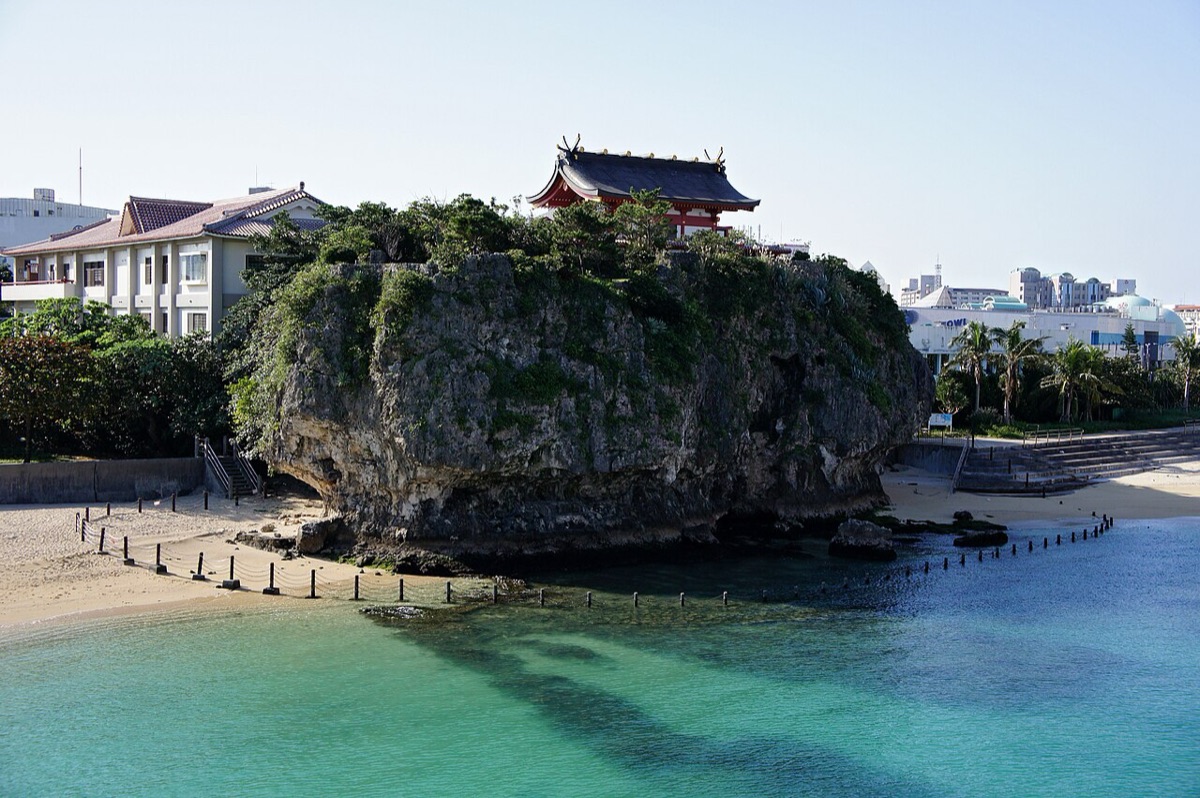
Naminoue Shrine (Naminoue-gu) is the closest shrine to the sea in central Naha and one of the easiest to fit into a trip: its red worship hall sits on a coral cliff, with the city's only beach right below. This guide covers Naminoue Shrine access, amulet office hours, how to get omamori and goshuin, how long to stay, and the crowds and parking limits during the New Year visit season, plus half-day routes from Naha Airport or Kokusai-dori so you can decide whether to go on arrival day, your last day, or New Year's morning.
What is Naminoue Shrine? Head of the Eight Shrines of Ryukyu
In short: Naminoue Shrine was the first of the "Eight Shrines of Ryukyu" officially recognized in the Ryukyu Kingdom era and is now Okinawa's chief guardian shrine. Visitors come mainly for the clifftop setting and for Okinawa-style omamori and goshuin.
According to the history page on the official website, the cliff was a sacred place for praying for harvests and safe voyages even before the shrine existed. Legend says a fisherman found a talking stone on the beach, and an oracle later revealed the deity to be Kumano Gongen, so the royal government built a shrine to honor it. Ships entering and leaving Naha port came here to pray for safe passage, and the Ryukyu king visited in person every New Year; it was called the foremost shrine of the country[2].
The main deities today are Izanami-no-mikoto, Hayatamao-no-mikoto and Kotosakao-no-mikoto, alongside the hearth deity Hinukan, the local guardian deity and Sukunahikona, a deity of medicine. It became a minor state shrine in 1890 and was damaged in World War II; the main hall and office were rebuilt in 1953, the worship hall in 1961, and a major Heisei-era rebuilding was completed in 1993[2]. It was designated a Naha City historic site in 2006[5].
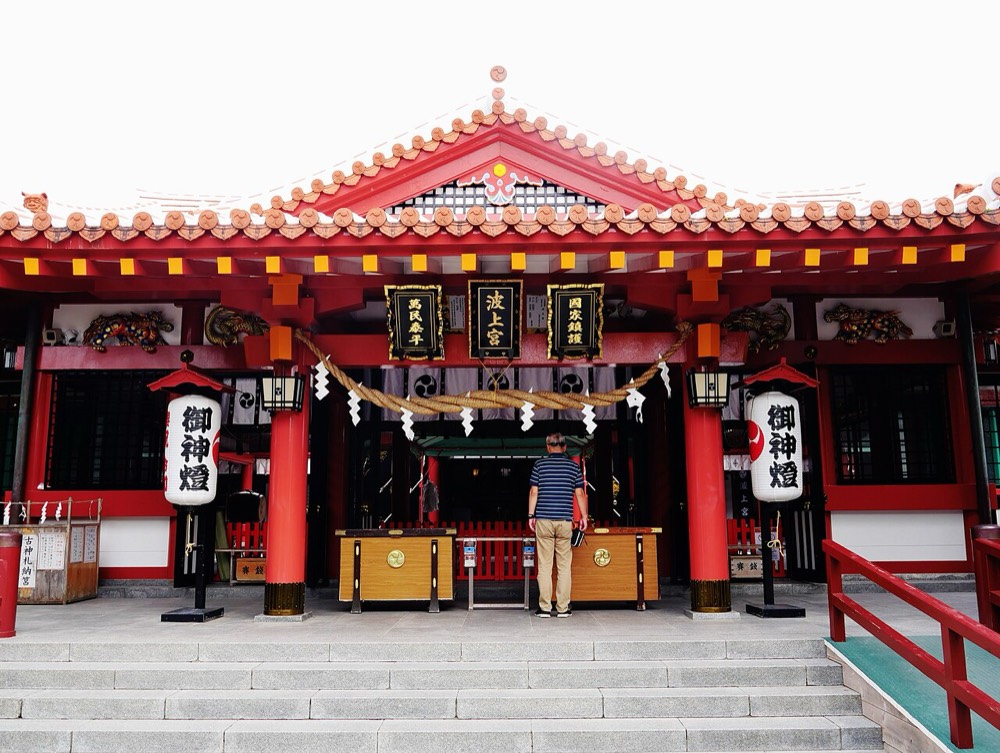
The biggest difference from shrines on Honshu is the Okinawan red-tiled roof and bright red pillars of the worship hall, with dragon carvings under the eaves. The grounds are small: the torii, purification fountain, worship hall and amulet office are close together, and you can walk around in ten-odd minutes.
Naminoue Shrine access: monorail, bus or taxi
The simplest way is the Yui Rail monorail to Asahibashi Station and a walk of about 15 minutes; from Kokusai-dori you can take a bus to the Nishinjo stop. The routes below are those listed on the official website[4]:
| Option | Route | Time | Cost | Best for |
|---|---|---|---|---|
| Monorail + walk | Naha Airport Station to Asahibashi Station (about 10 min), then walk about 15 min | About 25-30 min | Monorail fare per the Yui Rail fare table | Solo travelers happy to walk, luggage already stored |
| Monorail + bus | Naha Airport Station to Kencho-mae Station, walk 1 min to Palette Kumoji-mae stop, bus 2, 5, 15 or 45 for about 5 min to Nishinjo, then walk about 3 min | About 30 min (excluding waiting) | Monorail and bus charged separately | Coming from Kokusai-dori, traveling with older people or children |
| Taxi | Direct from Naha Airport | About 10 min | About 1,200 yen | Groups of 2-3, travelers with luggage |
| Car | Exit Okinawa West Coast Road at Wakasa IC, about 1 km toward Naha Port | Depends on traffic | Free shrine car park | Rental car users outside New Year |
On the walking route, head out of Asahibashi Station toward Wakasa. The streets are flat and mostly residential and commercial, but the midday sun is strong, so bring water in summer. The bus stop Nishinjo is written 西武門 and pronounced "nishinjo"; get off when you hear it announced.
By car, the shrine has about 20 free spaces; when they are full you must pay for a nearby lot[4]. The shrine car park is closed during the New Year period, so only nearby paid lots are available[6][10]. For getting around without a car, see the Okinawa without a car guide.
Visiting hours, amulet office hours and how long to stay
The grounds are free and open for worship at any time, but for omamori, goshuin or prayer rites you need to come during office hours.
| Item | Hours (checked November 2026) | Notes |
|---|---|---|
| Grounds | Open for free worship | No admission fee |
| Amulet office (omamori, goshuin) | 9:00-16:45 | Per a January 2026 notice; the office page says 9:00-16:30 |
| Prayer rite reception | 10:00-15:30 | May be unavailable during festivals or weddings |
| Monthly rite | 1st and 17th of each month, 10:00 | Regular ceremony by the priests |
| 2026 New Year extended hours | January 1-3, 7:00-22:00 | 2027 not yet announced |
The two official pages give different closing times (16:45 and 16:30)[1][4], so arriving before 16:30 is safest.
Time needed at Naminoue Shrine is usually 20-30 minutes for worship, photos of the hall and the amulet office. Add the walk down to the beach for the classic "shrine on the cliff" view and a look around neighboring Gokokuji, and allow 1 to 1.5 hours. During the first three days of January, add at least an hour for queuing.
| Plan | Time | What it covers |
|---|---|---|
| Quick visit | 20-30 min | Worship, hall photos, amulet office |
| Standard | 1-1.5 hours | Plus Naminoue Beach, Naminoue Bridge photos, Gokokuji |
| Relaxed half day | 3-4 hours | Plus Fukushuen, lunch, walk back to Kokusai-dori |
| New Year period | Add 1 hour or more | Queues for worship and the amulet office |
How to get Naminoue Shrine omamori and goshuin
Omamori and goshuin are both handled by priests at the amulet office beside the worship hall. Designs focus on wishes such as safety at sea, traffic safety and good relationships, and some feature Okinawan ocean motifs.
About the "school-bag omamori": many Chinese-language travel sites say a school-bag amulet is a popular item here, but the official website does not publish the official names, designs or offering amounts of its amulets. We could not find a confirmable official source, so no price is given; check what is displayed at the amulet office, or phone ahead (098-868-3697) to ask whether a particular item is available[4].
For goshuin:
- Pray at the worship hall first, then go to the amulet office.
- Ask for goshuin and hand over your own goshuin book, or buy one there.
- Pay the offering amount shown at the office; small change helps.
- Waits are longer at New Year and on holidays, and pre-written slips (kakioki) may be given instead, depending on the day.
Naminoue Shrine has an original goshuin book with a cover made from bingata, Okinawa's traditional dyed fabric, which is often listed as a popular item; its price is also shown on site. If you plan to collect stamps in Okinawa, Naminoue Shrine is usually the first stop, and you can continue to other Eight Shrines of Ryukyu.
Naminoue Shrine hatsumode: New Year 2027 crowds, times and parking
In short: if you go during New Year, January 1-3 will be crowded all day, so use public transport or a taxi and avoid New Year's morning.
The shrine has not yet published its 2027 New Year schedule (checked November 2026). Here is what happened in 2026, as a guide:
| Date | 2026 schedule (for reference) | Time |
|---|---|---|
| Late night December 31 to January 4 | Traffic controls on surrounding roads (prefectural police) | Per that year's notice |
| January 1 | Saitan-sai (New Year's Day rite) | 7:00 |
| January 1-3 | Amulet office open longer, crowded all day | 7:00-22:00 |
| January 3 | Genshi-sai | 10:00 |
| February 3 | Setsubun rite | 10:00 |
Sources: the official New Year notice and annual events page[1][3], and the Rurubu New Year page[6]. Ryukyu Shimpo has reported New Year's Day queues stretching into the surrounding streets, and police traffic controls around the shrine from late on December 31 to January 4[7]. The shrine car park is closed over New Year, leaving only paid lots nearby[6][10].
Ways to avoid the crowds:
- Go on January 4 or later: it is still the matsu-no-uchi New Year period, so the atmosphere remains but crowds are far smaller.
- Skip New Year's morning: in 2026 the amulet office stayed open until 22:00, so you can avoid the morning peak around the Saitan-sai and go in the afternoon or evening.
- Visit in late December: a year-end visit is not technically hatsumode, but it is quiet, easy to photograph, and you can get your new year's omamori early.
For nationwide New Year closures, etiquette and transport, see the Japan New Year guide; for winter temperatures and what to wear in Okinawa, see Okinawa in winter.
Nearby: Naminoue Beach, Gokokuji and Fukushuen
A beach, an old temple and a Chinese garden are all within walking distance of Naminoue Shrine, so you can link them in one morning.
Naminoue Beach
Naminoue Beach lies right below the shrine cliff and is the only swimming beach in central Naha. From the sand or from Naminoue Bridge beside it you get the classic shot of the shrine perched on the cliff, the view many visitors come for.
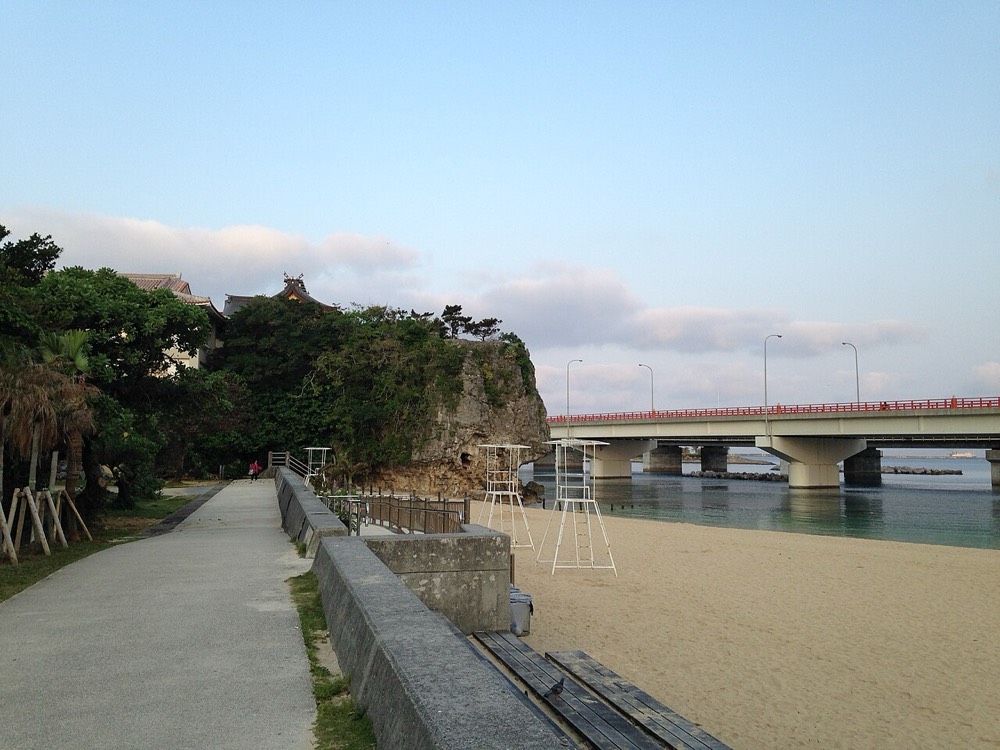
According to Rurubu, the 2026 swimming season ran April to October, 9:00-18:00 (until 19:00 in July and August), with two showers, two changing rooms and two lifeguard stations; there is no beach hut, food trucks set up instead, and parasol rental is 2,000 yen[8]. The swimming area is enclosed by a net. There is no swimming in winter, but it is a pleasant spot to walk, look at the sea and take photos.
Gokokuji Temple
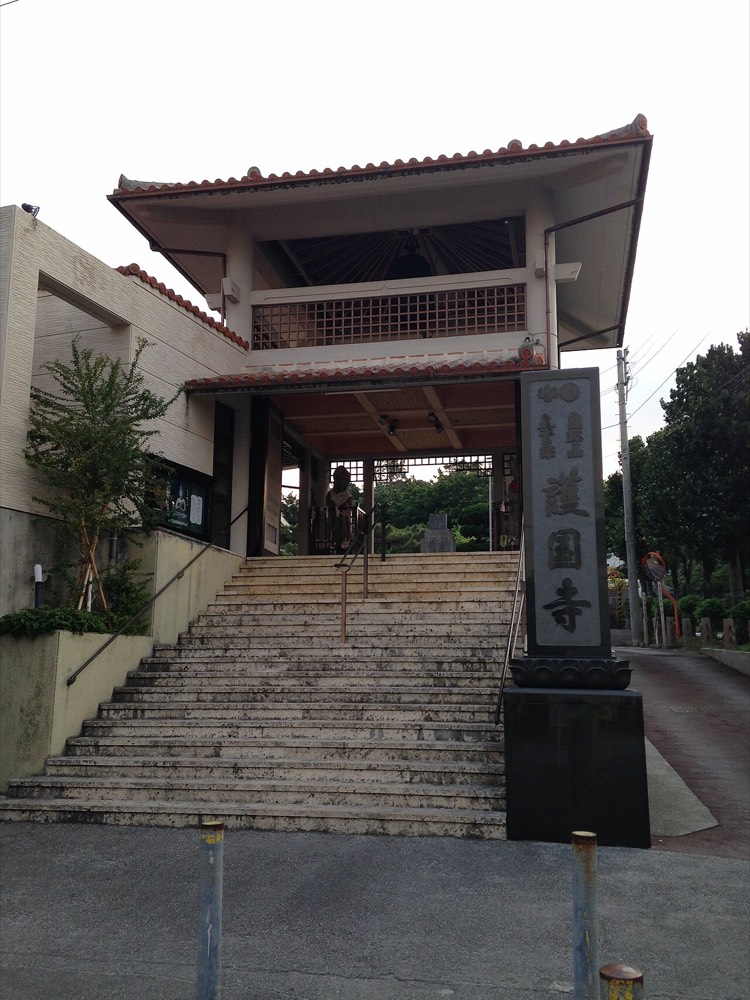
Gokokuji stands next to Naminoue Shrine. It is a Shingon temple closely linked with the shrine and is generally described as one of the oldest temples in Okinawa. The grounds contain a monument to Bernard Jean Bettelheim, a 19th-century missionary to Ryukyu; history fans can spend ten minutes looking around.
Fukushuen Garden
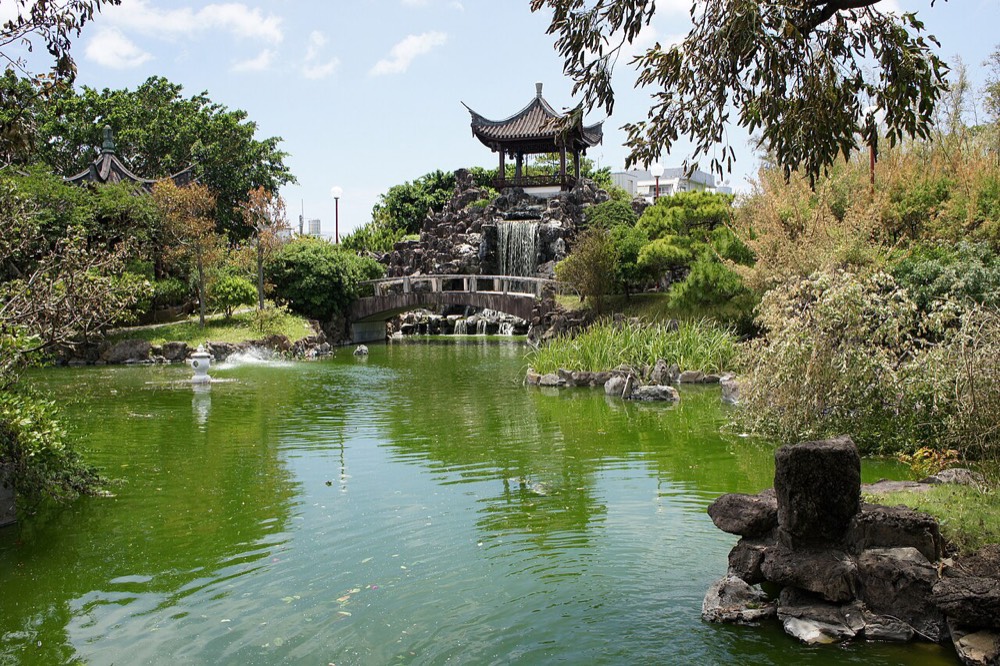
Fukushuen in Kume is a Chinese garden marking Naha's sister-city ties with Fuzhou, China, with ponds, stone bridges, a waterfall and pavilions. According to Naha City, it opens 9:00-18:00, admission is 200 yen for adults and 100 yen for junior high age and under, and it closes on Wednesdays (the next day if Wednesday is a holiday)[9]. It is about a 15-20 minute walk from Naminoue Shrine (estimated from the map), or about 5 minutes on foot from the Kume Koshibyo-mae bus stop.
Around Wakasa
Wakasa, where the shrine stands, is a quiet seaside residential area with a coastal path for sunset walks. The Nanmin Festival in mid-May is the shrine's grand festival, with a portable shrine procession, an all-island sumo tournament and a beach tug-of-war[1], and the area gets very lively then.
Half-day itineraries: from Naha Airport or Kokusai-dori
Neither example needs a car; times assume a normal walking pace.
Example 1: arrival day from Naha Airport (luggage stored)
| Time | Plan |
|---|---|
| 10:00 | Board the monorail at Naha Airport Station |
| 10:15 | Get off at Asahibashi, walk toward Wakasa |
| 10:30-11:00 | Worship at Naminoue Shrine, get omamori and goshuin |
| 11:00-11:15 | Gokokuji |
| 11:15-11:45 | Naminoue Beach and Naminoue Bridge for the cliff view |
| 12:00-13:00 | Walk to the Kume area for lunch |
| 13:00-13:40 | Fukushuen (closed Wednesdays) |
| 14:00 | Walk to Kokusai-dori or check in at your hotel |
Example 2: a morning from Kokusai-dori
| Time | Plan |
|---|---|
| 9:00 | Bus from Palette Kumoji-mae to Nishinjo |
| 9:15-9:45 | Worship at Naminoue Shrine (amulet office opens 9:00) |
| 9:45-10:30 | Gokokuji and Naminoue Beach |
| 10:45-11:30 | Fukushuen |
| 12:00 | Back to Kokusai-dori for lunch and shopping |
For food and shopping on Kokusai-dori, see the Kokusai-dori guide. If you want to stay within walking distance of the shrine, the Asahibashi and Kencho-mae areas are most convenient; see where to stay in Okinawa.
Who should go, and who can skip it?
Good for:
- First-time visitors to Okinawa looking for a sight in central Naha that needs no car.
- Travelers with 2-3 spare hours on arrival or before departure, since it is only about 10 minutes from the airport by car.
- Goshuin collectors and anyone after Okinawa-style omamori.
- Travelers spending New Year in Okinawa who want to experience a Japanese hatsumode.
Skip or adjust if:
- You only want big-ticket sights: the shrine is small and a visit is over in 20-30 minutes, so it may disappoint if expectations are high.
- You want serious water time in summer: Naminoue is a city beach, and its water and scenery cannot match the north or the outer islands; for snorkeling, the Kerama Islands are better.
- You plan to drive at New Year: with the car park closed and traffic controls in place, driving is the slowest option.
Before you go
- Worship is free, but reach the amulet office before 16:30 for omamori and goshuin.
- January 1-3 is the busiest time; the 2027 schedule has not been announced, so check the official Naminoue Shrine website before you go.
- The shrine car park is closed over New Year; use the monorail, bus or a taxi.
- For the "shrine on the cliff" photo, go to the beach or Naminoue Bridge; you cannot see that angle from inside the grounds.
- Fukushuen is closed on Wednesdays, so plan around it.
- The seafront is windy in winter; bring a light jacket from December to February.
FAQ
Does Naminoue Shrine charge admission? What time can I visit?
No ticket is needed and the grounds are open for free worship, so an early-morning walk works too. For omamori or goshuin you need to come while the amulet office is open: a January 2026 notice on the official site says 9:00 to 16:45, while the office page says until 16:30, so arrive before 16:30 to be safe.
Does Naminoue Shrine really sell a school-bag omamori? How much is it?
Many Chinese-language travel sites describe a popular school-bag amulet at Naminoue Shrine, but the official website does not publish amulet names or prices, and we could not find a reliable official source. Check the designs and offering amounts on display at the amulet office, or call 098-868-3697 to ask about a specific item.
Will Naminoue Shrine be crowded for New Year 2027?
Yes. In past years January 1-3 has been busy all day, with the New Year's Day queue spilling into nearby streets, the shrine car park closed and traffic controls in the area. The 2027 schedule has not been announced; in 2026 the Saitan-sai was January 1 at 7:00 and the Genshi-sai January 3 at 10:00, which you can use as a guide.
Can I swim at Naminoue Beach in winter?
The swimming season at Naminoue Beach runs roughly April to October (it may vary by year), so there is no swimming or lifeguard service in winter. From December to February you can walk on the sand and photograph the shrine from Naminoue Bridge, but going in the water is not recommended.
What is the easiest way to get from Kokusai-dori to Naminoue Shrine?
The west end of Kokusai-dori is near Kencho-mae monorail station. From the Palette Kumoji-mae bus stop, take bus 2, 5, 15 or 45 to Nishinjo (about 5 minutes), then walk about 3 minutes. For two or three people, a taxi is also a quick option.
Sources
- Naminoue-gu official website: Amulet office hours, extended 2026 New Year hours, Nanmin Festival
- Naminoue-gu official website: History: Founding legend, enshrined deities, head of the Eight Shrines of Ryukyu, post-war rebuilding
- Naminoue-gu official website: Annual events: Times for Saitan-sai, Genshi-sai, Setsubun and monthly rites
- Naminoue-gu official website: Map and contact: Address, office hours, access and parking
- Naminoue-gu Shrine (English): Travel times, Naha City historic site designation
- Rurubu&more: Naminoue-gu New Year visit: 2026 New Year rites, crowded periods, New Year parking
- Ryukyu Shimpo: New Year visit articles: Year-end traffic controls and New Year's Day crowds
- Rurubu&more: Naminoue Beach: Swimming season, hours, showers, changing rooms, parasol rental
- Naha City official website: Fukushuen: Opening hours, admission, closing days
- Jorudan New Year feature: Naminoue-gu: New Year parking and access
Fares, opening hours and event dates can change. Information checked on 2026.11.23; please confirm with official sources before you go.