Takeo Onsen Guide: The Romon Gate, Takeo City Library, Mifuneyama Rakuen and Getting There from Fukuoka and Nagasaki
Takeo Onsen day trip guide: the Romon gate, bath fees, Takeo City Library, Mifuneyama Rakuen winter tickets, trains from Hakata and Nagasaki, and Ureshino compared.
Quick answer
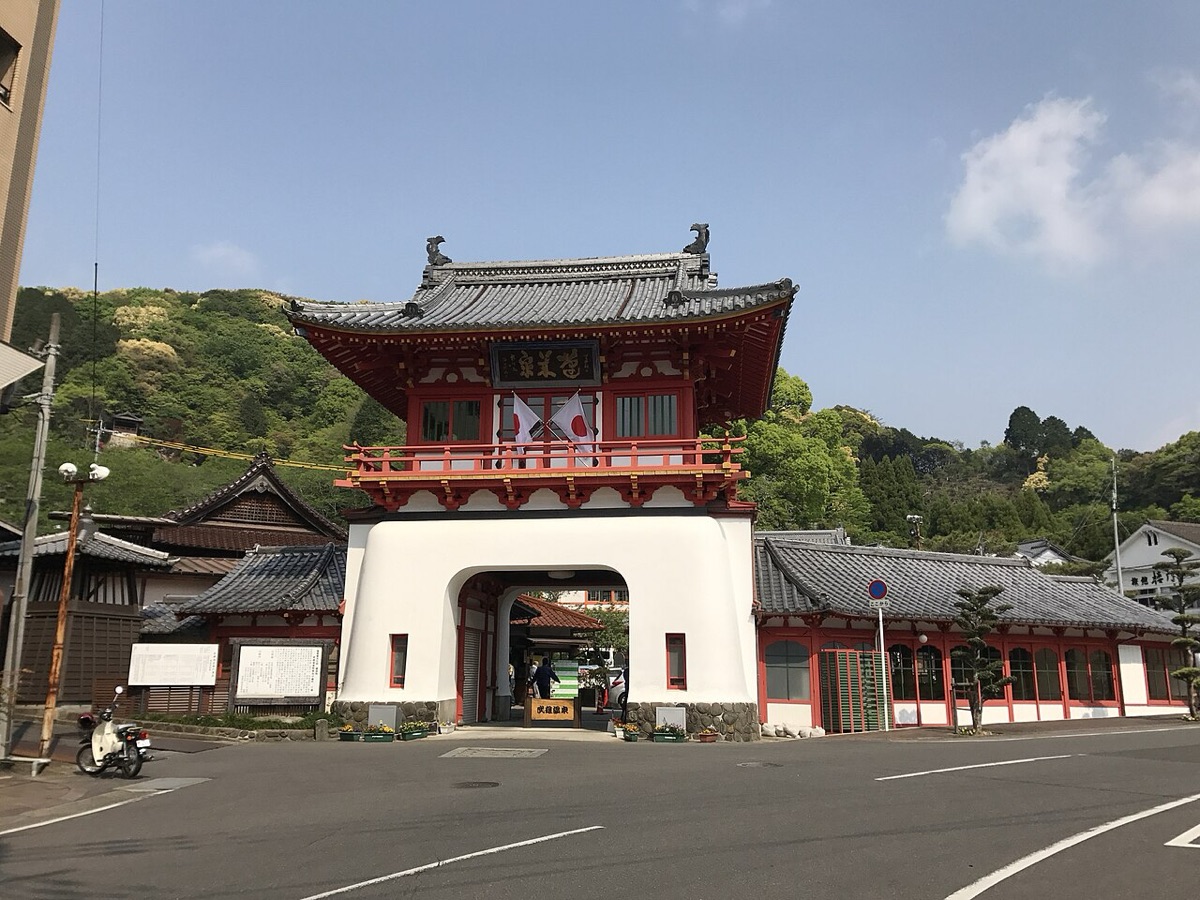
Takeo Onsen (Takeo, Saga Prefecture) is known for its vermilion Romon gate by Tatsuno Kingo, the architect of Tokyo Station. Completed in 1915, it was designated a National Important Cultural Property together with the Shinkan in 2005. From Hakata, the Relay Kamome limited express takes about 1 hour to Takeo-Onsen Station; from Nagasaki, the Nishi-Kyushu Shinkansen takes about 25–30 minutes, and the gate is a 15-minute walk from the station. Motoyu costs ¥500 for adults and Saginoyu ¥740; Takeo City Library is open 9:00–21:00 every day; Mifuneyama Rakuen's autumn festival runs until December 6, 2026 (¥600 per session), followed by the winter period at ¥500.
Takeo Onsen (武雄温泉, Takeo Onsen) in western Saga Prefecture has a history of about 1,300 years and is best known for its vermilion Romon gate, designed by Tatsuno Kingo, the architect of Tokyo Station. It sits between Hakata and Nagasaki at the starting point of the Nishi-Kyushu Shinkansen. Many people only change trains at Takeo-Onsen Station, yet the bath area is a 15-minute walk from the exit. This guide covers the gate and public bath fees, Takeo City Library, Mifuneyama Rakuen's opening information for this winter, and trains from Fukuoka and Nagasaki, with a day-trip plan, a cost breakdown and a comparison with Ureshino Onsen, so you can decide whether to stop for half a day or stay the night.
What is there to do in Takeo Onsen? The main sights
Bottom line: Takeo Onsen's sights cluster in three spots: the bath area around the Romon gate, Takeo Shrine and the library, and Mifuneyama Rakuen. They are close together, and you can see all of them in a day.
| Sight | What to see | Cost (adult) | From Takeo-Onsen Station | Suggested time |
|---|---|---|---|---|
| Takeo Onsen Romon and Shinkan | National Important Cultural Properties by Tatsuno Kingo | Exterior free; zodiac tour ¥500 (includes bath ticket) | About 15 min on foot | 30 min–1 hr |
| Motoyu, Horaiyu, Saginoyu | Public baths inside the gate | ¥500–740 | Same as above | 1 hr |
| Takeo Shrine and the Great Camphor Tree | Sacred tree estimated at over 3,000 years old | No fee listed | About 25 min on foot | 40 min–1 hr |
| Takeo City Library | Public library with a Tsutaya bookstore and café | Free entry | About 15 min on foot | 1 hr |
| Mifuneyama Rakuen | Large garden backed by the cliffs of Mt. Mifuneyama | ¥500 in the winter period; ¥600–900 during the autumn festival | About 5 min by taxi | 1.5–2 hrs |
Sources: Takeo City Tourist Association[1][3][11], Walkerplus[7], Mifuneyama Rakuen official site[9][10].
As for the water, the tourist association describes Takeo Onsen as a weakly alkaline simple spring nicknamed a "beauty bath"[6]. It feels gentle with no strong smell, which suits first-time onsen visitors.
Takeo Onsen Romon and Shinkan: Important Cultural Properties by Tatsuno Kingo
Bottom line: The Romon gate is the one thing not to miss in Takeo Onsen. The exterior is free; to see the zodiac carvings on the second-floor ceiling, join the morning zodiac tour.
The gate was completed on April 12, 1915 (Taisho 4), designed by Tatsuno Kingo of Tokyo Station fame, and built without a single nail. In 2005 it was designated a National Important Cultural Property together with the Takeo Onsen Shinkan behind it, and a 2013 restoration brought back its original vermilion color[1][2]. According to the Cultural Heritage Online database, both the Shinkan and the gate had their framework raised in 1914, and they are among the few Japanese-style buildings Tatsuno worked on[2].
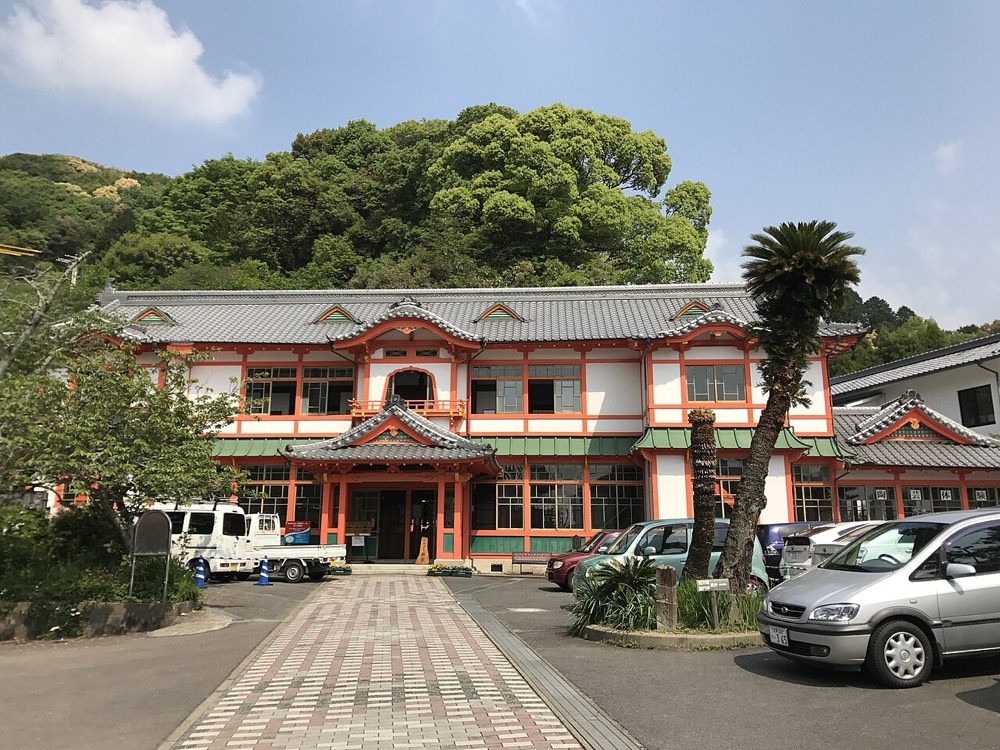
The most interesting detail is in the four corners of the second-floor ceiling, carved with four zodiac animals—rat, rabbit, horse and rooster—representing north, east, south and west. The dome ceilings of Tokyo Station, restored in 2012, carry the other eight signs, so the two buildings together complete all twelve[1]. The carvings are not normally visible; you need to join the tourist association's tour:
- Time: daily 9:00–10:00 (check in by 9:30), about 20 minutes, no tours on Tuesdays[1].
- Cost: ¥500 for adults and ¥250 for children, including a bath ticket; guests who stayed at accommodation in Takeo City the previous night pay ¥400 for adults and ¥150 for children, without a bath ticket[1].
- Period: currently announced through March 31, 2027[1].
The Shinkan behind the gate is a Taisho-era bathhouse built at the same time. It is now open to the public as a museum, and media reports say entry is free; however, we could not confirm its opening hours and closing days on an official page, so check with the Takeo City Tourist Association (0954-23-7766) before you go.
Which Takeo Onsen public bath? Motoyu, Horaiyu and Saginoyu compared
Bottom line: Choose Motoyu for the historic building, Saginoyu for an outdoor bath and sauna, and Horaiyu for a quick, inexpensive soak. All three are inside the gate and share the same inquiry phone number.
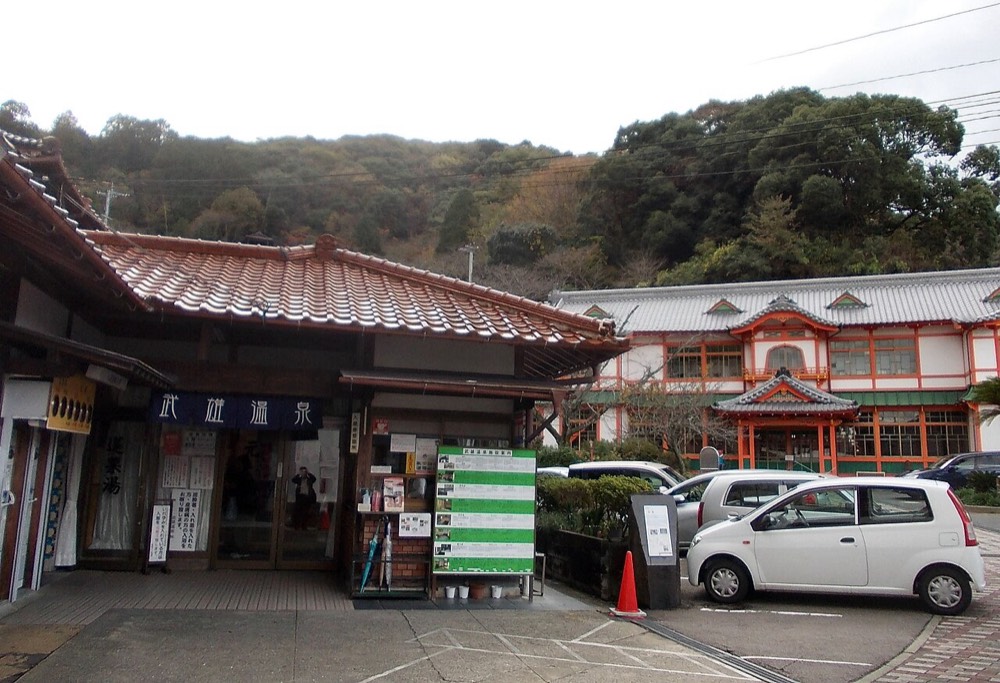
| Bath | Features | Adult / child (age 3 to elementary school) | Hours |
|---|---|---|---|
| Motoyu | Built in 1876 (Meiji 9), described as Japan's oldest onsen building still in use; high ceilings | ¥500 / ¥250 | 6:30–23:45 (last entry 23:00) |
| Horaiyu | Simple, clean large bath | ¥500 / ¥250 | 6:30–21:30 (last entry 1 hour before closing) |
| Saginoyu | Outdoor bath and sauna, attached to the Romontei ryokan | ¥740 / ¥370 | 6:30–23:45 (last entry 23:00) |
Source: Takeo City Tourist Association bath pages[3][4][5]. All three provide body soap and shampoo; bring your own towel.
Common pitfalls:
- People with tattoos are refused entry. All three bath pages state that people with tattoos, heavily intoxicated people, and those who ignore bathing etiquette may not enter[3][4][5].
- Horaiyu closes earlier, so if you arrive in the evening, go straight to Motoyu or Saginoyu.
- Closing days are not listed on the official pages; around the New Year and other special periods, call 0954-23-2001 to confirm.
- There are also private baths, Tonosama-yu and Karo-yu; we could not confirm their prices or bookable time slots on an official page, so call the number above.
Takeo City Library: a Tsutaya bookstore and café under one roof
Bottom line: Takeo City Library is a public library you can enter for free, sit down with a coffee and read. It is open 9:00–21:00 every day of the year, making it especially handy on rainy days or while waiting for an evening train[7].
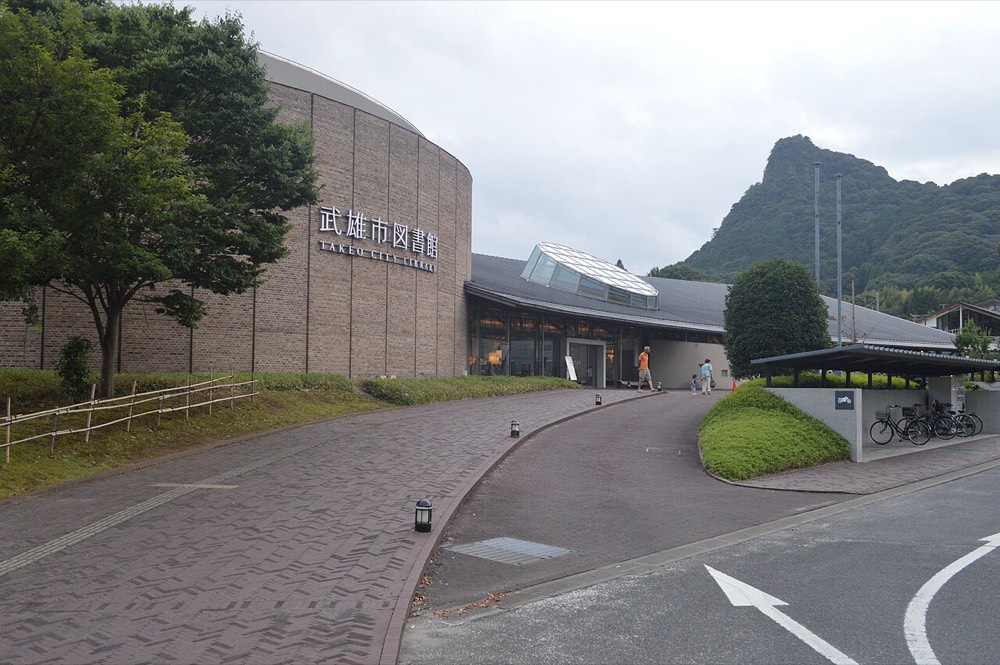
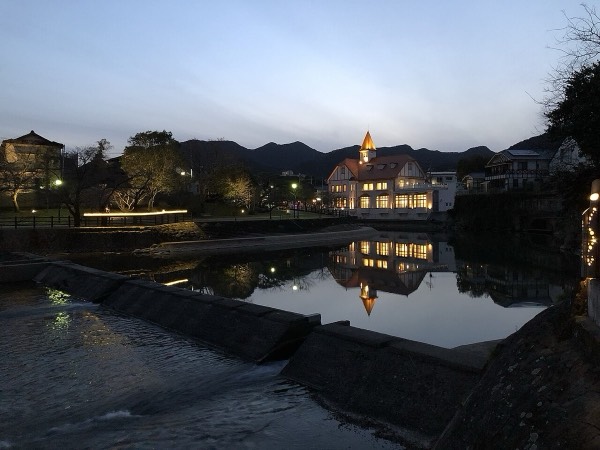
Takeo City Library reopened on April 1, 2013, after management was entrusted to CCC, the company behind Tsutaya bookstores, and the idea of "a library with a bookstore and café inside" became a big talking point in Japan[8]. The library holds about 250,000 books, has a Tsutaya bookstore selling books and magazines, and a café—buy a drink and you can read in the library. In October 2017, the Takeo City Children's Library opened next door[7].
- Access: about 15 minutes on foot from JR Takeo-Onsen Station; or take a Yutoku bus to the Toshokan stop, or a JR Kyushu bus to the Yume Town stop and walk[7].
- Cost: free entry, with parking[7].
The library is very close to Takeo Shrine, so plan them together.
Takeo Shrine and the Great Camphor Tree: a sacred tree estimated at 3,000 years old
Bottom line: The Great Camphor Tree of Takeo stands at the end of a bamboo grove behind Takeo Shrine, with a huge hollow at its base—Takeo's most striking natural sight.
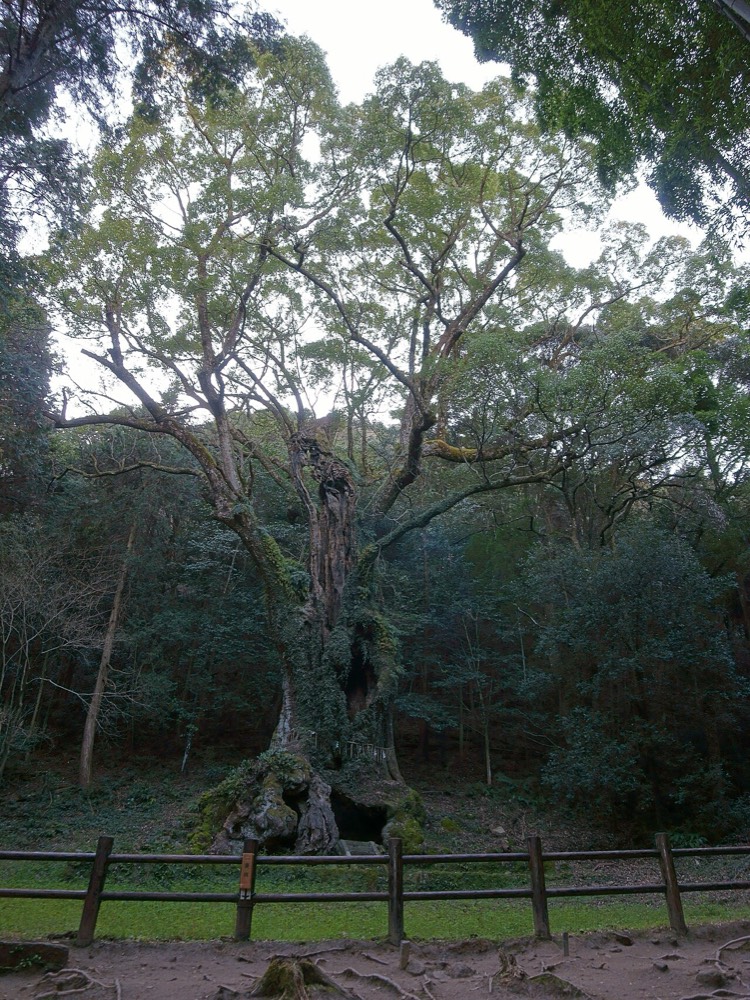
The tourist association describes the Great Camphor Tree as the sacred tree of Takeo Shrine, over 3,000 years old, about 30 m tall with a trunk circumference of about 20 m[11]. You reach it by a bamboo path beside the main shrine building. Note that the tree is showing withering and decay, and in April 2022 Takeo City expanded the no-entry area to prevent injuries from falling dead branches[12]. You can now only view it from outside the fence and cannot touch it.
From JR Takeo-Onsen Station it is about a 25-minute walk; or take a Yutoku bus toward Shimonishiyama, get off at Takeo Koko-mae, and walk about 10 minutes[11]. The official page lists no visiting hours, and the bamboo path is unlit, so go in daylight.
Mifuneyama Rakuen: autumn festival until December 6, then the winter period
Bottom line: In late November 2026 you can still catch the autumn festival (until December 6, with night illumination); from early December the winter period begins, with daytime opening only and ¥500 admission for adults.
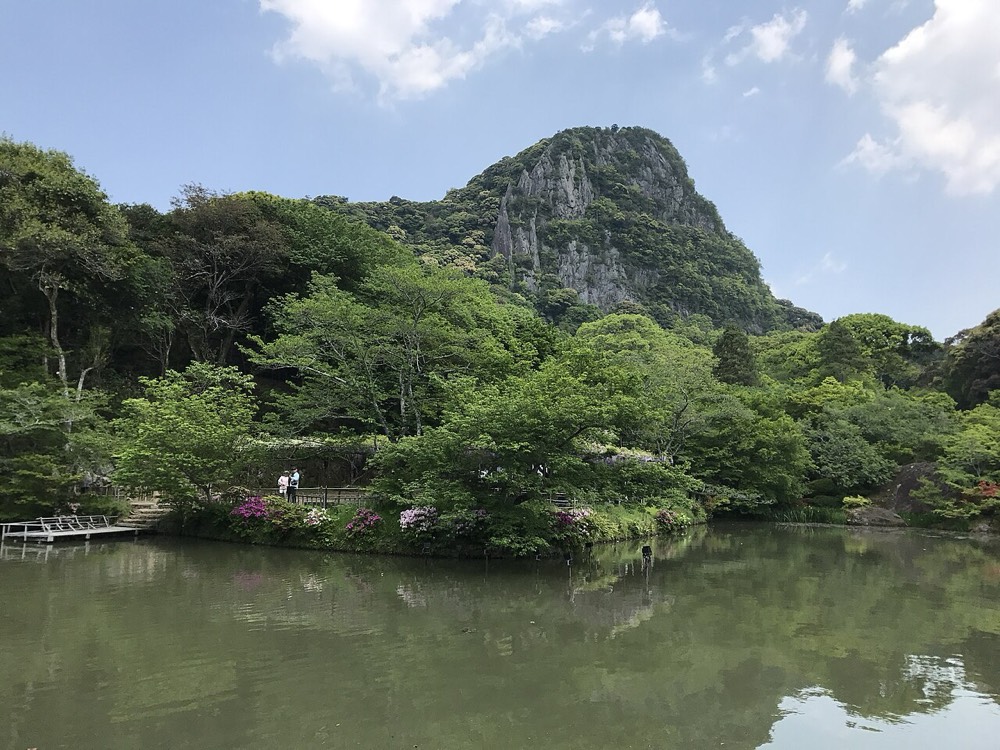
Mifuneyama Rakuen is a garden created in the late Edo period by Nabeshima Shigeyoshi, lord of Takeo, set against the 210 m cliffs of Mt. Mifuneyama. It is best known for azaleas and cherry blossoms in spring and autumn leaves. This winter's opening information[9]:
| Period | Dates | Hours | Admission (junior high and up / elementary) |
|---|---|---|---|
| Autumn festival | November 6 – December 6, 2026 | Day 8:00–17:30, night 17:30–22:00 | Day or night ¥600 / ¥300; day-and-night ¥900 / ¥400 |
| Winter period | Early December – early March 2027 | 8:00–17:00 | ¥500 / ¥300 |
| Cherry blossom festival | March 13 – April 4, 2027 | See the official site | See the official site |
About teamLab: Mifuneyama Rakuen has hosted large teamLab night exhibitions in past summers and autumns, but the official site currently lists no teamLab event for this winter[9]. Don't plan around older information online; check the official site or teamLab's website for the next run.
Access: the official site recommends a taxi from JR Takeo-Onsen Station, about 5 minutes[10]. It lists no walking or bus route, so allow time to call a taxi back to the station after the evening illumination. Highlights, foliage conditions and other Kyushu autumn spots are covered in Kyushu Autumn Leaves 2026.
Takeo Onsen access: how to get there from Hakata and Nagasaki
Bottom line: From Hakata, the Relay Kamome limited express runs directly to Takeo-Onsen Station in about 1 hour with no transfer; from Nagasaki, the Nishi-Kyushu Shinkansen Kamome takes about 25–30 minutes.
Takeo-Onsen Station is the starting point of the Nishi-Kyushu Shinkansen (Takeo-Onsen–Nagasaki), where the conventional limited express from Hakata and the Shinkansen to Nagasaki meet across the same platform. Based on the October 2026 timetable[13]:
| Route | Train | Example departures | Travel time | Reference fare (reserved, regular season) |
|---|---|---|---|---|
| Hakata → Takeo-Onsen | Relay Kamome | 7:16→8:25, 8:12→9:20, 10:03→11:00 | About 57 min–1 hr 15 min | ¥3,660 |
| Takeo-Onsen → Hakata | Relay Kamome, Relay Midori | 17:13→18:13, 19:18→20:17, 21:48→22:47 | About 1 hr | ¥3,660 |
| Nagasaki → Takeo-Onsen | Kamome (Shinkansen) | 7:46→8:16, 8:44→9:08 | About 23–31 min | ¥3,800 |
| Takeo-Onsen → Nagasaki | Kamome (Shinkansen) | 18:01→18:25, 20:05→20:29, 21:06→21:34 | About 25–30 min | ¥3,800 |
| Takeo-Onsen → Ureshino-Onsen | Kamome (Shinkansen, non-reserved) | Some trains skip Ureshino-Onsen | About 5 min | ¥1,210 |
Fares are base fare plus express charge: Hakata–Takeo-Onsen ¥1,930 + ¥1,730, Nagasaki–Takeo-Onsen ¥1,510 + ¥2,290, Takeo-Onsen–Ureshino-Onsen ¥340 + ¥870 (special non-reserved charge)[14]. Reserved seats cost ¥200 more in busy seasons and ¥400 more in peak seasons; non-reserved seats are generally ¥530 cheaper than reserved[14]. This table uses third-party compiled fares from September 2026; check JR Kyushu's official site or the station ticket machine before buying.
The smoothest way to go:
- From Hakata, buy a ticket to Takeo-Onsen and take the Relay Kamome, or the Midori limited express toward Sasebo that stops at Takeo-Onsen.
- Exit via the north exit and walk about 15 minutes toward the Romon gate[1].
- For Mifuneyama Rakuen, take a taxi from the north exit, about 5 minutes[10].
- If heading on to Nagasaki in the afternoon, return to Takeo-Onsen Station and change to the Shinkansen across the platform; a ticket bought from Hakata straight to Nagasaki qualifies for a through fare when you transfer at Takeo-Onsen the same day without leaving the gates[14].
If you are touring Kyushu for several days, the JR Kyushu Rail Pass (Northern Kyushu or All Kyushu) also covers this route; pass prices and seat reservation rules are in the Kyushu transport guide. If you are starting from Nagasaki, Takeo fits the day before or after your Nagasaki sightseeing guide itinerary.
Takeo Onsen day trip: an itinerary from Hakata
Bottom line: Leave early to catch the 9:00 zodiac tour at the gate, use the included bath ticket at Motoyu, see the camphor tree, library and Mifuneyama Rakuen in the afternoon, and return to Hakata in the early evening. This example uses the October 2026 timetable on a day other than Tuesday[13].
| Time | Plan | Notes |
|---|---|---|
| 7:16 | Relay Kamome 5 from Hakata | Arrive at Takeo-Onsen Station 8:25 |
| 8:25–8:45 | Exit north, walk to the Romon gate | About 15 minutes |
| 9:00–9:20 | Romon zodiac tour | Check in by 9:30; none on Tuesdays |
| 9:30–10:30 | Bathe at Motoyu with the bath ticket; see the Shinkan exterior | Bring a towel |
| 10:45–12:00 | Visit Takeo Shrine and the Great Camphor Tree | Bus or taxi (about 25 min on foot from the station) |
| 12:00–14:00 | Takeo City Library; lunch at its café or nearby | The library is near the shrine |
| 14:15–16:30 | Taxi to Mifuneyama Rakuen, stroll the garden | Closes 17:00 in the winter period |
| 16:30–17:00 | Taxi back to Takeo-Onsen Station | About 5 minutes |
| 17:13 | Relay Kamome 46 back to Hakata | Arrive 18:13 |
During the autumn festival (until December 6), move Mifuneyama Rakuen to the end of the day, see the night illumination from 17:30, then take the 19:18 or 20:20 train back to Hakata, arriving around 21:00[13]. If you are staying in Hakata, see where to stay in Fukuoka for areas around the station.
Day-trip cost breakdown (1 adult)
| Item | Cost | Notes |
|---|---|---|
| Hakata–Takeo-Onsen round trip (reserved, regular season) | ¥7,320 | Differs with a rail pass or non-reserved seats |
| Romon zodiac tour (includes Motoyu bath ticket) | ¥500 | Bathing at Motoyu without the tour is also ¥500 |
| Mifuneyama Rakuen | ¥500 (winter period) | ¥600 per session or ¥900 day-and-night during the autumn festival |
| Takeo City Library | ¥0 | Coffee extra |
| Takeo Shrine / Great Camphor Tree | No fee listed officially | — |
| Taxis (station ↔ Mifuneyama Rakuen, etc.) | Metered | Better value split among 2–3 people |
| Total fixed costs | About ¥8,320 | Excludes meals and taxis; about ¥8,420–8,720 during the autumn festival |
How to plan an overnight stay
Bottom line: Staying one night lets you see the night illumination, join the zodiac tour without rushing the next morning, and bathe both at night and early in the morning.
- Day 1 afternoon: after arriving, visit Takeo City Library and Takeo Shrine, then check in by early evening; during the autumn festival, go to Mifuneyama Rakuen after dinner for the illumination (open until 22:00).
- Day 1 evening: Motoyu and Saginoyu are open until 23:45 (last entry 23:00)[3][5], so there is time for a bath after dinner.
- Day 2 morning: join the 9:00 Romon zodiac tour; guests who stayed in Takeo City the night before pay only ¥400, but no bath ticket is included[1].
- Day 2 late morning: take the Shinkansen toward Nagasaki, or head to Ureshino Onsen (about 5 minutes by Shinkansen or about 30 minutes by JR Kyushu bus) for yudofu before moving on.
For accommodation, the Romontei ryokan next to the gate has Saginoyu attached[5], and Mifuneyama Rakuen also has its own hotel. Prices vary widely by season and date, so check each property's official site or booking platforms for current rates. In winter, Takeo also has events such as the Saga Prefectural Space & Science Museum "Yumeginga" winter special exhibition (December 5, 2026 – January 31, 2027), worth a look for families with children[15].
Takeo Onsen or Ureshino Onsen? A comparison
Bottom line: Takeo is "transport hub + historic architecture + more sights"; Ureshino is "water quality + yudofu + ryokan relaxation". The two are one Shinkansen stop (about 5 minutes) apart, so you can sightsee in Takeo by day and stay a night in Ureshino.
| Takeo Onsen | Ureshino Onsen | |
|---|---|---|
| Spring type | Weakly alkaline simple spring, gentle on the skin[6] | Sodium bicarbonate–chloride spring, one of Japan's "three great beauty baths" |
| Signature | Tatsuno Kingo's Romon gate and Shinkan (Important Cultural Properties) | Onsen yudofu, Ureshino tea |
| Station to bath area | About 15 min on foot from Takeo-Onsen Station | About 8–10 min by bus from Ureshino-Onsen Station |
| From Hakata | Relay Kamome direct, about 1 hr | Change to Shinkansen at Takeo-Onsen, about 1 hr 10–20 min |
| Sights beyond the baths | Mifuneyama Rakuen, Takeo City Library, Great Camphor Tree | Onsen town stroll, Hizen Yoshida ware |
| Best for | Half-day to one-day stopover, old public baths, gardens | A relaxed overnight stay, focus on ryokan and dinner |
Ureshino's ryokan comparison, the Siebold-no-Yu public bath and yudofu restaurants are covered in the Ureshino Onsen guide, so they are not repeated here.
Who Takeo Onsen suits, and who it doesn't
Good for:
- Travelers moving between Fukuoka and Nagasaki who want a half-day stopover.
- Fans of modern Japanese architecture who want to see Tatsuno Kingo's work.
- Anyone wanting autumn-leaf night illumination in autumn, or a bath in Japan's oldest onsen building.
- Families and budget travelers: public baths from ¥500, and the library is free.
Not ideal for:
- People who want to stay in an onsen town with a whole shopping street outside the door: the Takeo bath area is small and few shops are open at night; Ureshino or Yufuin and Beppu fit that better.
- People with tattoos who only want public baths.
- Visitors coming in winter specifically for night events: from early December, Mifuneyama Rakuen has no night opening.
Before you go
- No Romon zodiac tours on Tuesdays; to see the carvings, avoid Tuesdays and check in by 9:30[1].
- Mifuneyama Rakuen's autumn festival ends December 6; the winter period closes at 17:00, so arriving late in the afternoon won't work[9].
- For the Romon gate, use the north exit of Takeo-Onsen Station; it is about a 15-minute walk[1].
- Some Shinkansen trains to Nagasaki skip Ureshino-Onsen; check the timetable if you plan to stop there[13].
- Heading south from Takeo connects well with the Huis Ten Bosch guide: Takeo-Onsen Station is also on the JR Sasebo Line, so you can plan the two on consecutive days.
FAQ
Is one day enough for Takeo Onsen?
Yes. Seeing the Romon gate, taking one bath, and visiting the library and Mifuneyama Rakuen fits into a day trip from Hakata or Nagasaki. If you want the garden's night illumination, or the morning zodiac tour of the gate followed by a bath, staying one night is more relaxed and lets you continue to Ureshino or Nagasaki the next day.
How long is the walk from Takeo-Onsen Station to the hot spring area?
About 15 minutes on foot from the north exit of JR Takeo-Onsen Station to the Romon gate. Takeo City Library is also about 15 minutes from the station. The Great Camphor Tree at Takeo Shrine is farther, about 25 minutes, or take a Yutoku bus to Takeo Koko-mae and walk about 10 minutes. For Mifuneyama Rakuen, a taxi from the station takes about 5 minutes.
Can people with tattoos use the Takeo Onsen public baths?
No. The Takeo City Tourist Association pages for Motoyu, Horaiyu and Saginoyu all state that people with tattoos, heavily intoxicated people, and anyone who ignores bathing etiquette will be refused entry. Travelers with tattoos can look at private baths or rooms with their own onsen bath, but rules vary by property, so check first.
Is Mifuneyama Rakuen worth visiting in winter?
The autumn festival runs from November 6 to December 6, 2026, with night illumination. From early December to early March is the winter period: open 8:00–17:00, ¥500 for adults, focused on the garden and the cliffs of Mt. Mifuneyama with no night opening. The official site does not currently list a teamLab exhibition for this winter.
Should I stay in Takeo Onsen or Ureshino Onsen?
Stay in Takeo for convenient transport and historic architecture: the station has limited expresses and the Shinkansen, and the bath area is walkable. Stay in Ureshino for the water quality, onsen yudofu and a relaxing ryokan stay. They are one Shinkansen stop or about 30 minutes by JR Kyushu bus apart, so you can also split them.
Sources
- Takeo City Tourist Association: Takeo Onsen Romon: Gate designer, completion date, cultural property designation, zodiac tour times and fees, walking time from the station
- Cultural Heritage Online: Takeo Onsen Shinkan and Romon: Designation date, construction period and design office
- Takeo City Tourist Association: Takeo Onsen Motoyu: Hours, bath fees, 1876 building, entry rules
- Takeo City Tourist Association: Takeo Onsen Horaiyu: Hours and bath fees
- Takeo City Tourist Association: Takeo Onsen Saginoyu: Hours, bath fees, outdoor bath and sauna
- Takeo City Tourist Association: Hot springs: History and spring type of Takeo Onsen
- Walkerplus: Takeo City Library & Historical Museum: Opening hours, closing days, access, facilities
- Current Awareness Portal (National Diet Library): Takeo City Library reopens: Reopened in 2013 under CCC management
- Mifuneyama Rakuen official site: Dates, opening hours and admission for the autumn festival and winter period
- Mifuneyama Rakuen: Access: Taxi time from Takeo-Onsen Station, address
- Takeo City Tourist Association: Great Camphor Tree of Takeo: Age, size, access
- Takeo City: Protective measures for the Great Camphor Tree of Takeo: Expanded no-entry area
- JR Group: Relay Kamome / Kamome timetable (as of October 2026): Departures and travel times Hakata–Takeo-Onsen and Nagasaki–Takeo-Onsen
- JR Shinkansen Net: Nishi-Kyushu Shinkansen fares: Base fares and express charges from Hakata, Nagasaki and Ureshino-Onsen to Takeo-Onsen (updated September 2026)
- Takeo City Tourist Association: Winter in Takeo: Winter events in Takeo, December 2026–January 2027
Fares, opening hours and event dates can change. Information checked on 2026.11.27; please confirm with official sources before you go.