Umeda Sky Building Floating Garden Observatory Guide: Tickets, Night-View Timing, Access and the Osaka Amazing Pass
Umeda Sky Building's Floating Garden Observatory is ¥2,000 for adults, open 9:30–22:30. Tickets, Amazing Pass rules, Nov–Feb sunset timing and access.
Quick answer
The Floating Garden Observatory (Kuchu Teien) sits about 173 m up, where the two towers of the Umeda Sky Building join. It is open 9:30–22:30 (last entry 22:00); the official fare table lists ¥2,000 for adults and ¥500 for age 4 through elementary school. The Osaka Amazing Pass gives free entry before 15:00 and only 10% off afterwards. From late November through December Osaka's sunset is around 16:47–16:51, so entering around 16:00 lets you see both sunset and the night view. It is about a 7-minute walk from JR Osaka Station's Central North Exit.
The Floating Garden Observatory at the Umeda Sky Building (梅田スカイビル 空中庭園展望台) is the only observatory in Osaka where you can walk a full outdoor rooftop loop 173 m above the ground, and it is the easiest night-view spot to fit in around Umeda. This guide helps you decide three things: the cheapest way to get in (official price, the Amazing Pass free window, online tickets), what time to enter in winter to catch both sunset and the night view, and how it compares with HARUKAS 300, Tsutenkaku and the HEP FIVE Ferris wheel. It also covers the walking route from JR Osaka Station and the basement food street.
What is the Floating Garden, and is it worth it?
In short: if you want to feel the wind on an open-air, 360-degree rooftop at night, the Floating Garden is Osaka's most distinctive choice; if you only want the highest and farthest view, choose HARUKAS 300.
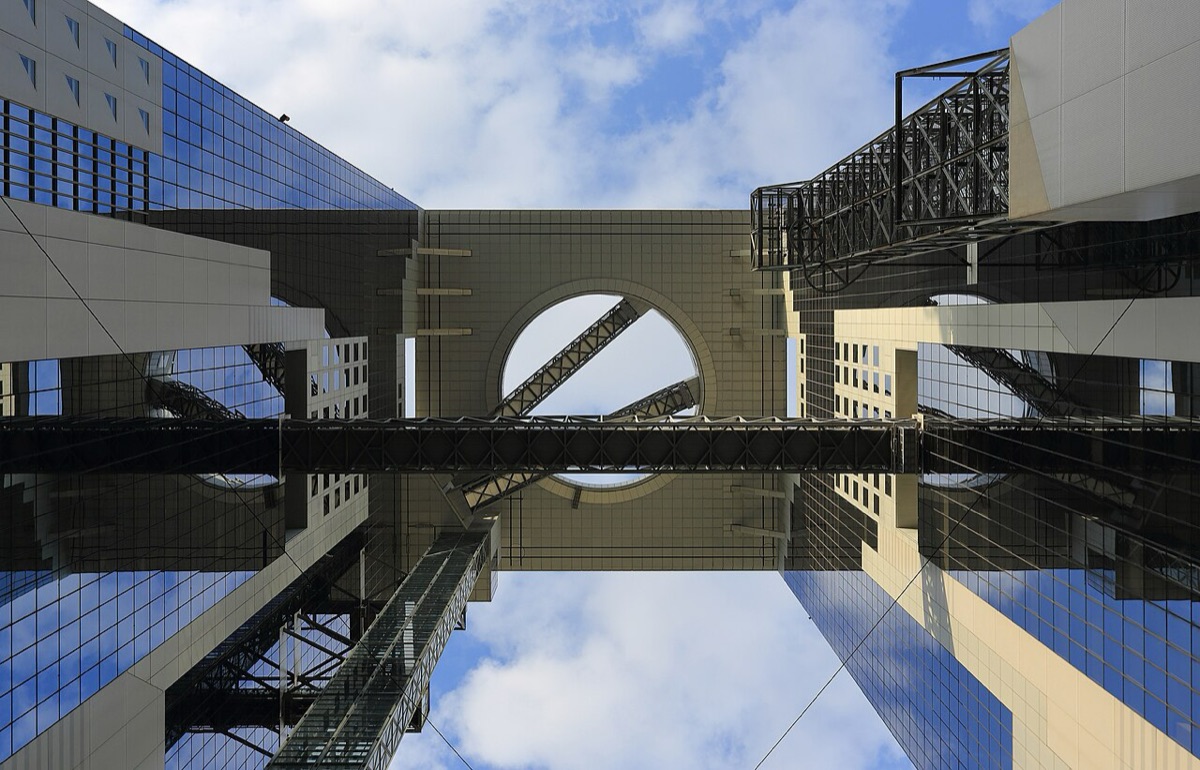
The Umeda Sky Building consists of two 40-storey towers, Tower East (タワーイースト) and Tower West (タワーウエスト), joined at the top by a ring-shaped structure with a large circular hole in the middle. That connecting section is the Floating Garden Observatory, about 173 m above ground[9]. It has three levels: 39F holds the ticket counter and sky lobby, 40F has the indoor observation area and "cafe SKY 40", and the roof is an outdoor loop called the "Sky Walk" (スカイ・ウォーク)[2].
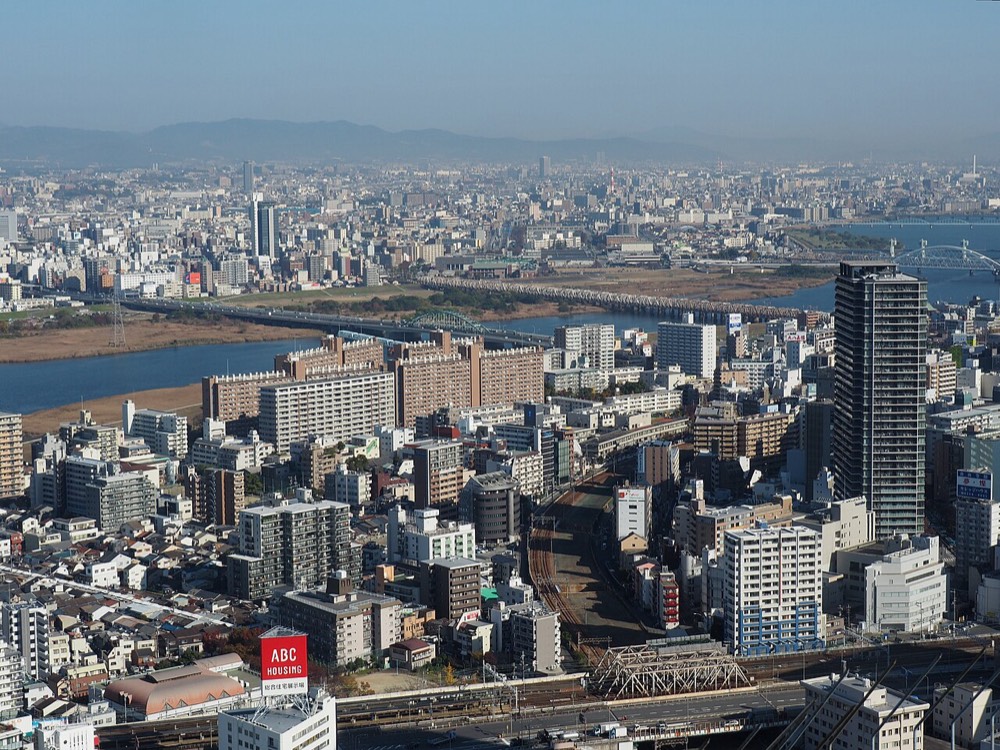
The roof has no glass walls, only chest-high railings, and the wind blows straight through; that is the big difference from most indoor observatories. On a clear day you can see the Yodo River and distant ridges to the north, the Rokko mountains to the west, and on especially clear days Awaji Island[9]. After dark, phosphorescent stones set into the rooftop floor glow faintly, forming a starry walkway; this section is called the "Lumi Sky Walk" (ルミ・スカイ・ウォーク)[2][9].
Good for:
- People who want to photograph the city at night and like being outdoors
- Travelers staying around Umeda or Osaka Station who want a night view nearby
- Winter visitors who want the observatory, Christmas market and dinner in one building
Not ideal for:
- People who dislike heights, cold or wind (the roof feels very cold on winter nights)
- Anyone hoping to see Kyoto or Kansai Airport in the distance; HARUKAS 300 is higher
- Rainy or windy days: the roof may close, leaving only the 40F indoor area[1]
How much are Floating Garden Observatory tickets? On-site, online or Amazing Pass
In short: the official fare table lists ¥2,000 for adults and ¥500 for age 4 through elementary school, free under 4; with the Osaka Amazing Pass, entry before 15:00 is free[1][4].
| Ticket / method | Adult | Child (age 4 to elementary school) | Notes |
|---|---|---|---|
| Standard admission (39F counter) | ¥2,000 | ¥500 | Cash or credit card; free under 4 |
| Online ticket (booking page linked from the official site) | See booking page | See booking page | Choose a date, smoother entry, web-only plans |
| Osaka Amazing Pass (enter before 15:00) | Free | — | Once per facility on the day of use |
| Osaka Amazing Pass (after 15:00) | About ¥1,800 | — | 10% off admission when you show the pass |
| Disability card holders and companions | ¥1,000 | ¥250 | Half the regular fare; show the original card at the counter |
Compiled from the official visitor information and the Amazing Pass official facility page[1][4]. Points to note:
- "¥2,400 at the door": some travel sites say this, but on 18 November 2026 the official fare table showed only one price (¥2,000 for adults) with no separate on-site fare. The official site mentions good-value web-only tickets (such as plans with a drink); their prices appear only on the booking page, so go by what it shows when you buy[2].
- No re-entry[11]: you cannot go up during the day and come back at night on the same ticket.
- Hours change on special days: for example, it closed early at 19:00 on 8 November 2026 for inspections, and a shortened day to 18:00 has been announced for 18 April 2027[1]. Glance at the official notices before you go.
- New Year's sunrise: on 1 January 2026 there was a special 6:00–8:00 sunrise opening with online tickets only[1]. Whether this happens on 1 January 2027 has not been announced; treat this as reference from past years.
How to get the most from the Osaka Amazing Pass and other passes
In short: the pass is free only if you "enter before 15:00", so either go around midday for the daytime view, or enter between 14:30 and 15:00 and stay until sunset.
The official facility page is clear: Floating Garden entry with the pass is until 15:00, and after 15:00 showing the pass gets 10% off admission[4]. For whether a one-day pass is worth it and how to combine it with other sights, see the Osaka Amazing Pass 2026 guide; here we only cover how to use it at the Floating Garden:
- Daytime plan: enter in the morning or around noon, and combine it on the same day with Osaka Castle and the HEP FIVE Ferris wheel (on the pass's free list).
- Wait-for-sunset plan: from late November through December sunset is 16:47–16:57[5][6]. Enter around 14:50, sit in the 40F café, then watch the sunset from the roof; you will be there about two hours. Re-entry is not allowed[11], so leaving midway means buying a new ticket.
- Night plan: just pay ¥2,000 (about ¥1,800 with the pass discount) and ignore the 15:00 limit.
As for other Kansai passes, some travel sites say passes such as the "KANSAI JOY PASS" also include the Floating Garden with an entry-time limit, but we could not confirm the current conditions on an official page. Check that pass's official facility list before buying.
What time to go for the night view: November–February sunset times
In short: enter about 50 minutes before that day's sunset, see the daytime view, then the sunset, then wait for the sky to turn blue and the lights to come on; allow about 1.5 hours in total.
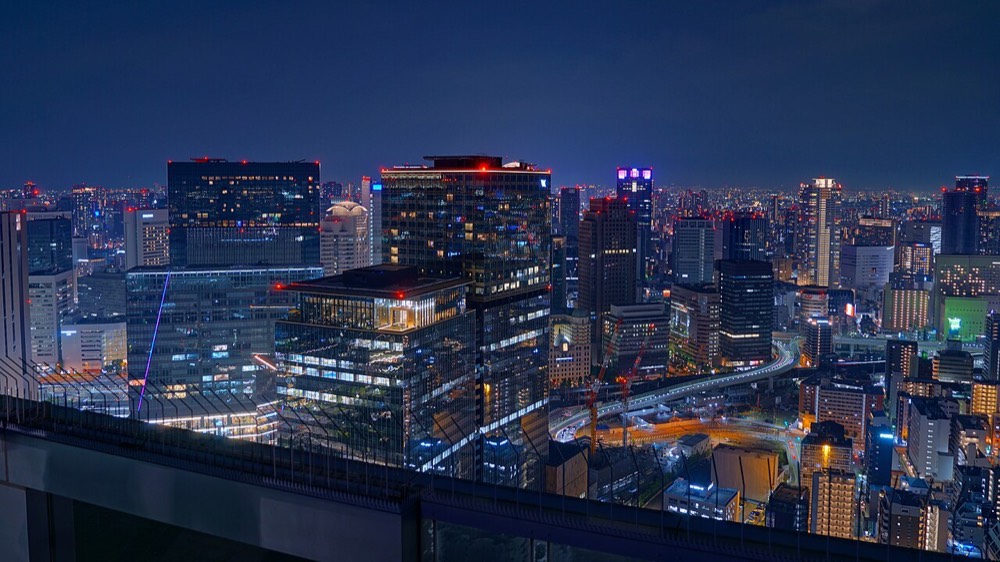
Based on Osaka sunset times published by the National Astronomical Observatory of Japan[5][6][7][8]:
| Date | Osaka sunset | Suggested entry | Bluest sky, best night view |
|---|---|---|---|
| 20 November | 16:51 | 16:00 | About 17:10–17:30 |
| 30 November | 16:47 | 16:00 | About 17:05–17:25 |
| 1–15 December | 16:47–16:49 | 16:00 | About 17:05–17:30 |
| 25 December | 16:53 | 16:05 | About 17:10–17:30 |
| 1 January | 16:58 | 16:10 | About 17:15–17:35 |
| 15 January | 17:10 | 16:20 | About 17:30–17:50 |
| 31 January | 17:26 | 16:35 | About 17:45–18:05 |
| 15 February | 17:41 | 16:50 | About 18:00–18:20 |
| 28 February | 17:53 | 17:00 | About 18:10–18:30 |
The "best night view" column is the blue hour roughly 20–40 minutes after sunset, a general rule of thumb that depends on the weather. A few practical tips:
- Sunset is to the west: on clear days the sun sets toward Osaka Bay and the Rokko mountains.
- Busy times: travel media data shows 14:00–18:00 as the busiest period, with mornings quieter[9]. Around sunset on weekends there may be a queue at the 39F ticket counter; an online ticket saves time buying.
- Stay warm: the roof is windy in winter, so a hat and gloves help more than a thicker coat; phone batteries also drain faster in the cold.
- Photography: shooting through the 40F windows picks up reflections; for clean night shots, go out onto the rooftop loop.
Getting to the Floating Garden: walking from JR Osaka and Umeda stations
In short: the official site lists about 7 minutes on foot from JR Osaka Station and about 9 minutes from Hankyu Osaka-umeda and Osaka Metro Umeda stations; all three routes end by going through an underground passage of about 40 m[3]. Allow 10–15 minutes on your first visit.
From JR Osaka Station (summary of the official route)[3]:
- Exit through the 3F "Renrakubashi" (連絡橋口) ticket gate and head toward the "Central North Exit" (中央北口).
- Go down to 1F and, once outside, walk northwest along Grand Front Osaka (グランフロント大阪) South Building.
- Cross the road, take the stairs down into the underground passage and walk straight for about 40 m.
- Climb the stairs at the other end back to street level, cross one more road, and you are at the Umeda Sky Building.
From Hankyu Osaka-umeda Station you leave via the Chayamachi Exit (茶屋町口), pass the New Hankyu Hotel and cross the big intersection; from the Osaka Metro Midosuji Line's Umeda Station you leave via the North Gate and pass Yodobashi Umeda. Both routes go between the north and south buildings of Grand Front Osaka and join the same underground passage[3]. On the way you pass the Grand Green Osaka (Umekita Park) area, worth a stroll in daylight.
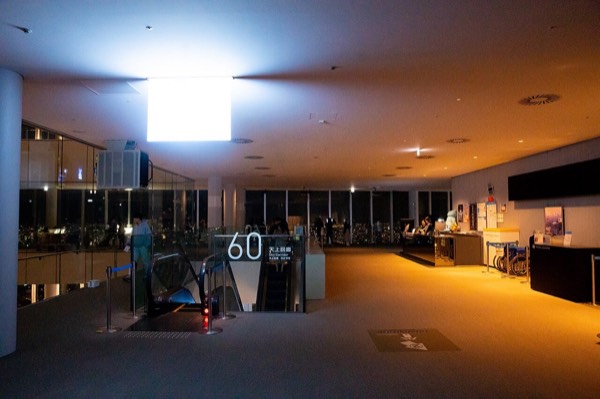
Finding the observatory's own entrance: you do not go up in the office elevators. The entrance is a glass door marked "FUN FUN PLAZA 空中庭園" on the side of Tower East facing the central plaza, Wonder Square (ワンダースクエア)[1][3]. Inside, take the elevator up from the 3F departure gate, then ride the sky escalator suspended between the two towers from 35F to 39F, and buy your ticket or exchange your Amazing Pass at the 39F counter[2]. Wheelchair users can take the high-rise elevator from Tower East 1F[1].
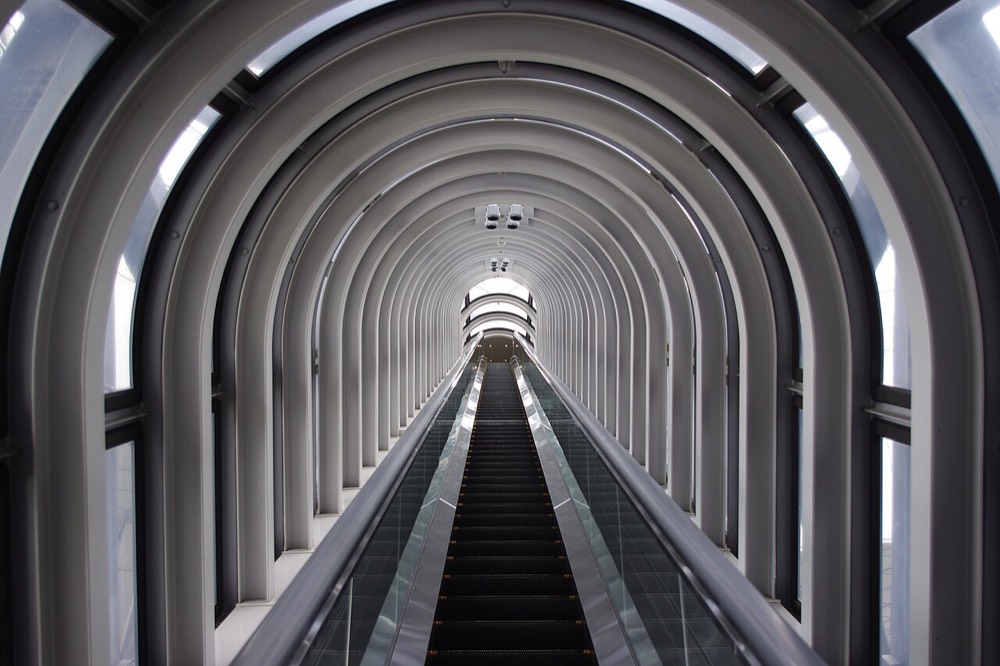
The escalator itself is a popular photo spot: outside the transparent tube is the open gap between the two towers. If you are nervous about heights, keep your eyes forward rather than looking down.
Takimi Koji basement food street and the winter Christmas event
In short: after the night view there is no need to go anywhere else; Takimi Koji on B1 has dinner covered, and from 13 November to 25 December the ground-floor plaza has a free Christmas market.
Takimi Koji (滝見小路, たきみこうじ) is on basement level 1 of the Umeda Sky Building. Its theme is a Showa-era Osaka backstreet, recreated with stone paving, a well, a small shrine and a post office, and it has about 20 restaurants[10]. Hours, closing days and whether cards are accepted vary by shop[10][11], and no reservation is needed[11]. Popular places may have a queue at dinnertime, so you can put your name down before going up to the observatory, or avoid the 18:00–19:30 peak.
The 2026 Christmas event, "UMEDA SKY BUILDING Christmas 2026", runs from 13 November to 25 December. The ground-floor plaza Wonder Square has a large Christmas tree and a market open 12:00–22:00 (last orders 21:30), and from 1 December there is a light show of about 6 minutes every hour and half hour from 17:00 to 21:30[12]. The 40F observatory has Christmas decorations over the same period, which require an observatory ticket. For market stalls, the limited-edition mug and an evening route, see Osaka Christmas Markets 2026; we won't repeat it here.
Osaka night-view observatories compared: Floating Garden, HARUKAS 300, Tsutenkaku, HEP FIVE
In short: choose the Floating Garden for an outdoor rooftop, HARUKAS 300 for the highest and farthest view, Tsutenkaku for retro atmosphere and full Amazing Pass coverage, and the HEP FIVE Ferris wheel for a quick loop between shops.
| Umeda Sky Building Floating Garden | Abeno HARUKAS 300 | Tsutenkaku | HEP FIVE Ferris Wheel | |
|---|---|---|---|---|
| Height | About 173 m | 300 m | 87.5 m / outdoor deck 94.5 m | About 106 m at the top (travel media figure) |
| Adult fare | ¥2,000 | ¥2,200 (10% off online by the day before) | ¥1,500 | ¥1,000 |
| Hours | 9:30–22:30 (last entry 22:00) | 9:00–22:00 (last entry 21:30) | 9:00–21:45 (last admission 21:15) | 11:00–23:00 (last ride 22:45) |
| Osaka Amazing Pass | Free before 15:00, 10% off after | Not included | Free (exchange for a timed ticket on site) | On the free list |
| What you see | Outdoor 360°: Umeda towers, Yodo River, Rokko mountains | Indoor glass: all of Osaka, Kyoto and the Akashi Kaikyo Bridge on clear days | Shinsekai streets and the Tennoji area | Close-up view of central Umeda |
| Location | Umeda (Kita) | Tennoji | Shinsekai | Umeda (Kita) |
Hours and Amazing Pass conditions for the Floating Garden, Tsutenkaku and HEP FIVE follow the pass's official facility page[4]; the Floating Garden fare follows the official site[1]. For HARUKAS 300 fare details, the EDGE rooftop experience and sunset timing, see the Abeno HARUKAS 300 observatory guide; for Tsutenkaku time-slot booking, the slide and a Shinsekai kushikatsu walk, see the Tsutenkaku and Shinsekai guide.
Quick ways to decide:
- Only one night-view observatory: staying in Umeda, choose the Floating Garden; staying in Namba or Tennoji, choose HARUKAS 300.
- With the Amazing Pass: Floating Garden in the daytime (before 15:00), Tsutenkaku at night, both free.
- With children: the Floating Garden's child fare is ¥500 and under-4s are free, which is friendlier for families.
Cost examples: how much do three common groups spend?
In short: two adults seeing the night view without the pass pay ¥4,000; a family of four (two adults, two elementary-school children) pays ¥5,000.
| Group | Calculation | Total |
|---|---|---|
| Two adults, night view | ¥2,000 × 2 | ¥4,000 |
| Two adults + two elementary-school children | ¥2,000 × 2 + ¥500 × 2 | ¥5,000 |
| Two adults + one 3-year-old | ¥2,000 × 2 + ¥0 | ¥4,000 |
| One adult with the Amazing Pass, entering after 15:00 | 10% off ¥2,000 | About ¥1,800 |
Buying the Amazing Pass just for the Floating Garden is not worth it; the pass pays off only with a full day of subway rides and several sights. See the dedicated pass guide mentioned above for the calculation.
Putting it together: a sample winter half day in Umeda
Using a weekday in early December as an example (sunset 16:47), starting from JR Osaka Station:
| Time | Plan | Notes |
|---|---|---|
| 14:30 | Walk around Grand Green Osaka and Umekita Park | On the way from JR Osaka Station |
| 15:40 | Arrive at the Umeda Sky Building and find the dedicated entrance by Tower East | Arrive 10 minutes earlier at weekends |
| 16:00 | Buy tickets on 39F, enjoy the daytime view from the 40F indoor area | Check the sunset direction on the west side of the roof first |
| 16:47 | Watch the sunset from the roof | Bring warm layers |
| 17:05–17:30 | Blue hour and night view | The glowing stone walkway is clearest after dark |
| 17:40 | Go down to the ground-floor Christmas market and catch the light show every half hour from 17:00 | Market open until 22:00 |
| 18:30 | Dinner at Takimi Koji on B1 | Put your name down early at popular places |
| 20:00 | Walk back to JR Osaka Station | About 10–15 minutes |
With the Osaka Amazing Pass you can flip the order: Osaka Castle in the morning, free entry to the Floating Garden around 14:30, stay through sunset, then go down for dinner. To fit other Umeda sights, shopping and other districts into the same trip, see Osaka's top attractions.
FAQ
How much is a Floating Garden Observatory ticket? Is it more expensive at the door?
The official fare table lists ¥2,000 for adults, ¥500 for age 4 through elementary school, and free under 4; cash and credit cards are accepted. Some travel sites quote ¥2,400 at the door, but on 18 November 2026 the official table showed no separate on-site price. Online tickets let you pick a date, speed up entry and include web-only plans; check the booking page for their prices.
What time should I go to the Floating Garden for the night view?
Enter about 50 minutes before that day's sunset. Osaka's sunset is around 16:47–16:57 from late November through December, about 17:10 in mid-January and 17:41 in mid-February. In early December, for example, enter at 16:00, see the daytime view, watch the 16:47 sunset, then wait 20–30 minutes for the blue hour and city lights.
Is the Umeda Sky Building free with the Osaka Amazing Pass?
Yes, but only if you enter before 15:00, once per facility on the day you use the pass. After 15:00 the pass gives just 10% off, about ¥1,800 for an adult. To use the pass and still see sunset, enter between 14:30 and 15:00 and stay until dusk; re-entry is not allowed, so leaving means buying a new ticket.
How do I walk from JR Osaka Station to the Umeda Sky Building?
The official site says about 7 minutes: exit the 3F Renrakubashi gate toward the Central North Exit, go down to 1F, follow Grand Front Osaka South Building, cross the intersection, walk through a roughly 40 m underground passage and come back up to street level. Allow 10–15 minutes on your first visit, in crowds or in the rain.
Where is the observatory entrance in the Umeda Sky Building?
The observatory has its own entrance: a glass door marked "FUN FUN PLAZA 空中庭園" on the side of Tower East facing the central plaza, Wonder Square. The office elevators in Tower East and Tower West do not go to the observatory. Wheelchair users can take the high-rise elevator from Tower East 1F.
Sources
- Umeda Sky Building Floating Garden Observatory: Visitor information: Fares, hours, payment methods, dedicated entrance, rooftop closure in bad weather (checked 18 November 2026)
- Umeda Sky Building Floating Garden Observatory: 3F departure gate, 35F–39F sky escalator, 39F and 40F facilities, rooftop Sky Walk and Lumi Sky Walk, online tickets
- Umeda Sky Building: Access: Walking routes and times from JR Osaka, Hankyu Osaka-umeda and Osaka Metro Umeda stations
- Osaka Amazing Pass: Free facilities: Floating Garden free before 15:00, 10% off afterwards; HEP FIVE Ferris wheel and Tsutenkaku conditions
- National Astronomical Observatory of Japan: Osaka sunrise/sunset, November 2026: Osaka sunset times in November
- National Astronomical Observatory of Japan: Osaka sunrise/sunset, December 2026: Osaka sunset times in December
- National Astronomical Observatory of Japan: Osaka sunrise/sunset, January 2027: Osaka sunset times in January
- National Astronomical Observatory of Japan: Osaka sunrise/sunset, February 2027: Osaka sunset times in February
- Walkerplus: Umeda Sky Building Floating Garden Observatory: 173 m height, glowing rooftop stones at night, views, busiest times
- Rurubu&more.: Showa Retro shopping street Takimi Koji: Basement 1, Showa-era Osaka theme, about 20 restaurants
- Walkerplus: Takimi Koji restaurant street, Umeda Sky Building B1: Hours vary by shop; no re-entry to the observatory
- Umeda Sky Building: UMEDA SKY BUILDING Christmas 2026: 2026 Christmas event dates, market and light-show times
Fares, opening hours and event dates can change. Information checked on 2026.11.18; please confirm with official sources before you go.