Nagasaki Lantern Festival 2027: February 5-21 Dates, Venues, Emperor's Parade and Mazu Procession Times, Access and Hotels
Nagasaki Lantern Festival 2027 is expected to run February 5-21. Lighting hours, venues, past parade times, tram access, hotel tips and Huis Ten Bosch.
Quick answer
The Nagasaki Lantern Festival (Nagasaki Rantan Festival) 2027 is expected to run for 17 days from Friday, February 5 to Sunday, February 21, following the usual rule of 17 days from the first Friday of February; travel agencies already list these dates, but check the organizer's announcements. About 15,000 lanterns light up the city, with the main venues at Shinchi Chinatown (Minato Park) and Chuo Park. Lights usually run about 17:00-22:00, with the Emperor's Parade on Saturday afternoons and the Mazu Procession on Sunday afternoons.
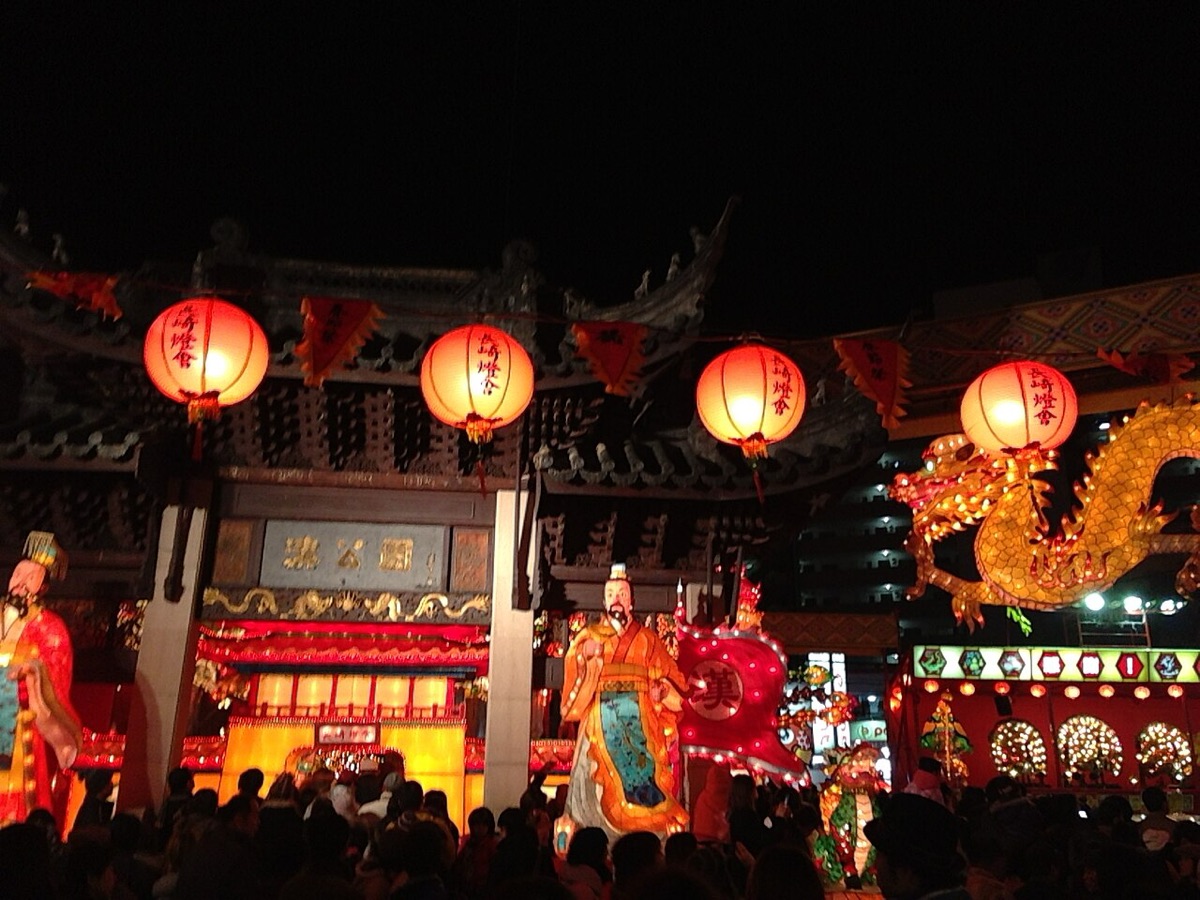
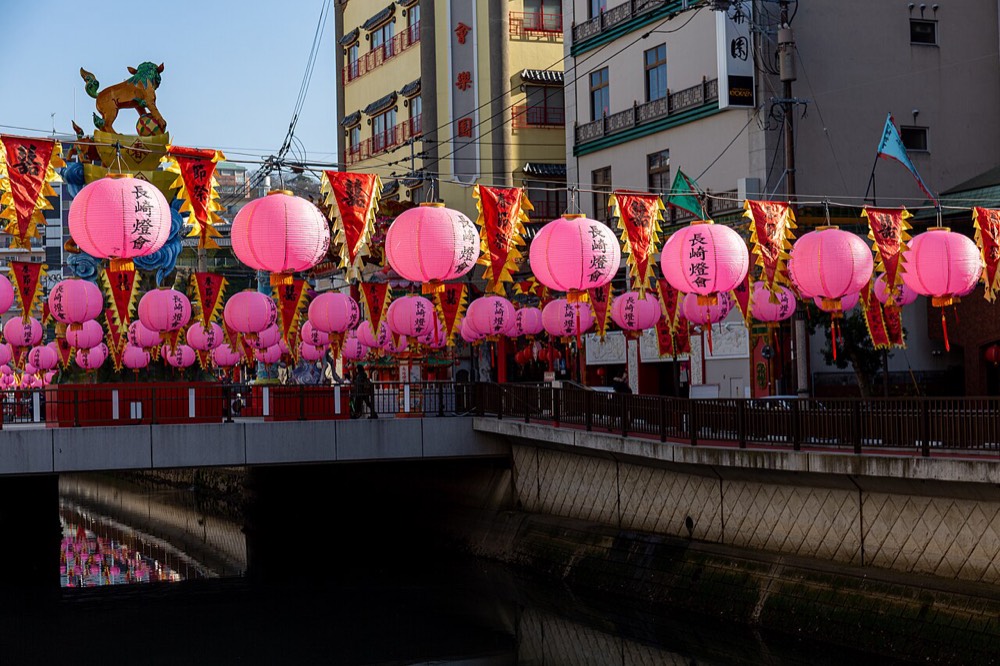
The Nagasaki Lantern Festival 2027 (Nagasaki Rantan Festival) is expected to run from Friday, February 5 to Sunday, February 21, 2027, for 17 days. It is Nagasaki's biggest winter event: about 15,000 lanterns hang across Shinchi Chinatown, Chuo Park, the Hamanomachi shopping arcades and the banks of the Nakashima River, turning the city center red, pink and yellow at night. This guide covers the 2027 dates, lighting hours, each venue, past times for the Emperor's Parade and Mazu Procession, plus access, hotels and how to add Huis Ten Bosch, so you can decide which days to go.
Nagasaki Lantern Festival 2027 dates: February 5-21, 17 days
In short: the Nagasaki Lantern Festival 2027 is expected to open on Friday, February 5 and close on Sunday, February 21, for 17 days[1].
These dates match the usual pattern. The festival grew out of the Spring Festival held in Shinchi Chinatown to celebrate Chinese New Year, and was expanded to its current scale in 1994[2]. It now runs for 17 consecutive days from the first Friday of February; if the day after closing is a national holiday, it is extended by a day, as in 2026, when it ran February 6-23 (18 days)[2]. The first Friday of February 2027 is February 5, and 17 days later is Sunday, February 21. Monday, February 22 is not a holiday, so 17 days is the expected length.
| Item | 2027 (expected) | 2026 (past-year reference) |
|---|---|---|
| Dates | Fri Feb 5 - Sun Feb 21, 17 days | Fri Feb 6 - Mon Feb 23 (holiday), 18 days |
| Lighting hours | To be announced | Opening day 18:00-22:00; other days 17:00-22:00; last day until 21:00 |
| Daytime lighting | To be announced | Shinchi Chinatown and Hamanomachi venues from 12:00 |
| Emperor's Parade | To be announced | Sat Feb 14 and Sat Feb 21, afternoon |
| Mazu Procession | To be announced | Sun Feb 8 and Sun Feb 15, afternoon |
When are Chinese New Year and the Lantern Festival day in 2027?
Chinese New Year 2027 falls on Saturday, February 6, the day after the festival opens. The fifteenth day of the first lunar month, the traditional Lantern Festival day, is Saturday, February 20, during the festival's last weekend. If you want to spend the Lantern Festival day in Nagasaki, the weekend of February 19-21 will be the liveliest and the most crowded.
On the Japanese calendar, Thursday, February 11, 2027 is National Foundation Day, when domestic visitors increase. To avoid crowds, aim for weekday evenings on February 8-10 or 15-18.
Nagasaki Lantern Festival venues: what each one offers
In short: the most popular are the two main venues, Shinchi Chinatown (Minato Park) and Chuo Park, along with the Hamanomachi arcades, Nakashimagawa Park and Tojin Yashiki. Most venues are within about 1 km of each other, so you can walk between them[2]. These were the official venues in 2026 (past-year reference; venues can change each year):
| Venue | Highlights | Best for |
|---|---|---|
| Shinchi Chinatown (Minato Park) | Main venue with the lighting ceremony, stage shows and food stalls; Minato Park holds about 2,000 people and has lantern figures over 10 m tall; the pink lanterns along the Doza River are a favorite photo spot | First-timers, big lantern displays and shows |
| Chuo Park | The other main venue with many stage shows; holds about 1,000 people and is less crowded than Shinchi; the only venue with tables and chairs along the walkway, so you can eat stall food while watching | Families, older travelers, watching shows seated |
| Hamanomachi (Hamanomachi and Kanko-dori arcades) | Two covered shopping streets (about 350 m and 300 m) full of lanterns, with a Gekka Rojin matchmaking-god lantern; many shops open until 21:00 on weekends | Shopping while seeing the lanterns |
| Nakashimagawa Park | Yellow lanterns along the river, with reflections around Meganebashi Bridge; you can walk down to the water when the level is low | Photos and strolling |
| Tojin Yashiki | The Edo-period Chinese quarter with a retro feel and four remaining shrines; paid candle stamp rally | Fans of historic streets |
Source: Hoshino Resorts festival guide (2026 data)[2].
The Confucius Shrine and Kofukuji are worth a detour
Besides the official venues, nearby Chinese-style temples fit easily into your route. The Confucius Shrine (Koshibyo) in Nagasaki is a Chinese-style shrine to Confucius, and according to a travel agency, it hosts a daily "love lantern" (koi rantan) event during the festival[1]; check the shrine for admission fees. Kofukuji is a Chinese-style temple founded by Chinese residents of Nagasaki in the Edo period, just east of the Nakashima River, so you can pair it with Meganebashi Bridge on one walk. Check the year's official announcements for any festival decorations or events there.
When are the Emperor's Parade and Mazu Procession? Past times and routes
In short: the 2027 parade schedule has not been announced. In 2026, the Emperor's Parade ran on the festival's second and third Saturday afternoons and the Mazu Procession on its first and second Sunday afternoons[2]. If 2027 follows the same pattern, the Emperor's Parade could fall on February 13 and 20 and the Mazu Procession on February 7 and 14, but this is only an estimate; wait for the official schedule.
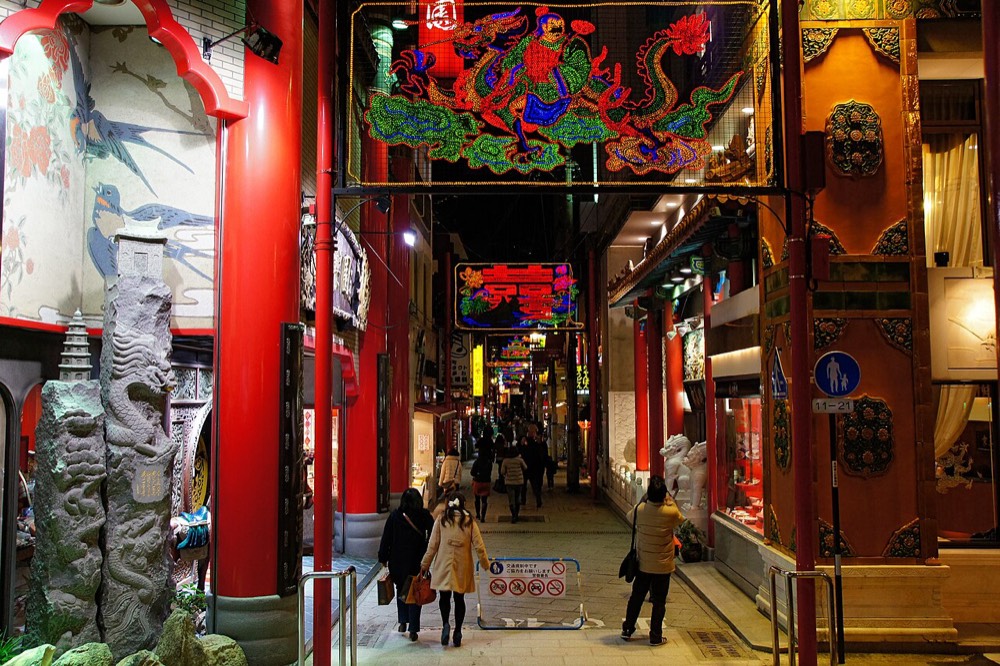
The Emperor's Parade (Kotei Parade) recreates a Chinese emperor and empress touring the city to celebrate the new year, and it is the festival's most lavish event. The 2026 route and planned times (past-year reference)[2]:
| Location | Planned time (February 14 and 21, 2026) |
|---|---|
| Depart Chuo Park | 14:00 |
| Hamanomachi | 14:30 |
| Kajiichi-dori | 14:50 |
| Hamanomachi | 15:30 |
| Arrive Shinchi Chinatown (Minato Park) | 16:00 |
The Mazu Procession recreates the ritual in which crews of Chinese trading ships carried Mazu, the goddess who protects seafarers, ashore and later returned her to the ship before sailing. In 2026 (past-year reference) it took place on two days[2]:
- Sunday, February 8 (bringing Mazu ashore): depart Tojin Yashiki 13:40 → Shinchi Chinatown (Minato Park) 14:20 → Hamanomachi 14:55 → arrive Chuo Park 15:45 for a ceremony.
- Sunday, February 15 (returning Mazu to the ship): depart Chuo Park 13:15 → Hamanomachi 14:20 → Shinchi Chinatown (Minato Park) 14:40 → Tojin Yashiki 15:15.
Tips for watching: the Hamanomachi stretch has the thickest crowds, so for a clear view arrive 30 minutes early near the Chuo Park start or the Minato Park finish. The parade ends just as it gets dark, so you can stay at Minato Park for the lantern-lit evening. Venues also host dragon dances (jaodori), face-changing and Chinese martial arts shows, mostly free with no reservation needed[2]; timetables are released before the festival.
Getting to the Nagasaki Lantern Festival and moving between venues
In short: the tram takes about 10 minutes from JR Nagasaki Station to each venue, and walking between venues is fastest.
- Shinchi Chinatown venue: from JR Nagasaki Station, take Nagasaki Electric Tramway Line 1 for about 8 minutes to Shinchi Chukagai stop, then walk about 1 minute[4].
- Hamanomachi venue: take Line 1 for about 12 minutes to Shianbashi stop; the arcades are right there[4].
- Chuo Park venue: change to Line 5 at Tsukimachi and get off at Meganebashi, about 2 minutes on foot[4].
- Nakashimagawa Park (Meganebashi Bridge): also get off at Meganebashi.
A single tram ride costs 150 yen for adults; if you ride 4 or more times in a day, a one-day pass is better value. See the tram section of our Nagasaki guide for details. Evening trams get packed during the festival, so if you stay near Chinatown or Hamanomachi, walking back to your hotel is often faster than waiting.
From Fukuoka, the fastest route from Hakata to Nagasaki takes about 1 hour 20 minutes on the Relay Kamome limited express and Nishi-Kyushu Shinkansen. For other routes and choosing a JR Kyushu Rail Pass, see our Kyushu transport guide.
Where to stay for the Nagasaki Lantern Festival and when to book
In short: weekends and the days around National Foundation Day on February 11 are the hardest to book, so reserve a free-cancellation room as soon as your dates are set.
- Which area: Shinchi Chinatown, Hamanomachi and Shianbashi are the most convenient for the lanterns, as you can walk back to your hotel. The JR Nagasaki Station area has more hotels and is easier with luggage, and Chinatown is only about 8 minutes away by tram.
- Avoid weekends: the same room type is usually easier to get Monday to Thursday than on Friday or Saturday.
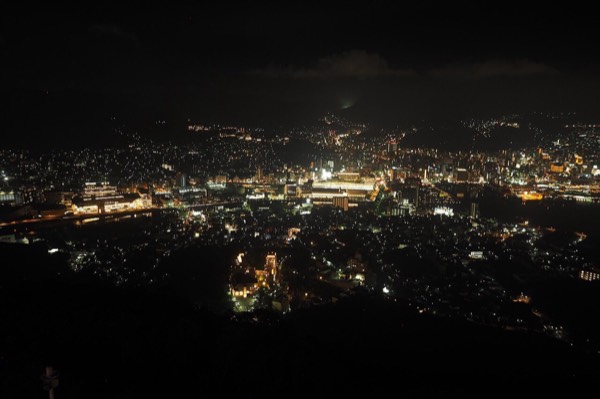
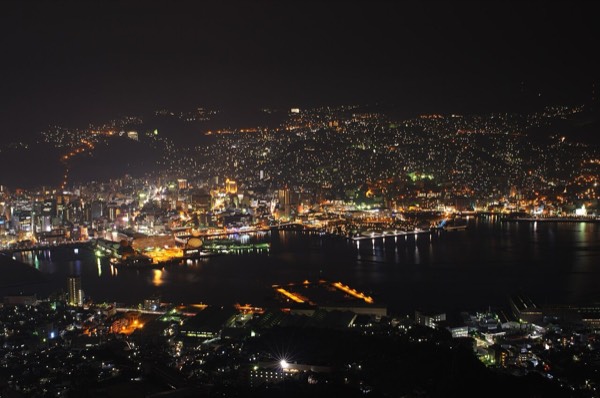
- Night views plus lanterns: Nagasaki also has the Mt. Inasa night view, so spend one night at the lanterns and one on the mountain, with at least 2 nights.
- Weather and clothing: February in Nagasaki is milder than Hokkaido or Tokyo, but standing outdoors for lanterns and shows at night gets cold, so bring a warm jacket and gloves. Depending on the weather, lighting hours and stage events may change or be cancelled[2].
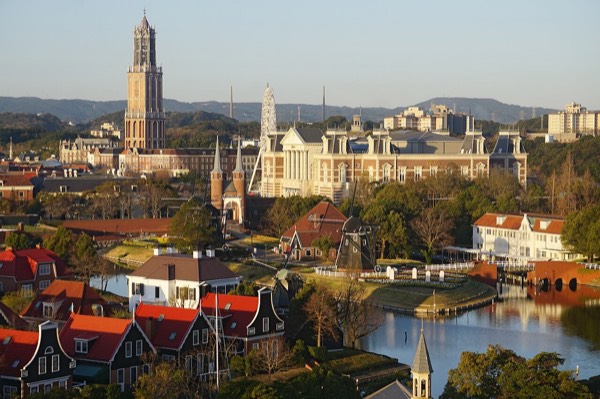
Combining the Nagasaki Lantern Festival with Huis Ten Bosch
In short: a JR rapid train from Nagasaki Station reaches Huis Ten Bosch directly in about 1 hour 30 minutes, and its 2026-27 winter illumination is scheduled to run until February 25, 2027, overlapping the festival. That makes a two-day "Huis Ten Bosch by day, Nagasaki by night" plan easy. For tickets, illuminations and access, see our Huis Ten Bosch guide.
A suggested 3-day, 2-night plan:
- Day 1: travel from Fukuoka to Nagasaki, explore Dejima and Shinchi Chinatown in the afternoon, see the lighting at Minato Park in the early evening, then walk Hamanomachi and Meganebashi Bridge.
- Day 2: take JR to Huis Ten Bosch in the morning, stay until the illuminations at dusk, then return to Nagasaki or stay at the park.
- Day 3: if you are staying in Nagasaki, visit the Confucius Shrine, Kofukuji or Tojin Yashiki in the morning; on weekends catch the Emperor's Parade or Mazu Procession, then head back to Fukuoka in the afternoon.
If your trip includes a parade weekend, keep Nagasaki for the weekend and put Huis Ten Bosch on a weekday to avoid the biggest crowds at both.
Before you go: how to plan it smoothly
- The 2027 dates are based on the usual pattern and travel agency information. Emperor's Parade, Mazu Procession and stage timetables depend on the official announcement, so check again one to two weeks before you go.
- The best photo time is the "blue hour" about 30 minutes after sunset. Sunset in Nagasaki is around 18:00 in early February[2], so get to Minato Park or Meganebashi Bridge by 17:30.
- Shinchi Chinatown is the most crowded. For champon or sara udon at dinner, go before 17:00 or use the quieter stalls at Chuo Park.
- Most venues are within walking distance, so wear comfortable shoes; walking often saves more time than the tram.
FAQ
When is the Nagasaki Lantern Festival 2027?
It is expected to run from Friday, February 5 to Sunday, February 21, 2027, for 17 days. This follows the usual rule of 17 days from the first Friday of February, and travel agency sites already list the same dates. The organizer usually publishes full event details shortly before opening, so check Nagasaki City's official tourism site before you go.
Do I need a ticket for the Nagasaki Lantern Festival?
The main venues and lantern displays are free, and most stage shows need no reservation. Some activities cost extra; in 2026, for example, the candle stamp rally at Tojin Yashiki was 1,000 yen and limited handheld lanterns were 1,400 yen. Check official announcements for 2027 fees.
What time are the lanterns lit and how late can I see them?
In 2026 the lanterns were lit from 18:00 on opening day and 17:00-22:00 on other days, until 21:00 on the last day; the Shinchi Chinatown and Hamanomachi venues were lit from 12:00. Sunset in Nagasaki is around 18:00 in early February, and the 30 minutes after sunset are best for photos. 2027 hours are yet to be announced.
When are the Emperor's Parade and the Mazu Procession?
The 2027 schedule has not been announced. In 2026 the Emperor's Parade ran on the afternoons of Saturday, February 14 and 21, from Chuo Park to Shinchi Chinatown (Minato Park), and the Mazu Procession ran on the afternoons of Sunday, February 8 and 15, between Tojin Yashiki and Chuo Park. If 2027 follows the same pattern, both will fall on festival weekends.
Can I combine the Nagasaki Lantern Festival with Huis Ten Bosch?
Yes. A JR rapid train from Nagasaki Station reaches Huis Ten Bosch Station in about 1 hour 30 minutes, and Huis Ten Bosch's 2026-27 winter illumination is scheduled to run until February 25, 2027, overlapping the festival. Visit Huis Ten Bosch by day or on a separate day and keep evenings in Nagasaki for the lanterns, with at least 2 nights.
Sources
- Kinki Nippon Tourist: Nagasaki Lantern Festival feature: 2027 dates of February 5-21 (17 days); daily love lantern event at the Confucius Shrine
- Hoshino Resorts: Nagasaki Lantern Festival guide: 2026 dates, lighting hours, venue features, Emperor's Parade and Mazu Procession routes and times, 1994 origin and lantern count
- Nagasaki City official tourism site (at-nagasaki): Nagasaki Lantern Festival: Official event page; check here for the latest dates, venues and schedules
- Guidoor: Nagasaki Lantern Festival: Tram access to Shinchi Chinatown, Hamanomachi and Chuo Park
Fares, opening hours and event dates can change. Information checked on 2026.10.29; please confirm with official sources before you go.